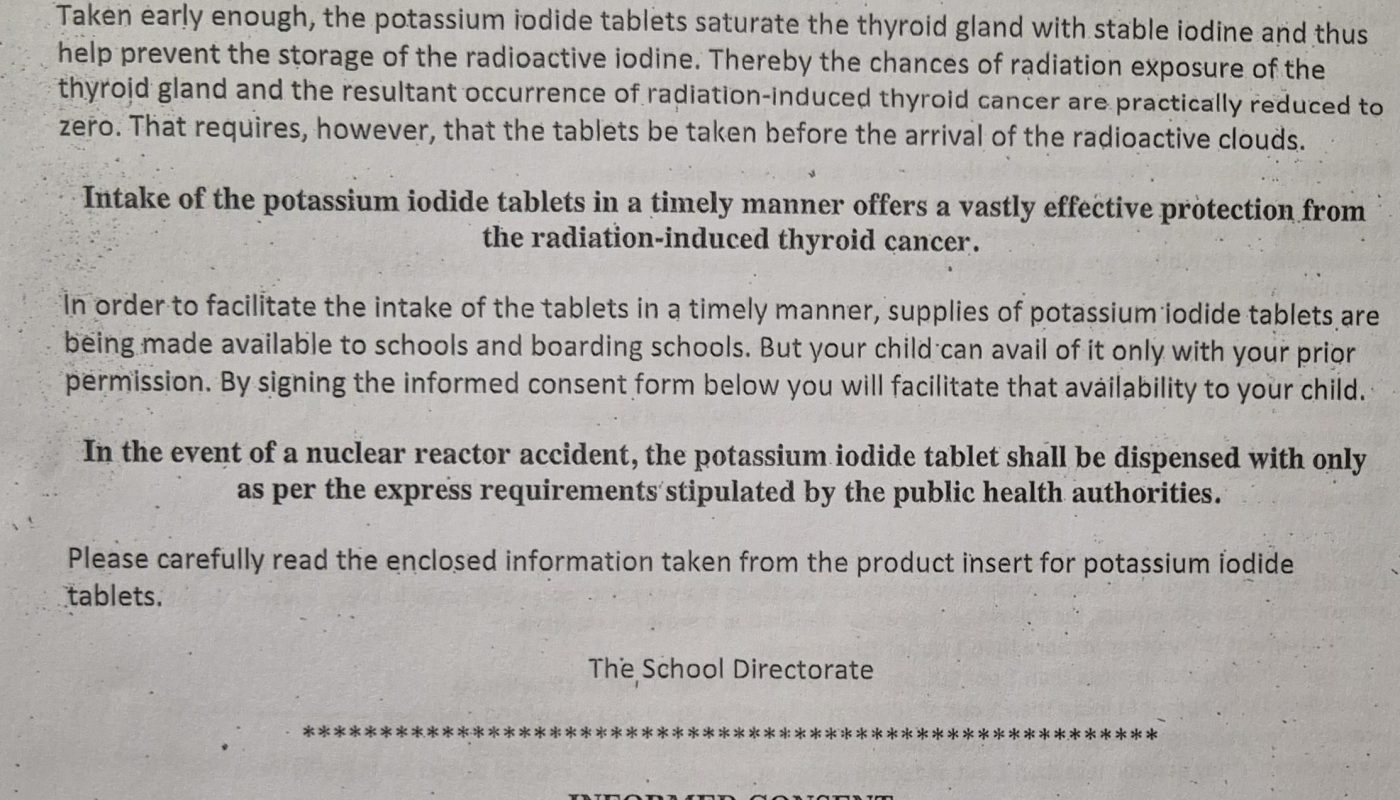
A routine school consent form… for giving kids iodine tablets in case of nuclear fallout
Title: Understanding School Consent Forms for Iodine Tablets: Nuclear Preparedness for Your Child
Meta Description: Learn why schools are distributing consent forms for iodine tablets, how they protect children during nuclear emergencies, and what parents need to know before signing.
Introduction
In recent months, an increasing number of schools have begun distributing routine consent forms for a surprising request: permission to administer iodine tablets (potassium iodide, or KI) to children in the event of nuclear fallout. While the concept may seem alarming, these forms reflect schools’ growing commitment to emergency preparedness in an uncertain geopolitical climate. This article explains what parents need to know about these consent forms, why iodine tablets matter, and how they keep kids safe.
Why Are Schools Issuing Iodine Tablet Consent Forms?
Nuclear accidents or attacks—though rare—can release radioactive iodine into the air, which poses severe health risks, especially to children. Radioactive iodine targets the thyroid gland, increasing the risk of thyroid cancer years later. Potassium iodide (KI) tablets block the absorption of radioactive iodine, shielding the thyroid from harm.
Schools are proactively preparing for all emergencies, from natural disasters to human-caused threats. By obtaining parental consent in advance, they ensure swift action if a nuclear crisis occurs.
Key Facts About Iodine Tablets for Kids
-
How They Work
KI tablets flood the thyroid with stable iodine, preventing radioactive iodine from being absorbed. They are most effective when taken within hours of exposure. -
Safety & Side Effects
KI is FDA-approved and safe for children when dosed correctly. Side effects are rare but may include stomach upset or allergic reactions (e.g., rash). Children with thyroid conditions or iodine allergies require medical consultation before use. -
Timing is Critical
Schools will only distribute tablets during a verified nuclear emergency, such as a nearby plant accident or attack. They are not given as a preventative measure.
What the Consent Form Covers
A typical school consent form will include:
- Permission to Administer KI Tablets: Allows trained staff to provide the correct dose to your child.
- Dose Information: Weight-based guidelines for safe distribution.
- Medical Information: Space to disclose allergies or pre-existing conditions.
- Opt-Out Option: Parents can decline participation (though this is discouraged by health authorities).
Deadlines matter: Schools require forms returned promptly to ensure emergency plans are complete.
Should Parents Be Concerned?
The distribution of consent forms is a precaution, not a prediction of disaster. Governments and schools worldwide routinely stockpile KI tablets as part of broader disaster-response plans. For instance:
- The U.S. Nuclear Regulatory Commission recommends KI for those living within 10 miles of nuclear plants.
- Countries like Finland and Switzerland distribute KI to households near facilities.
Remember: Signing the form doesn’t mean your child will take KI immediately—it’s a contingency for worst-case scenarios.
FAQs for Parents
Q: Can I give my child iodine tablets at home instead?
A: Yes, but schools must track which children have received doses to avoid double-dosing. Coordinate with the school nurse.
Q: What if there’s no time for consent during an emergency?
A: Schools follow strict protocols. If parental consent is on file, they act immediately. Without consent, your child may not receive the tablet.
Q: Are iodine tablets a substitute for evacuation?
A: No. KI tablets protect against radioactive iodine but not other radiation types. Evacuation or sheltering-in-place remains the priority.
The Bigger Picture: Nuclear Preparedness
Schools issuing KI consent forms are part of larger safety efforts, including:
- Drills for sheltering in place.
- Emergency communication systems.
- Partnerships with local health departments.
Proactive planning ensures a calm, coordinated response instead of panic.
What Should Parents Do Next?
- Review the Form Carefully: Note dosage instructions and medical disclosures.
- Consult Your Pediatrician: Discuss any concerns about allergies or your child’s health.
- Talk to Your Child: Explain this is like a “vitamin for emergencies” to avoid fear.
- Stay Informed: Follow school updates on emergency protocols.
Conclusion
While consent forms for iodine tablets may feel unsettling, they reflect a commitment to keeping children safe in all circumstances. By understanding the science behind KI, the purpose of these forms, and the rarity of nuclear events, parents can confidently make informed decisions. Signing the form ensures your child is protected—just like vaccinations or seatbelts—against unforeseen threats.
Take Action: Return the consent form promptly, and use it as an opportunity to discuss emergency preparedness with your family. Safety is always better than regret.
Keywords: school consent form iodine tablets, potassium iodide for kids, nuclear emergency preparedness, KI tablets consent, child safety nuclear fallout, radioactive iodine protection, school emergency protocols