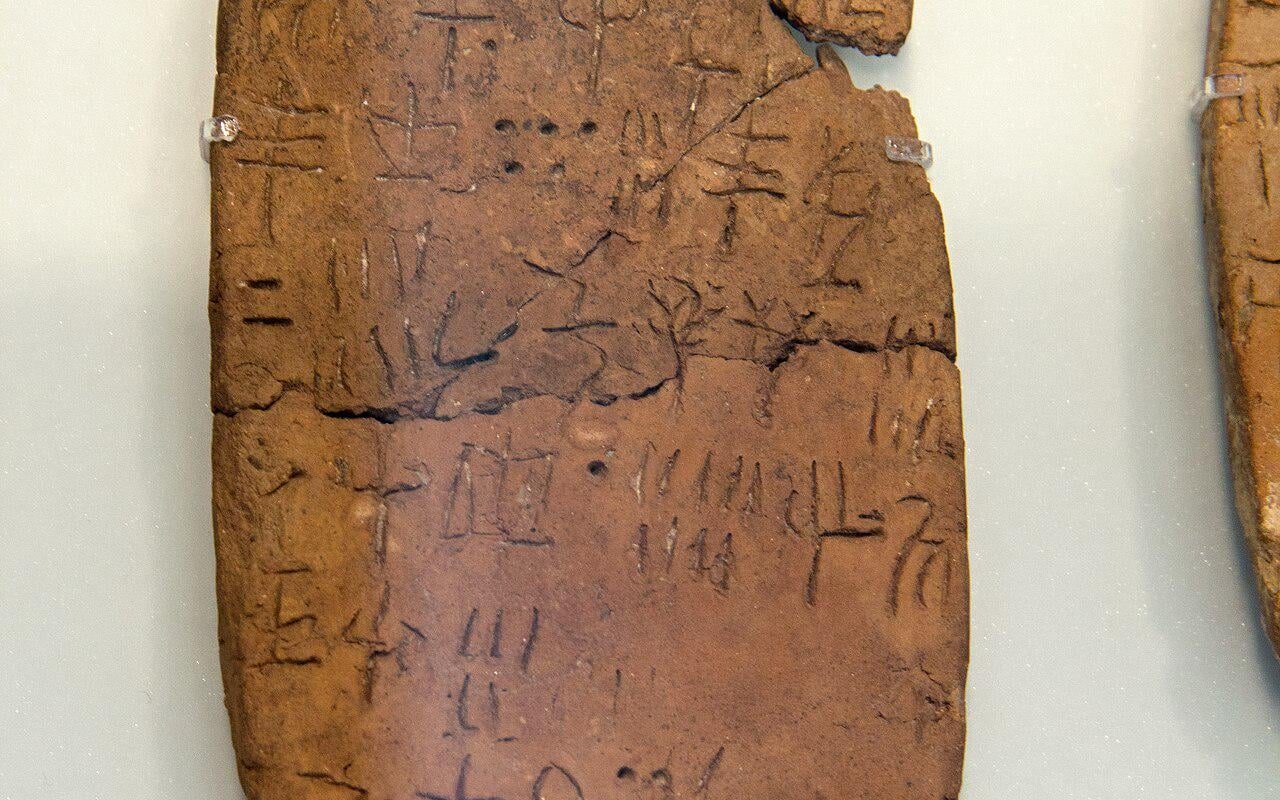
a tablet from the island of crete written in “linear A” script, used to write the language/s of the ancient Minoan civilization (2100–1450BC) which has yet to be deciphered .
Linear A Tablet: The Undeciphered Mystery of the Minoan Civilization
The Enigmatic Clay Tablet from Crete: A Portal to Ancient Secrets
Deep within the sun-drenched ruins of Crete—the heart of the ancient Minoan civilization—lies one of archaeology’s greatest unsolved puzzles: Linear A. This cryptic script, etched onto clay tablets over 3,500 years ago, remains tantalizingly untranslated, guarding the secrets of Europe’s first advanced society. For linguists, historians, and curious minds alike, Linear A tablets symbolize a linguistic labyrinth that has defied decipherment since their discovery in the early 20th century.
What is Linear A?
The Script of the Minoan World (2100–1450 BC)
Linear A is a prehistoric writing system used exclusively by the Minoans, Crete’s sophisticated Bronze Age culture famed for its sprawling palaces like Knossos and Phaistos. Dating to 2100–1450 BC, Linear A predates its successor, Linear B (used to write Mycenaean Greek), and shares some symbolic similarities. Yet, while Linear B was decoded in 1952, revealing administrative records of the Mycenaeans, Linear A continues to shroud the Minoan language—or languages—in mystery.
Why Haven’t We Cracked Linear A?
Key Challenges in Deciphering Ancient Crete’s Language
-
No Rosetta Stone Equivalent:
Unlike Egyptian hieroglyphs (deciphered using the trilingual Rosetta Stone), no bilingual Linear A texts exist. Without a known language counterpart, decoding it relies on statistical analysis and guesswork. -
Limited Corpus:
Only around 1,400 Linear A inscriptions survive, mostly short administrative texts on clay tablets, seal stones, and ceremonial objects. Few provide contextual clues. -
Unknown Language Family:
Scholars debate whether Minoan was an isolate language or related to languages like Luwian (Anatolian) or Proto-Greek. Without this “anchor,” decipherment stalls. -
Overlap with Linear B:
Linear B borrowed 80+ symbols from Linear A but repurposed them for Greek. This complicates efforts to retro-engineer Linear A’s original meaning.
The Thrilling Discovery of Linear A Tablets
British archaeologist Sir Arthur Evans unearthed the first Linear A tablets in 1900 during his excavations at Knossos. Alongside the more abundant Linear B tablets, these finds revealed a complex bureaucracy tracking grain, oil, and religious offerings. Yet, while Linear B’s Greek ties made translation possible, Linear A’s underlying language—likely ”Minoan”—left scholars stumped.
What Do the Tablets Reveal?
Glimpses into Minoan Life & Beliefs
Though undeciphered, Linear A tablets offer clues about Minoan society:
- Economic Records: Lists of commodities like figs, wine, and textiles suggest a trade-driven economy.
- Religious Rituals: Symbols for “libation” and “offering” hint at spiritual practices tied to nature.
- Cultural Exchange: Tablets found beyond Crete (e.g., Aegean islands) prove Minoan influence spanned the Mediterranean.
Theories & Breakthroughs: Will We Ever Decode Linear A?
Modern technology fuels new hope:
- AI & Computational Linguistics: Algorithms analyze symbol patterns, linking Linear A to rare languages like Etruscan or Hattic.
- Archaeological Context: Studying tablet find-sites (e.g., storage rooms vs. shrines) hints at their purpose.
- Symbolic Evolution: Tracking how Linear A evolved into Linear B may unlock shared meanings.
Still, most experts agree: without a “eureka” artifact—a multilingual inscription or Rosetta Stone-like key—Linear A’s secrets may endure indefinitely.
Linear A vs. Phaistos Disk: Crete’s Twin Mysteries
Often confused with Linear A, the Phaistos Disk (1700 BC) is a separate enigma. This clay disk, stamped with untranslated hieroglyph-like symbols, shares no clear ties to Linear A or B. Both artifacts, however, highlight Crete’s role as a cradle of unsolved ancient writing.
Where to See Linear A Tablets Today
Most surviving Linear A artifacts reside in:
- Heraklion Archaeological Museum (Crete): Houses the largest collection.
- Archaeological Museum of Chania (Crete): Displays tablets from western Minoan sites.
- The British Museum (London): Features select Evans-funded finds.
Conclusion
The Linear A tablets of ancient Crete are more than relics—they’re a linguistic time capsule waiting to be unlocked. As technology advances and interdisciplinary research grows, the dream of hearing the Minoans’ “voice” persists. Until then, these silent clay fragments remind us that some histories refuse to surrender their secrets easily.
SEO Meta Description:
Unlock the mystery of the Minoan Linear A tablet—Crete’s undeciphered script from 2100–1450 BC. Explore its history, challenges, and why this ancient language remains a linguistic enigma.
Target Keywords:
Linear A tablet, Minoan civilization, undeciphered script, ancient Crete, Linear A language, Bronze Age writing, Minoan Linear A, Knossos tablets.
Internal Links/Anchor Text Ideas (if applicable):
- “Linear B vs. Linear A: What’s the Difference?”
- “The Palace of Knossos: Heart of Minoan Crete”
- “Bronze Age Writing Systems: From Cuneiform to Hieroglyphs”
Would you like to explore a specific angle, such as recent research or theories about the Minoan language? Let me know!