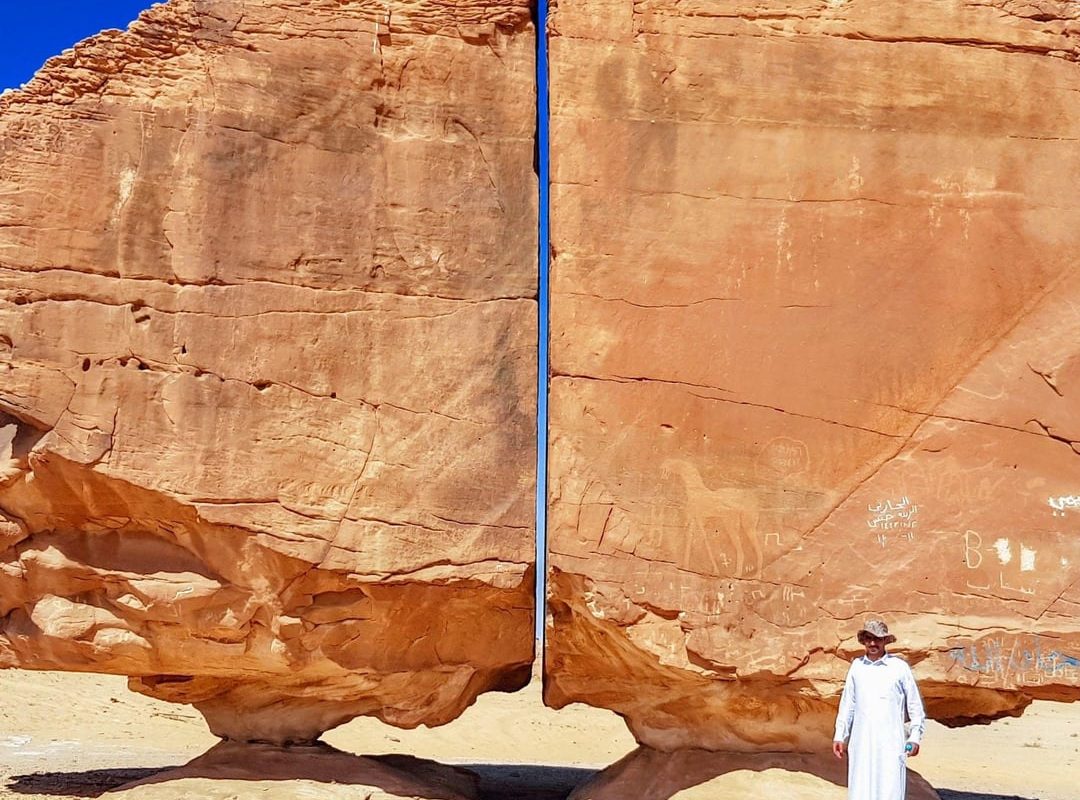
Al Naslaa Rock, Saudi Arabia. split almost perfectly in half by nature
Meta Title: Al Naslaa Rock: The Mysterious Saudi Arabian Wonder Split Perfectly in Half by Nature
Meta Description: Explore Al Naslaa Rock, Saudi Arabia’s enigmatic geological marvel—a massive sandstone formation split with laser-like precision. Discover its history, theories, and how to visit!
Al Naslaa Rock: Nature’s Perfect Split in Saudi Arabia’s Desert
Standing defiantly amid the golden sands of Saudi Arabia’s desert, Al Naslaa Rock captivates travelers and scientists alike. This iconic sandstone monolith, split cleanly down the middle by a razor-thin fissure, looks almost as if it were sliced by a giant laser beam. A testament to nature’s artistry and mystery, Al Naslaa is not just a geological oddity—it’s a doorway to ancient history, cosmic speculation, and breathtaking desert adventure.
What is Al Naslaa Rock?
Located 50 km south of the Tayma Oasis in northwestern Saudi Arabia, Al Naslaa Rock is a dual sandstone formation towering 6 meters high and 9 meters wide. Its defining feature? A near-perfect vertical split that divides the rock into two symmetrical halves, separated by a gap just wide enough for a person to walk through. Both halves balance delicately on small stone pedestals, defying gravity and logic.
The Geological Puzzle: How Did It Split?
The precision of the split has fueled debates for decades. Scientists and geologists propose several theories, while myth lovers imagine extraterrestrial interventions. Here’s what we know:
-
Natural Erosion & Weathering
- Frost Wedging: Seasonal temperature swings cause water to seep into tiny cracks, freeze, expand, and split the rock. Over millennia, this process could create Al Naslaa’s clean divide.
- Tectonic Activity: A minor but sharp seismic shift millenia ago may have fractured the rock vertically.
- Jointing: As softer rock layers eroded, vertical stress fractures formed, eventually splitting the sandstone along a straight plane.
-
Controversial Theories
- Ancient Advanced Tools: Conspiracy theorists argue that the split is too smooth to be natural, suggesting unknown ancient technology.
- Laser Precision: Some online forums even joke about alien lasers!
While the exact cause remains debated, the consensus leans toward natural weathering—just an exceptionally rare display of Earth’s slow-motion power.
A Canvas of Ancient Civilization
Beyond its geological intrigue, Al Naslaa offers a glimpse into prehistoric Arabia. Both rock faces are adorned with ancient petroglyphs (rock carvings) dating back thousands of years:
- Human Figures: Stick-like drawings of hunters and warriors.
- Animals: Depictions of Arabian horses, ibexes, and camels.
- Symbols: Mysterious inscriptions that scholars link to the Thamudic or Nabatean civilizations.
These carvings prove Tayma was a thriving crossroads between Mesopotamia, Egypt, and the Levant, frequented since the Bronze Age (2000 BCE). Some archaeologists speculate that Al Naslaa’s prominence made it a ritual site or territorial marker.
Visiting Al Naslaa Rock: A Travel Guide
Tayma, an oasis town rich in archaeological sites, is the gateway to Al Naslaa. Here’s how to see this marvel firsthand:
Getting There
- Nearest Cities: Riyadh (6-7 hours by car), Tabuk (4 hours)
- Route: Drive toward Tayma via Highway 70. From there, follow desert trails with a 4×4 (GPS coordinates: 27.2205° N, 38.6127° E).
- Guided Tours: Local operators offer desert safaris combining Al Naslaa with Tayma’s ancient ruins and mud-brick forts.
Best Time to Visit
- October–March: Mild daytime temperatures (15–25°C).
- At Sunrise/Sunset: Golden light emphasizes the rock’s textures and shadow play.
What to Bring
- Water, sunscreen, and a hat
- Sturdy shoes for rocky terrain
- A camera with a wide-angle lens
Respect the Site
As tourism grows, Saudi authorities emphasize preservation. Touching the petroglyphs or climbing the rock accelerates erosion—admire from a distance.
Conservation & UNESCO Recognition
In 2023, Al Naslaa and Tayma’s cultural landscape were added to Saudi Arabia’s UNESCO World Heritage Tentative List. This status aims to balance sustainable tourism with protecting the site’s geological and archaeological value.
Why Al Naslaa Rock Matters
Al Naslaa is more than a photogenic curiosity—it’s a symbol of nature’s power, human history, and unanswered questions. Whether shaped by ice, earthquakes, or time alone, this sandstone sentinel remains one of Saudi Arabia’s most surreal wonders, inviting explorers to ponder Earth’s hidden stories.
Keywords for SEO: Al Naslaa Rock, Saudi Arabia, perfect rock split, Tayma Oasis, geological mystery, ancient petroglyphs, Saudi tourism, sandstone formation, natural wonder Al Naslaa, how was Al Naslaa formed, visiting Tayma Saudi Arabia.
Image Alt Text Suggestion: “Al Naslaa Rock split perfectly in half under a desert sunset, Saudi Arabia.”
Plan your trip to Al Naslaa and witness a marvel where geology, myth, and history collide—one of Earth’s most extraordinary natural wonders. 🌄