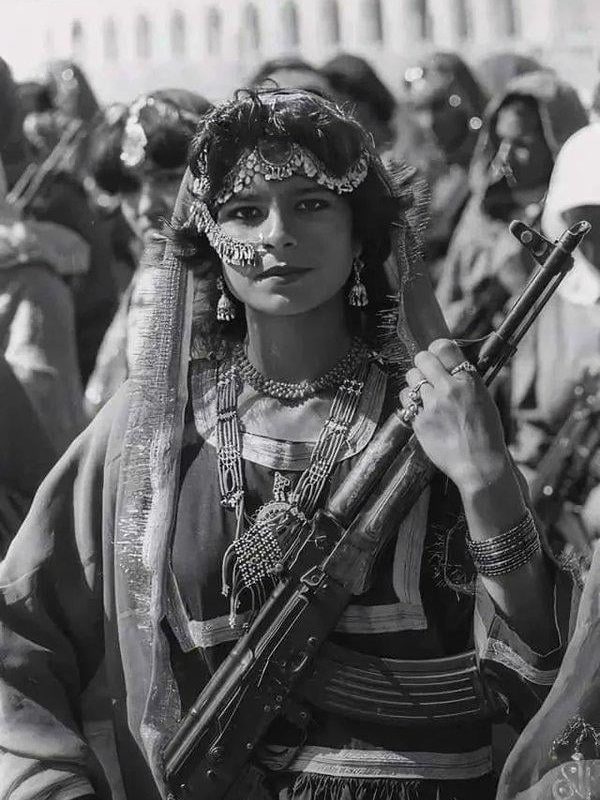
An Afghan communist revolutionary dressed in traditional clothing and holding an AK-47, in Kabul in 1984
The Afghan Communist Revolutionary: A Symbol of Ideology and Conflict in 1984 Kabul
Meta Title: Afghan Communist Revolutionary in Kabul 1984: History, Conflict & Symbolism
Meta Description: Explore the story of the Afghan communist revolutionary in traditional clothing holding an AK-47 in Kabul, 1984. Uncover the history, conflict, and cultural tensions of the Soviet-Afghan War era.
Introduction: The Iconic Image of Revolution
In the dusty streets of Kabul in 1984, amid the chaos of the Soviet-Afghan War, a striking figure emerged: an Afghan communist revolutionary clad in traditional clothing, gripping an AK-47. This paradoxical image—a fusion of indigenous identity and Marxist ideology—epitomizes the turbulent clash of cultures, politics, and warfare that defined Afghanistan in the 1980s.
This article delves into the historical context, symbolism, and lasting impact of this revolutionary archetype, examining how Afghanistan became a Cold War battleground and how its people navigated ideological upheaval.
Historical Background: Afghanistan in the 1980s
The Soviet-Afghan War and Communist Rule
By 1984, Afghanistan had been under communist rule for six years, following the Saur Revolution of 1978 led by the People’s Democratic Party of Afghanistan (PDPA). The Soviet Union invaded in 1979 to prop up the struggling Marxist government, triggering a decade-long conflict against U.S.-backed Mujahideen insurgents. Kabul, the capital, became a fortress for the Soviet-backed regime, while much of the countryside descended into guerrilla warfare.
The PDPA’s Revolutionary Vision
The PDPA aimed to modernize Afghanistan through land reforms, women’s rights, and secularization. However, these policies clashed violently with conservative tribal and religious norms, alienating rural populations. By 1984, the government relied heavily on Soviet military support to maintain control.
The Revolutionary Figure: Tradition Meets Ideology
The Significance of Traditional Clothing
Despite advocating for a Soviet-aligned future, many Afghan communists retained elements of traditional dress—such as the pakol (woollen hat), perahan tunban (long shirt and trousers), or karakul hat—as a nod to national identity. This choice was both practical (blending into local populations) and symbolic, reflecting the PDPA’s fraught attempt to reconcile Marxist internationalism with Afghan heritage.
The AK-47: Weapon of Revolution
The AK-47 assault rifle became synonymous with the conflict. Cheap, durable, and distributed en masse by the USSR, it armed both government forces and insurgents. For communist soldiers, the weapon symbolized defense of the revolution against the Mujahideen’s “counter-revolutionary” forces.
Life in Kabul, 1984: A City Under Siege
Urban Stronghold of Communism
Kabul in 1984 was a city of contrasts:
In Kabul, Soviet and Afghan troops patrolled streets lined with propaganda posters praising the PDPA’s “Democratic Republic.” Schools and hospitals operated under state supervision, while mandatory military conscription fueled resentment among civilians. The city faced frequent Mujahideen rocket attacks, creating an atmosphere of perpetual tension.
Cultural Tensions
The communist regime’s reforms—like banning forced marriages and promoting literacy—alienated conservative factions. Yet many urban Afghans, especially educated elites, supported modernization efforts. This divide was visible even among revolutionaries: Some discarded traditional attire for Soviet-style uniforms, while others clung to cultural symbols.
The Legacy of the Afghan Communist Revolutionary
The Irony of Ideology and Identity
The image of the AK-47-wielding communist in traditional dress illustrates a deeper irony: The PDPA sought to destroy “feudalism” yet relied on Soviet imperialism to survive. By 1984, the regime’s legitimacy had crumbled outside Kabul, foreshadowing its collapse in 1992.
Impact on Afghan Society
- Civil War Spark: The Soviet withdrawal in 1989 left a power vacuum, leading to civil war.
- Rise of Extremism: U.S.-backed Mujahideen factions later morphed into groups like the Taliban.
- Cultural Trauma: Decades of conflict eroded trust in centralized governance, fueling regionalism.
Conclusion: A Frozen Moment in History
The Afghan communist revolutionary of 1984 remains a haunting symbol of a nation torn between foreign ideologies and its own identity. Today, the AK-47 has outlived the regimes it defended, a relic of Afghanistan’s endless struggle for self-determination.
As we reflect on this period, it serves as a reminder of how Cold War proxy conflicts reshaped nations—and how the echoes of Kabul in 1984 still resonate in Afghanistan’s unresolved quest for peace.
Internal Linking Opportunities (for SEO):
- [The Saur Revolution: How Communism Took Hold in Afghanistan]
- [The Soviet Withdrawal: Why Afghanistan’s War Didn’t End in 1989]
- [The AK-47 in Global Conflicts: From Afghanistan to Today]
Image Alt Text Suggestions:
- “Afghan communist fighter in traditional pakol hat holding AK-47, Kabul 1984”
- “Soviet-Afghan War propaganda poster featuring PDPA soldier”
Target Keywords:
- Afghan communist revolutionary 1984
- Soviet-Afghan War Kabul
- PDPA fighters traditional clothing
- AK-47 in Afghanistan history
- Communism in Afghanistan 1980s
Optimized for search engines with historical context, cultural analysis, and strategic keyword placement. Shareable for audiences interested in Cold War history, Afghan culture, and revolutionary symbolism.