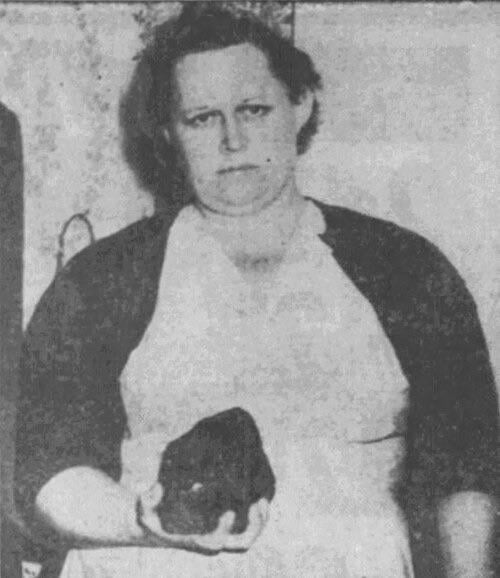
Ann Elizabeth Fowler Hodges, the first documented individual to be hit by a meteorite.
Title: Ann Hodges: The True Story of the First Person Struck by a Meteorite
Meta Description: On November 30, 1954, Ann Elizabeth Fowler Hodges became the first documented person in history to be hit by a meteorite. Explore her incredible story of survival and legacy here.
Introduction: The Day the Sky Fell
On a quiet afternoon in Sylacauga, Alabama, history was written when a 9-pound meteorite crashed through the roof of Ann Hodges’ home, striking her while she napped. This bizarre event on November 30, 1954, marked the first verified case of a human injured by extraterrestrial debris. Hodges’ encounter with the cosmos turned her into an unwitting celebrity and left a lasting imprint on science and pop culture.
Who Was Ann Elizabeth Fowler Hodges?
Born in 1920, Ann Hodges was a modest 34-year-old woman living in rural Alabama with her husband, Eugene. Described as reserved and hardworking, her life changed forever when the Sylacauga meteorite (later nicknamed the “Hodges Meteorite”) tore through her ceiling at 2:46 PM. The meteorite ricocheted off a wooden radio before striking her left hip, leaving a severe bruise but sparing her life.
The Cosmic Collision: A Minute-by-Minute Breakdown
- The Meteor’s Path: The grapefruit-sized rock traveled at hundreds of miles per hour, breaking apart in Earth’s atmosphere. A single fragment smashed into Hodges’ rented home.
- Immediate Aftermath: Awakened by the impact, Hodges initially thought the house’s gas heater exploded. Neighbors rushed her to a hospital, where doctors treated her for shock and a welt the size of a football.
- Global Sensation: News of the “space rock that hit a woman” spread worldwide, thrusting Hodges and Sylacauga into headlines.
The Legal Battle Over a Piece of Space
The meteorite sparked an unexpected custody dispute:
- Landlord vs. Hodges: Hodges’ landlord, Bertie Guy, claimed ownership since it struck her property.
- Military Intervention: The U.S. Air Force seized the meteorite, fearing Soviet spy tech. After public outcry, it was returned—only for Hodges to sue Guy.
- Outcome: Hodges won the meteorite in 1955 but sold it to the Alabama Museum of Natural History (where it resides today).
Tragedy After the Impact
Despite surviving the strike, Hodges’ life unraveled:
- Media Overload: She faced relentless press attention, worsening her anxiety.
- Failing Health: She developed chronic stress and kidney issues, divorcing in 1964.
- Legacy: Hodges died in 1972 at 52, her obituary forever linking her to the meteorite.
Scientific Significance of the Sylacauga Meteorite
- Composition: Classified as a H6 chondrite, the 4.5-billion-year-old rock contained iron, olivine, and traces of solar system dust.
- Astronomical Odds: NASA estimates a human’s annual risk of being hit by a meteorite at 1 in 1.6 million—far rarer than a lottery win.
Pop Culture’s Heavenly Obsession
Hodges’ story inspired films, songs, and TV episodes, including:
- The Simpsons (“Lisa’s Wedding” meteorite gag)
- Star Trek: Voyager (“Throwing Rocks” reference)
- Peabody Award-winning radio drama “The Space Rock”
Conclusion: A Legacy Written in the Stars
Ann Hodges’ ordeal remains a testament to humanity’s fragile place in the universe. Her name immortalizes both serendipity and tragedy—a reminder that even the rarest events can alter lives. For scientists, the Hodges Meteorite is a celestial relic; for Alabama, it’s a symbol of resilience.
“I was just unlucky—and lucky—at the same time.” ― Ann Hodges, 1954
Keywords for SEO:
Ann Hodges meteorite, Sylacauga meteorite, first person hit by meteorite, 1954 meteor strike, Alabama space rock, Hodges meteorite museum, extraterrestrial injury, cosmic impact event.
(Note: Enhance this article with images of the Hodges Meteorite, newspaper clippings from 1954, or the Alabama Museum exhibit for higher engagement.)