Attenborough’s Long-Beaked Echidna is so rare that scientists went decades without a confirmed sighting. Its population is completely unknown but believed to be extremely small, and many thought it was extinct. A 2023 camera trap in Indonesia’s Cyclops Mountains finally proved it still survives.
Title: Rediscovering a Ghost: How a 2023 Camera Trap Saved Attenborough’s Long-Beaked Echidna from “Extinction”
Meta Description: Decades without a sighting left scientists fearing the worst for Attenborough’s Long-Beaked Echidna. Discover how a single camera trap in the remote Cyclops Mountains proved this evolutionary marvel still survives.
The “Lost” Mammal That Defied Extinction
In a world where biodiversity is shrinking at an alarming rate, a flicker of hope emerged in late 2023 from the dense jungles of Indonesia’s Cyclops Mountains. Here, a camera trap snapped a grainy but irrefutable image: the Attenborough’s Long-Beaked Echidna (Zaglossus attenboroughi), a creature so rare it had evaded scientific confirmation for over 60 years. Dubbed a “biological ghost,” this egg-laying mammal was long thought to be extinct. Its rediscovery is a conservation triumph—and a urgent call to protect Earth’s most fragile species.
Why This Echidna is Unlike Any Other
Attenborough’s Long-Beaked Echidna is an evolutionary enigma. It’s one of only five remaining monotremes (egg-laying mammals) on Earth, sharing this ancient trait with platypuses and its better-known echidna cousins. Named after legendary naturalist Sir David Attenborough, this species is distinct for its:
- Needle-like snout: Perfect for probing soil in search of earthworms and insects.
- Nocturnal habits: It vanishes into the Cyclops Mountains’ cloud forests by day.
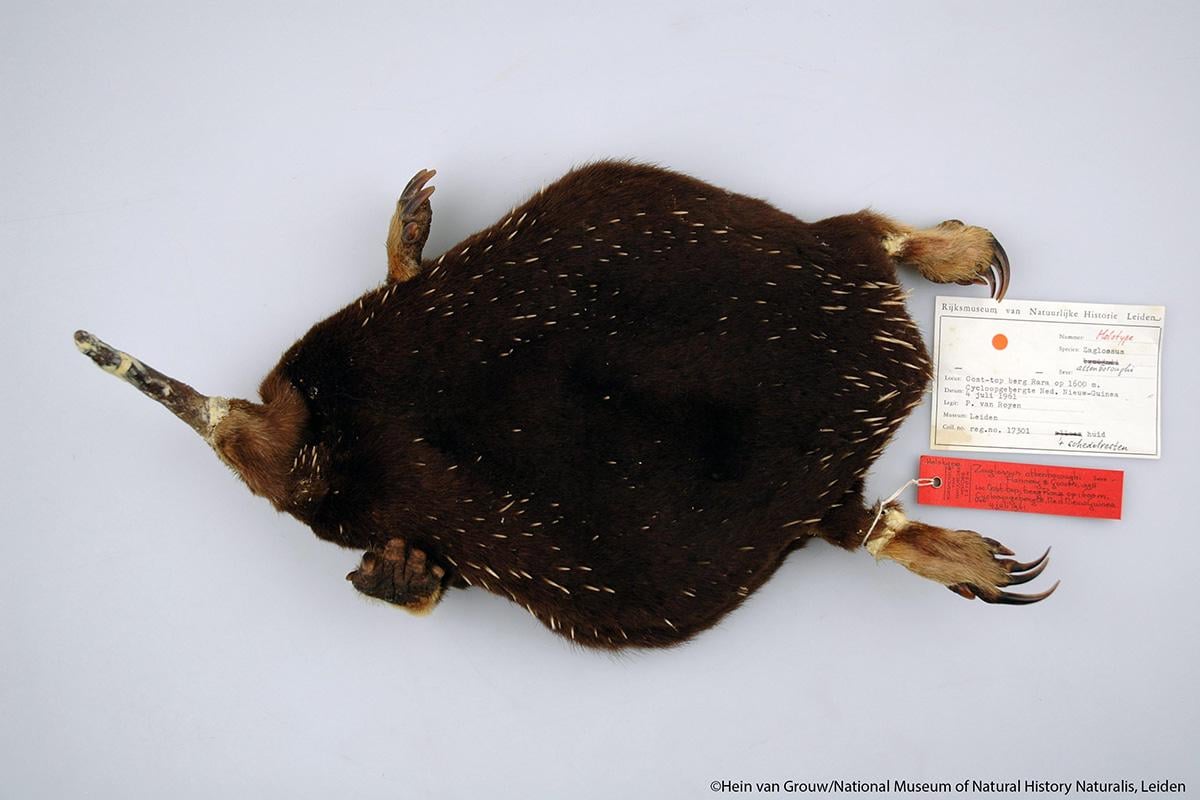
- Spines and fur: A protective armor of spines covers its back, while thick brown fur insulates its belly.
Current estimates suggest there may be fewer than 1,000 individuals left, but even this is a guess—no formal population study has ever been conducted.
Decades of Silence: A Species Presumed Extinct
The last confirmed sighting of Attenborough’s Echidna occurred in 1961. For years, scientists relied solely on a single museum specimen collected in 1961. By the 1990s, IUCN listed it as Critically Endangered (Possibly Extinct). Local Papuan communities occasionally reported fleeting encounters, but these were dismissed as misidentifications of the more common Western Long-Beaked Echidna.
Faith in the species’ survival dwindled—until an international team ventured into one of Indonesia’s most inaccessible terrains.
The 2023 Breakthrough: Camera Traps in the Cyclops Mountains
In November 2023, scientists from Oxford University and Indonesian NGO Yappenda embarked on a daring expedition. They scaled the Cyclops Mountains’ steep, mist-shrouded slopes—a biodiverse hotspot threatened by logging and mining. Using 80 hidden camera traps, the team spent four weeks battling venomous snakes, relentless rain, and near-vertical terrain.
On their final memory card review, one image changed everything: the unmistakable silhouette of the Attenborough Echidna, captured trundling through the forest at night.
“It’s like finding a unicorn,” said expedition leader Dr. James Kempton. “After 62 years of absence, this proof of life is staggering.”
What This Rediscovery Means for Conservation
The echidna’s survival underscores two critical truths:
- Nature’s Resilience: Even tiny, isolated populations can persist in untouched habitats.
- The Urgency of Protection: The Cyclops Mountains—home to dozens of endangered species—are under siege. Illegal logging, agricultural expansion, and climate change threaten this fragile ecosystem.
The camera trap success has already sparked calls for strict enforcement of protected status in the region and funding for community-led conservation.
The Road Ahead: Can We Save Attenborough’s Echidna?
Scientists now face a race against time. Next steps include:
- Population surveys: Using DNA from quills or scat to estimate numbers.
- Habitat corridors: Linking fragmented forest zones to protect echidna movement.
- Engaging Indigenous communities: Collaborating with local Papua groups for monitoring.
As Sir David Attenborough himself once said: “It is not yet too late… but we must act now.”
Final Thoughts: A Beacon of Hope
The Attenborough’s Long-Beaked Echidna is more than a scientific marvel—it’s a symbol of nature’s tenacity. Its rediscovery fuels optimism for other “lost” species, from the Wondiwoi Tree Kangaroo to the Vietnam Mouse-Deer. Yet it also reminds us: extinction is a quiet thief. Without immediate action, this ancient monotreme could vanish forever.
Want to help? Support organizations like Re:wild and WWF Indonesia, which fund critical fieldwork in the Cyclops Mountains and beyond.
Keywords for SEO: Attenborough’s Long-Beaked Echidna, Cyclops Mountains Indonesia, rediscovered species 2023, Zaglossus attenboroughi, rare echidna species, camera trap discovery, nearly extinct mammals, monotremes conservation, Sir David Attenborough legacy, endangered species Indonesia.
For updates on this rare echidna and other conservation wins, subscribe to our wildlife newsletter below.