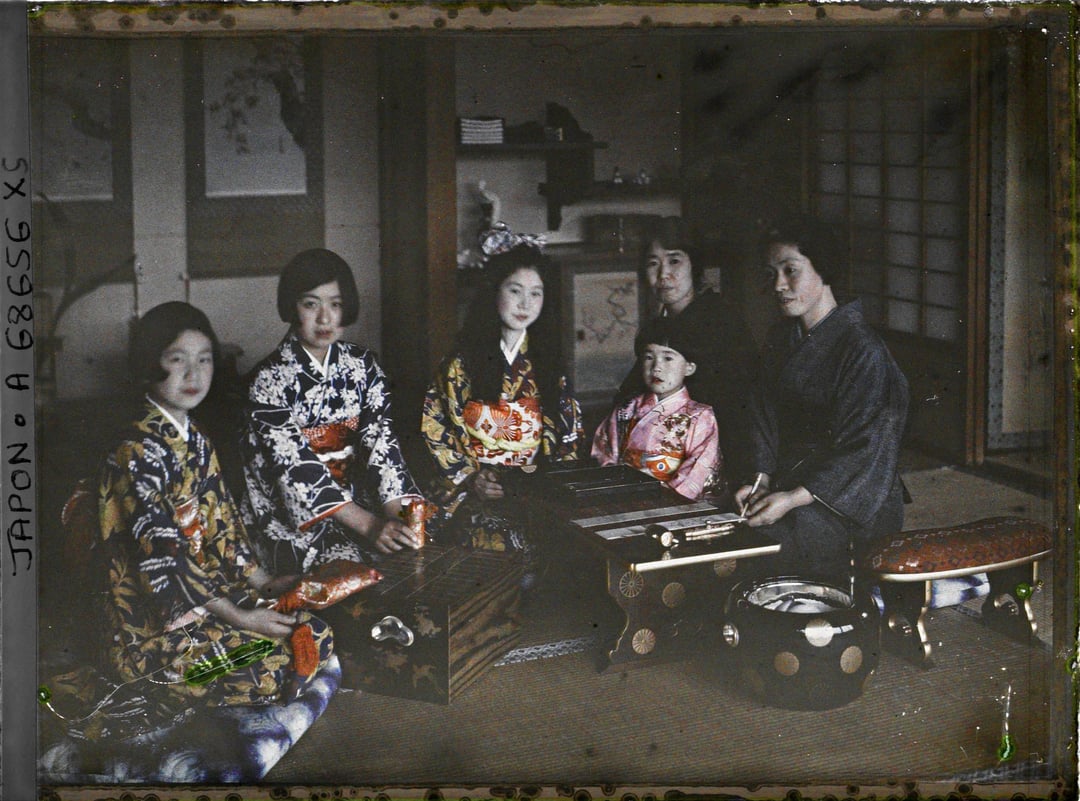
Autochrome shots of Japanese family in their living room, Tokyo Japan, 1926.
Time Capsule in Color: Autochrome Photos of a Japanese Family in 1926 Tokyo
In an era dominated by black-and-white imagery, the rare and luminous autochrome photographs of a Japanese family in their Tokyo living room (circa 1926) offer a breathtaking portal into everyday life during a transformative period in Japan’s history. These images, captured using the pioneering Lumière brothers’ color process, reveal intimate details of domesticity, fashion, and cultural fusion in early 20th-century Japan. Let’s explore the significance of these autochrome treasures and the world they immortalize.
What Are Autochrome Photographs?
The autochrome process, patented in 1903 by French inventors Auguste and Louis Lumière, revolutionized photography as the first commercially viable method to produce color images. The technique involved coating glass plates with microscopic grains of potato starch dyed red, green, and blue-violet, acting as filters to capture vibrant, painterly hues. Though labor-intensive and delicate, autochromes preserved fleeting moments with a soft, ethereal quality unmatched by monochrome. By the 1920s, this technology had reached Japan, enabling photographers to document the nation’s blend of tradition and modernity in living color.
Tokyo 1926: A City in Flux
The mid-1920s marked Japan’s Taishō era (1912–1926), a time of rapid urbanization and cultural change. Tokyo, still rebuilding from the catastrophic 1923 Great Kantō Earthquake, embodied resilience and reinvention. Western influences permeated fashion, architecture, and daily life, yet Japanese traditions remained deeply rooted. The autochrome photos of a middle-class family in their home encapsulate this duality—a “window” into a society balancing global aspirations with its heritage.
Inside the Living Room: A Snapshot of Daily Life
The autochrome images depict a serene domestic scene, rich with symbolic and material details:
-
Architecture & Décor
- The living room (ima) features tatami mats and translucent shoji screens, hallmarks of traditional Japanese design.
- A low wooden table (chabudai) anchors the space, surrounded by floor cushions (zabuton) for seating.
- Subtle Western touches appear: a framed oil painting hangs beside calligraphy scrolls, and a pendulum clock sits beside an incense burner.
-
Family & Dress
- A multi-generational family poses gracefully—grandparents in kimono (wafuku), parents in hybrid attire (mother in a mofuku mourning kimono; father in a tailored suit), and children in school uniforms.
- The subdued palette of the autochrome—muted indigos, moss greens, and earthy browns—accentuates the textiles’ intricate patterns.
-
Objects & Rituals
- A tokonoma alcove displays a seasonal floral arrangement (ikebana) and ceramic vase, reflecting the family’s aesthetic values.
- Tea sets and lacquered trays suggest the ritual of hospitality (omotenashi), central to Japanese culture.
Cultural Significance: Tradition Meets Modernity
These images capture Japan’s “dual identity” in the 1920s:
- Urban Middle-Class Life: Tokyo’s burgeoning salaried class embraced modern conveniences (electric lighting, radios) while cherishing ancestral customs.
- Gender Roles: Women’s kimono styles denote marital status and social standing, while younger generations adopt Western dresses and short hairstyles (moga or “modern girls”).
- Westernization vs. Preservation: The living room’s hybridity mirrors Japan’s broader cultural negotiations—adopting imported ideas without erasing its unique identity.
Legacy of Autochrome: Why These Photos Matter
Autochrome photos of 1920s Japan are vanishingly rare due to the fragility of glass plates and WWII destruction. Surviving examples, like these family portraits, serve as:
- Historical Documents: They counteract exoticized Western depictions of Japan, showing authentic, unfiltered domesticity.
- Artistic Milestones: The Lumière process transformed photography into a medium capable of poetic realism, influencing Japanese Pictorialism.
- Emotional Bridges: The warmth of color humanizes history, making distant lives relatable to modern audiences.
Conclusion: A Moment Frozen in Hues
The autochrome shots of a Tokyo family in 1926 transcend mere documentation—they are spectral visions of a world poised between past and future. As Japan rebuilt from disaster and raced toward modernity, these quiet, color-drenched moments remind us that even amid upheaval, the rhythms of family and home endure. For historians and art lovers alike, they remain irreplaceable windows into a luminous, vanishing world.
(Explore more early 20th-century autochrome collections at the Albert Kahn Museum or Tokyo Photographic Art Museum to delve deeper into this captivating chapter of visual history.)