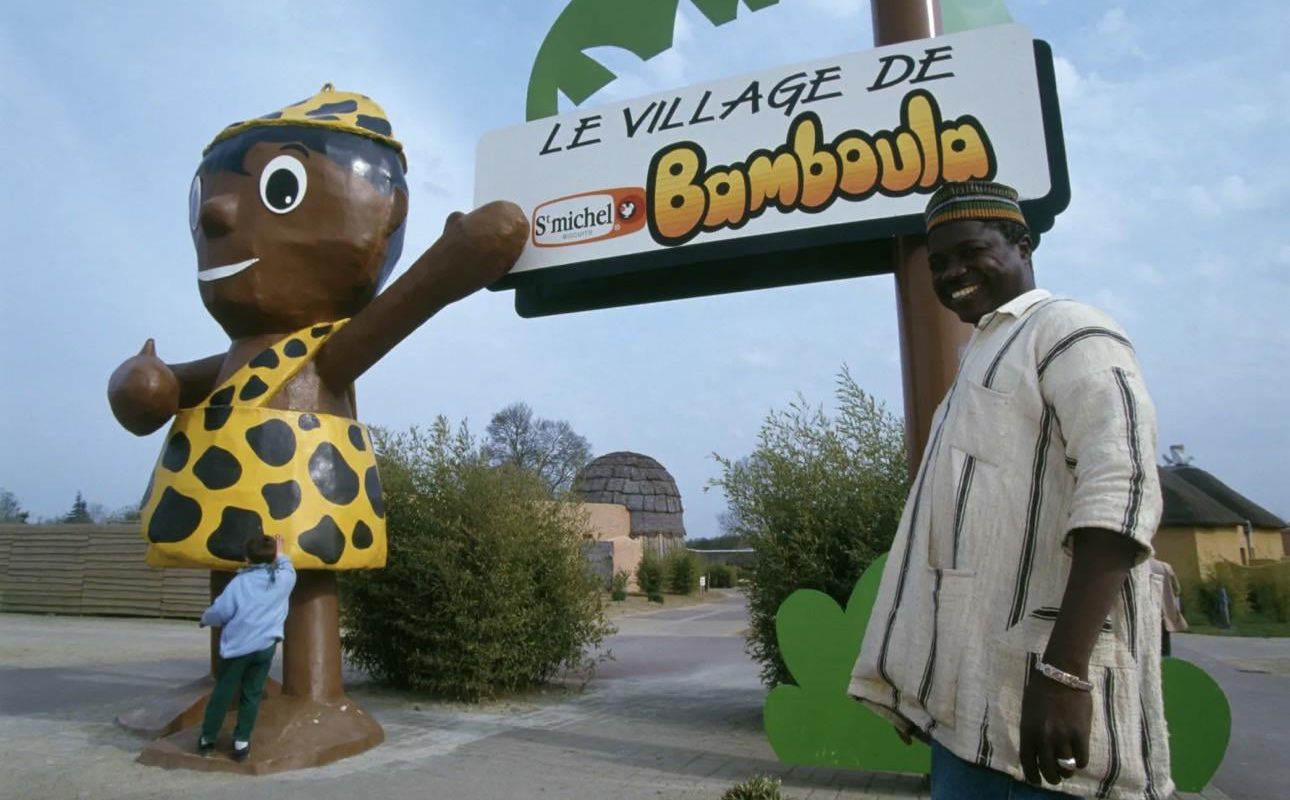
Bamboula Village, the racist Zoo where visitors paid to see black people in 1994
Meta Title: Bamboula Village: France’s Shameful 1994 “Human Zoo” & Its Racist Legacy
Meta Description: Explore the disturbing history of Bamboula Village, a 1994 French “human zoo” where Black performers were displayed for profit. Learn about its racist origins and lasting impact.
Bamboula Village: The Racist “Human Zoo” That Exploited Black People in 1994
In 1994, at the height of global efforts toward racial equality and human rights, France faced international outrage over Bamboula Village—a so-called “African-themed” attraction where visitors paid to gawk at Black performers in a degrading mock village. This modern-day human zoo reignited painful memories of colonial-era racism, sparking protests and forcing society to confront its tolerance for dehumanizing entertainment.
What Was Bamboula Village?
Bamboula Village was a temporary exhibition launched during the summer of 1994 as part of the Leisure Park of Port-Saint-Père near Nantes, France. Marketed as an “authentic African village,” the attraction featured:
- A recreated Senegalese village with huts and “traditional” props.
- 30 Black performers (mostly Senegalese men and women) paid to act out stereotyped daily routines—cooking, crafting, and dancing—for predominantly white audiences.
- Tickets sold for $12–15 USD, with no historical context or acknowledgment of colonialism’s violence.
Visitors could openly photograph and stare at the performers as if they were zoo animals, reducing human beings to caricatures of “exotic” African life.
The Dark History Behind “Human Zoons”
Bamboula Village was not an outlier. It echoed centuries of racist ethnographic exhibitions that began in the late 1800s, when European colonizers showcased Indigenous and African people in cages or staged villages for public amusement. Notably:
- The 1889 Paris World Fair exhibited 400 Indigenous people in “human zoos,” drawing 28 million viewers.
- Joséphine Baker, the famed Black entertainer, was forced to perform in a similar “native village” in 1931.
- Germany’s Augsburg Zoo displayed Somali people in 1930, and Brussels’ 1958 World Fair included a Congolese exhibit.
France hosted at least 34 human zoos between 1877 and 1931, conditioning generations to equate non-white bodies with spectacle.
Backlash & Outrage Against Bamboula Village
Though organizers claimed Bamboula Village “celebrated cultural exchange,” activists immediately condemned it. Some voices of protest included:
- SOS Racisme, a French anti-racism NGO, denounced the attraction as a “disgrace” and “unacceptable degradation.”
- The French League of Human Rights called for its closure, citing the nation’s “collective amnesia” about colonial brutality.
- The Marches for Equality movement likened it to 19th-century “scientific racism.”
Public pressure and international media scrutiny forced Bamboula Village to close after just four months.
The Aftermath: Apologies & Ongoing Reckoning
While Bamboula Village was short-lived, its damage lingered:
- No compensation or formal apology was ever issued to performers.
- In 1999, workers alleged exploitative conditions, claiming they were paid $45/month to endure humiliation.
- Similar exhibits appeared in the 2000s in Europe (e.g., Germany’s Augsburg Zoo “African Village” in 2005).
In 2021, Nantes—a port city enriched by the transatlantic slave trade—opened a Memorial to the Abolition of Slavery, reflecting on its complicity in racial violence. Bamboula Village remains a shameful chapter in this reckoning.
Why Bamboula Village Matters Today
This episode reveals how systemic racism persists in modern tourism. Bamboula Village commodified Blackness in the same way colonial fairs did, proving systems of oppression adapt without disappearing.
Key Lessons:
- Dehumanizing entertainment reinforces harmful stereotypes.
- True “cultural exchange” requires consent, dignity, and historical truth.
- Silence enables racism—Bamboula Village thrived because institutions let exploitation go unchallenged.
Keywords: Bamboula Village Human Zoo, Racist Zoo France 1994, Colonial Human Exhibits, African Village France, Ethnographic Exhibitions, Human Zoos History, Exploitative Tourism, SOS Racisme Protest