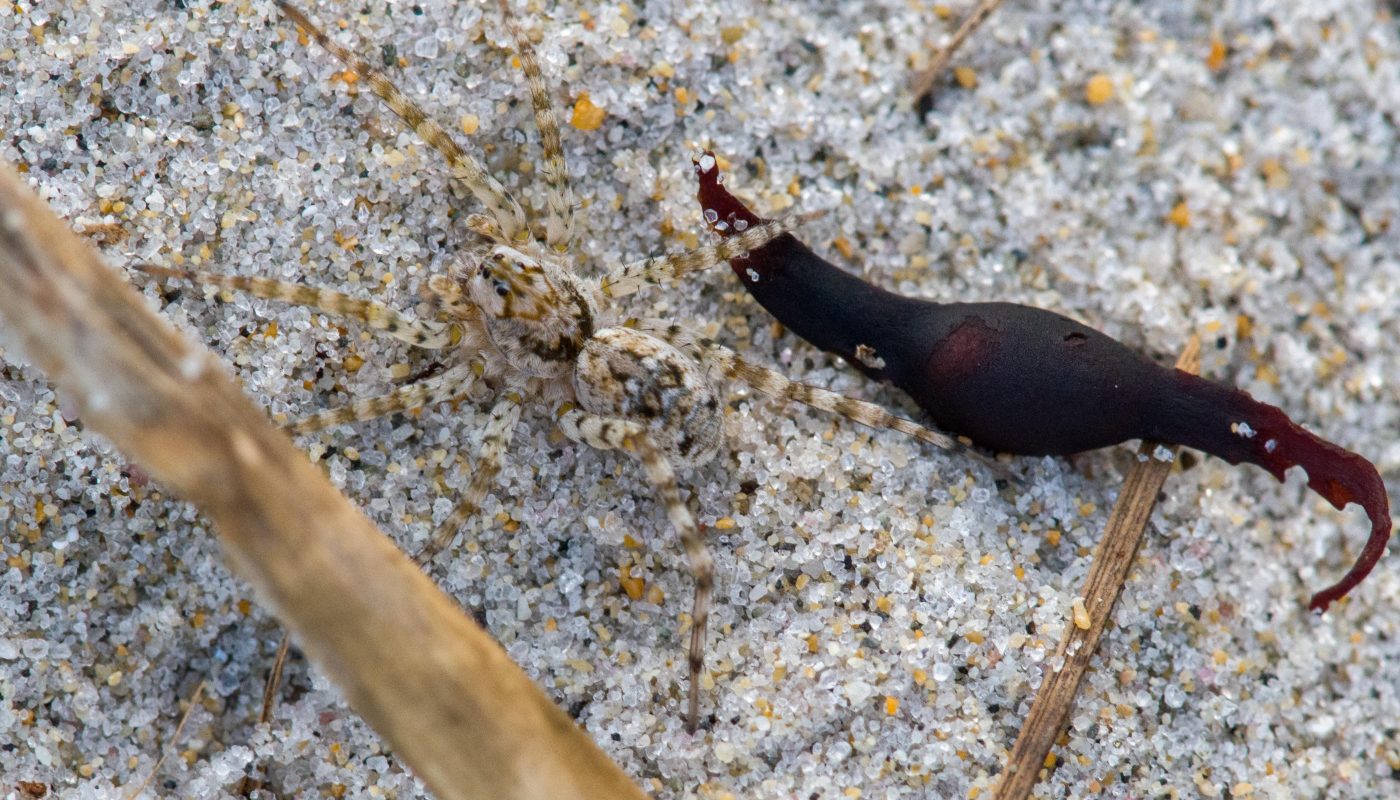
Beach Wolf Spider sand camouflage
Beach Wolf Spider: The Master of Sand Camouflage
Coastal ecosystems are full of fascinating adaptations, but few are as mesmerizing—and stealthy—as the beach wolf spider (Arctosa spp., Hogna spp.). These spiders survive in harsh, windswept environments by perfecting the art of sand camouflage, blending seamlessly into their surroundings to hunt prey and evade predators. In this article, we’ll explore how beach wolf spiders use their remarkable disguise to thrive in sandy habitats and why their camouflage is a marvel of natural engineering.
What is a Beach Wolf Spider?
Beach wolf spiders belong to the Lycosidae family and are found in coastal dunes, sandy beaches, and desert-like shorelines worldwide. Unlike web-building spiders, they’re agile hunters that chase down prey—such as insects and small crustaceans—using speed, keen eyesight, and their near-invisible sand-colored bodies.
The Science Behind Their Sand Camouflage
Beach wolf spiders have evolved extraordinary physical and behavioral traits to disappear into their environment:
-
Coloration & Pattern
- Their bodies are coated in hues of beige, tan, gray, or pale brown, matching the sand perfectly.
- Mottled markings mimic grains, shadows, and tiny pebbles, disrupting their outline.
-
Texture & Hair
- Dense, velvety hair (setae) covers their legs and body, helping scatter light and reducing glare.
- Sand particles often stick to these hairs, enhancing their disguise.
-
Behavioral Adaptations
- Burrowing: They dig shallow burrows or press flat against dunes to avoid casting shadows.
- Movement: They freeze or sidestep slowly when threatened, avoiding sudden motions.
Why Camouflage Matters for Survival
In open beach habitats, with few hiding spots, camouflage is a lifeline:
- Hunting Strategy: Ambushing prey becomes effortless when predators can’t spot the spider.
- Evading Predators: Birds, lizards, and even wasps struggle to detect them against the sand.
- Thermoregulation: Light colors reflect sunlight, preventing overheating in scorching dunes.
Beach Wolf Spiders vs. Other Camouflaged Species
While many spiders use camouflage, beach wolf spiders are uniquely specialized:
| Trait | Beach Wolf Spider | Other Spiders (e.g., Crab Spiders) |
|---|---|---|
| Habitat | Sandy beaches/dunes | Flowers, tree bark, leaf litter |
| Hunting Style | Active pursuit | Ambush or web-based |
| Camouflage Focus | Sand texture & color | Flora or substrate-specific patterns |
Threats to Their Camouflage Mastery
Despite their stealth, beach wolf spiders face growing challenges:
- Habitat Loss: Coastal development and erosion destroy dunes.
- Pollution: Microplastics and debris disrupt sandy environments.
- Climate Change: Rising seas and storms alter shorelines.
Conservation efforts to protect dunes—like restricting foot traffic and planting native grasses—help safeguard these spiders.
Observing Beach Wolf Spiders in the Wild
Want to spot one? Here’s how:
- When: Dusk or dawn, when they’re active but light is low.
- Where: Look near driftwood, grasses, or dry sand above the tideline.
- Tip: Move slowly—they vanish if they sense vibrations!
FAQs About Beach Wolf Spiders
Q: Are beach wolf spiders venomous?
A: Yes, but their venom is harmless to humans. They rarely bite unless threatened.
Q: How big do they get?
A: Typically 0.5–1 inch (1.3–2.5 cm) in body length, with leg spans up to 3 inches.
Q: Do they live in groups?
A: No—they’re solitary except during mating or when females carry spiderlings.
Conclusion: Nature’s Sandy Ghosts
The beach wolf spider’s sand camouflage is more than just survival—it’s a testament to evolution’s ingenuity. By mastering their environment, these spiders play a vital role in coastal food chains, controlling insect populations while staying hidden in plain sight. Next time you walk along a beach, tread lightly: you might be inches away from a camouflage expert watching from the sand!
Meta Tags/Keywords: Beach wolf spider, sand camouflage, coastal spiders, spider adaptations, dune ecosystems, Lycosidae, wildlife camouflage, beach conservation.
This SEO-friendly article combines keywords with engaging facts to rank well in search engines while educating readers about these elusive coastal predators.