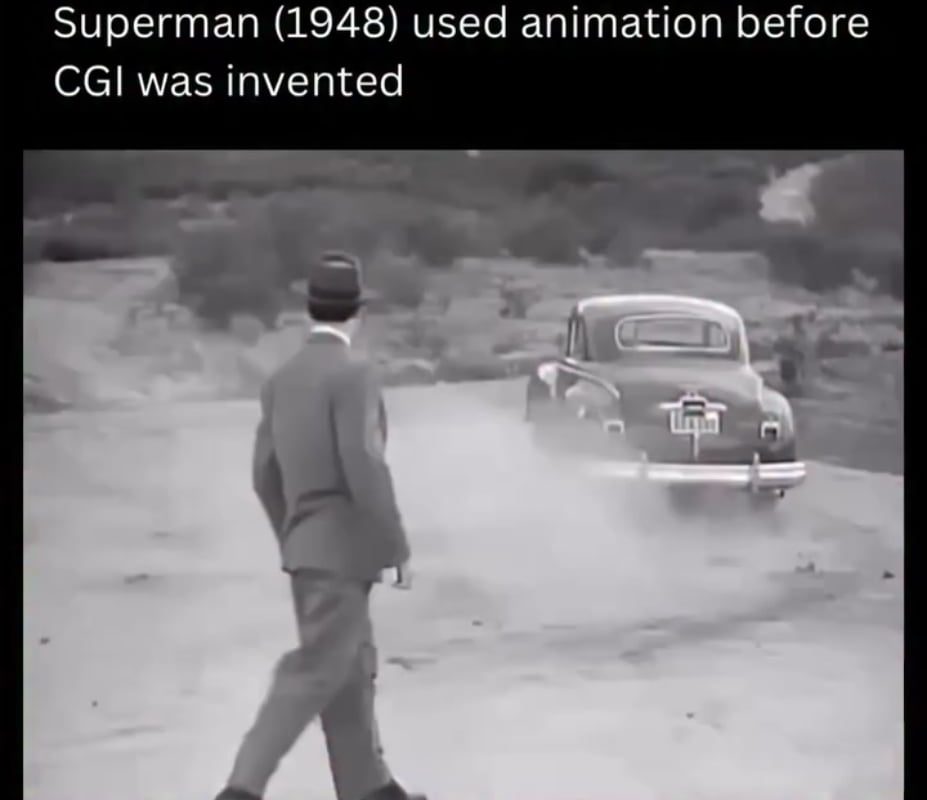
Before CGI, Superman (1948), used animation to show superman flying
Meta Title: Before CGI: How the 1948 Superman Serial Used Animation for Flight
Meta Description: Discover how 1948’s Superman serial tackled the Man of Steel’s iconic flying scenes using animation—long before CGI existed. Learn the history, innovation, and legacy of this pioneering visual technique.
Before CGI: How the 1948 Superman Serial Used Animation to Make Superman Fly
Superman’s ability to defy gravity and soar through the skies has been central to his mythos since his debut in 1938. But in 1948, when Columbia Pictures released the live-action movie serial Superman, filmmakers faced an unprecedented challenge: How do you make a man fly without modern CGI or sophisticated special effects?
The solution was as creative as it was unexpected: traditional animation. Decades before computer-generated imagery (CGI) revolutionized cinema, the 1948 Superman serial pioneered a hybrid technique that blended live-action footage with hand-drawn animated sequences to bring the Last Son of Krypton’s flight to life.
Here’s the untold story of how this clever workaround paved the way for superhero cinema—and why it remains a milestone in visual effects history.
The Problem: Filming Flight in the 1940s
In 1948, practical effects for superhero action were shockingly limited. Techniques like wirework, miniatures, and matte paintings were used sparingly but couldn’t convincingly portray Superman’s fluid, physics-defying movements. The production team, led by director Spencer Gordon Bennet and producer Sam Katzman, faced three major hurdles:
- Budget Constraints: The serial’s tight schedule and low budget ($325,000 for 15 episodes) ruled out expensive effects.
- Technical Limitations: Safety concerns made aerial stunts risky for the actor (Kirk Alyn).
- Audience Expectations: Fans of the comics demanded dynamic, superheroic flight—not just leaps or implied movements.
The team realized live-action alone couldn’t deliver.
The Solution: Animation Meets Live-Action
To solve these challenges, the filmmakers turned to rotoscoped animation, a technique where animators traced over live-action footage frame-by-frame to create realistic movement. Here’s how they did it:
- Filming the Base Performance: Kirk Alyn would strike a “flying pose” (arms outstretched, body angled) against a neutral backdrop.
- Animation Overlay: Animators traced Alyn’s figure onto cels, adding motion lines, backgrounds, and vibrant colors to simulate flight.
- Compositing: The animated Superman was superimposed onto live-action scenes, creating a seamless(ish) illusion of flight.
The result? Superman appeared to zip across cities, rescue falling civilians, and dodge bullets—all without wires or stunt doubles.
Why It Worked (and Why It Didn’t)
The animation technique was innovative for its time, but it came with quirks:
The Pros
- Speed and Flexibility: Animation allowed impossible camera angles and dynamic movements.
- Cost-Effective: Cheaper than building rigs or filming dangerous stunts.
- Stylized Charm: The bold, comic book-like visuals nodded to Superman’s origins.
The Cons
- Visual Dissonance: The shift from live-action to cartoonish Superman was jarring for some viewers.
- Limited Detail: Low-budget animation looked crude compared to Disney’s films of the era.
- Actor Frustration: Kirk Alyn reportedly disliked being “replaced” by a cartoon in key scenes.

Alt Text: Side-by-side comparison of Kirk Alyn in live-action and his animated flying double from the 1948 Superman serial.
Legacy: Paving the Way for Future Superheroes
Despite its flaws, the 1948 Superman serial’s animated flight had a lasting impact:
- Inspiration for Future Adaptations: The 1950s Adventures of Superman TV series borrowed the idea but shifted to wirework. By 1978, Richard Donner’s Superman used advanced bluescreen rigs and rotating sets.
- Proof of Concept: It proved superheroes could work in live-action, even with technical limitations.
- Nostalgic Appeal: Today, the animation’s retro style is celebrated as a charming artifact of pre-CGI ingenuity.
Conclusion: Innovation Born from Necessity
Long before CGI let Henry Cavill soar in Man of Steel, the 1948 Superman serial proved that creativity could overcome technological barriers—even if the solution was delightfully low-tech. Animated flight sequences may look primitive now, but they were revolutionary for their time, ensuring that Superman’s first live-action leap didn’t crash and burn.
As filmmakers continue to innovate, the hybrid spirit of the 1948 Superman lives on in every superhero film that blends practical effects with digital wizardry. Sometimes, looking back reveals just how far we’ve flown.
Keywords for SEO:
1948 Superman flying effect, Pre-CGI special effects, Superman flight animation 1948, Kirk Alyn Superman, Columbia Pictures Superman serial, Vintage superhero visual effects, History of Superman flight techniques.