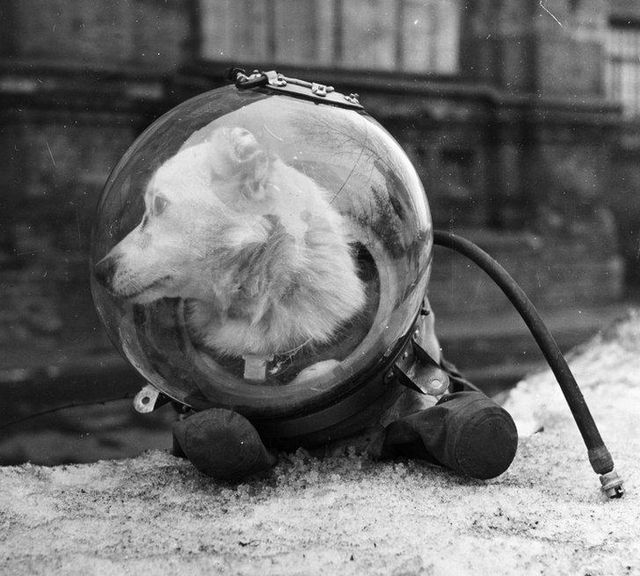
Belka and Strelka The Space Dogs Upon Returning From their Cosmic Voyage. USSR, August 1960
Title: Belka and Strelka: The Soviet Space Dogs Who Orbited Earth and Returned as Heroes
Meta Description: Discover the incredible story of Belka and Strelka, the Soviet space dogs who survived their historic 1960 orbital mission. Learn about their journey, legacy, and impact on human space exploration.
Belka and Strelka: The First Earth-Orbiting Survivors
In the fierce rivalry of the Cold War space race, the USSR achieved a groundbreaking milestone on August 19, 1960, when two stray dogs named Belka (“Squirrel”) and Strelka (“Little Arrow”) became the first living creatures to orbit Earth and return alive. This mission not only paved the way for human spaceflight but also turned these canine cosmonauts into global icons of Soviet ingenuity.
The Mission: A Leap Toward Human Space Travel
The flight of Belka and Strelka aboard Sputnik 5 marked a critical victory for the Soviet space program. Just three years after the tragic fate of Laika—the first dog in space, who perished during her 1957 mission—the Soviets aimed to prove that safe return from orbit was possible.
- Launch Date: August 19, 1960
- Spacecraft: Korabl-Sputnik 2 (Sputnik 5)
- Flight Duration: 25 hours, completing 17 orbits around Earth
- Crew: Belka, Strelka, 42 mice, 2 rats, flies, plants, and fungi
Scientists monitored the dogs’ vital signs, behavior, and reactions to microgravity. Remarkably, both survived the intense G-forces of launch, radiation exposure, and re-entry. Their safe return validated the spacecraft’s life-support systems and landing technology—a vital step before sending humans into space.
The Heroes’ Welcome: From Strays to Stars
Upon landing in Kazakhstan, Belka and Strelka instantly became Soviet superstars. State media celebrated their achievement, showcasing them as proof of the USSR’s technological prowess.
- Global Fame: Their images dominated newspapers, posters, and documentaries worldwide, softening Cold War tensions through their universal appeal.
- Continued Contributions: Both dogs lived out their lives comfortably at a Soviet research facility. Strelka even gave birth to six puppies, one of which (Pushinka) was gifted to U.S. President John F. Kennedy’s daughter in 1961 as a goodwill gesture.
Scientific Legacy: Paving the Path for Gagarin’s Flight
The data from Belka and Strelka’s mission was instrumental in preparing for Yuri Gagarin’s historic flight just eight months later on April 12, 1961. Key findings included:
- Physiological stability during sustained weightlessness.
- Effectiveness of food dispensers, air-recycling systems, and safety protocols.
- Evidence that living organisms could withstand prolonged space travel.
Their success silenced skeptics and fueled confidence in the Soviet Vostok program, which ultimately launched the first human into space.
Pop Culture Icons: The Dogs Who Conquered Space
Belka and Strelka transcended science to become cultural symbols:
- Film & Animation: A 2010 Russian animated film, Space Dogs, fictionalized their adventure.
- Stamps & Monuments: Their faces adorned Soviet stamps, coins, and statues, including displays at Moscow’s Memorial Museum of Cosmonautics.
- Merchandise: Plush toys, comics, and children’s books kept their legacy alive for generations.
Conclusion: A Bark Heard Across the Cosmos
Belka and Strelka’s journey proved that life could not only survive but thrive in space. Their courage advanced human space exploration and demonstrated the USSR’s dominance in the early space race. Today, their preserved bodies remain on display in Moscow, reminding the world of their historic voyage—a testament to science, survival, and the unlikely heroes who made the stars a little closer to Earth.
SEO Keywords: Belka and Strelka, Soviet space dogs, first animals in space, Sputnik 5, USSR space program, 1960 space mission, Cold War space race, dogs in space history, Yuri Gagarin precursor.
Image Alt Text Suggestions:
- “Belka and Strelka in their space capsule, 1960.”
- “Soviet stamp commemorating the space dogs Belka and Strelka.”
- “Strelka’s puppy Pushinka with Caroline Kennedy at the White House.”
By honoring Belka and Strelka, we remember the creatures who risked everything to push humanity toward the cosmos—a story of triumph that continues to inspire. 🚀