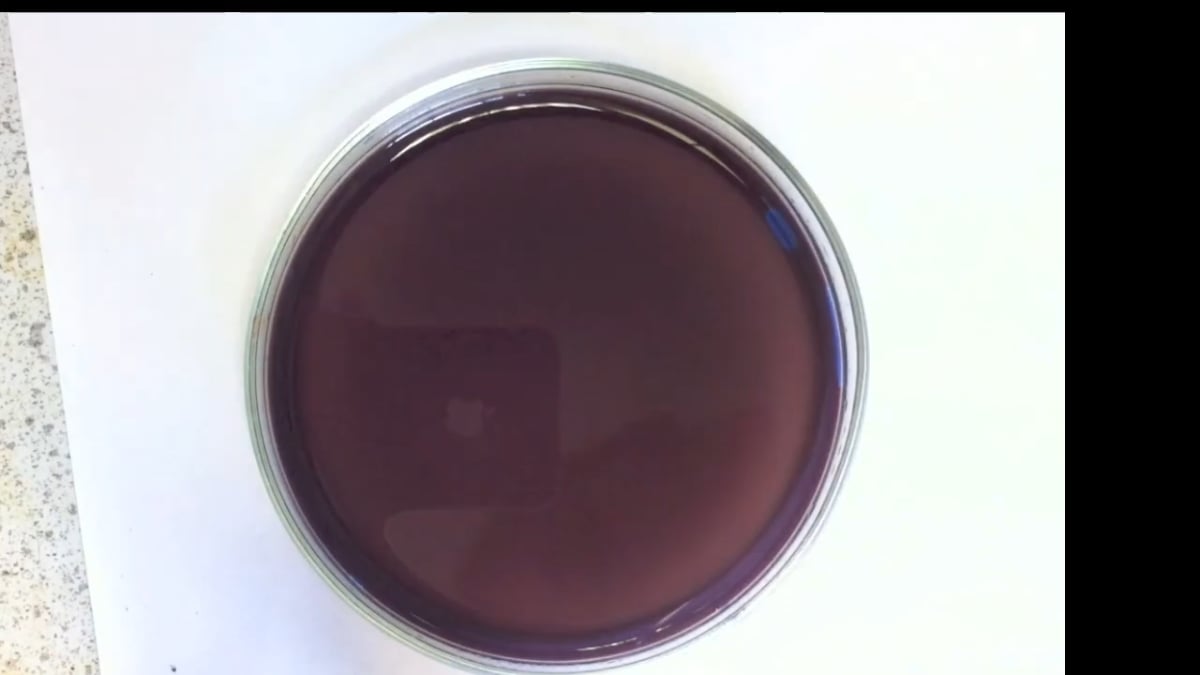
Belousov-Zhabotinsky Reaction; hands down one of the most visually stunning chemical reactions.
Unlocking the Dance of Chemistry: The Mesmerizing Belousov-Zhabotinsky Reaction
H1: What Is the Belousov-Zhabotinsky Reaction? A Stunning Chemical Symphony
Few phenomena in chemistry capture the imagination like the Belousov-Zhabotinsky (BZ) reaction. Dubbed a “chemical oscillator,” this self-organizing reaction transforms a simple mixture of compounds into a living canvas of swirling colors, pulsating waves, and hypnotic patterns. It’s not just a reaction—it’s a masterpiece of non-equilibrium thermodynamics, defying intuition by cycling through states like a ticking clock.
In this deep dive, we explore why the BZ reaction remains one of the most visually striking and scientifically profound demonstrations in chemistry—and how its eerie beauty bridges art, biology, and computing.
H2: Discovery: From Skepticism to Scientific Legend
The BZ reaction’s story begins in the 1950s with Soviet chemist Boris Belousov. While attempting to model biological processes, he mixed citric acid, bromate ions, and a cerium catalyst—and stumbled upon something extraordinary: the solution rhythmically shifted between yellow and clear, like a pendulum.
Yet, when Belousov submitted his findings, journals rejected them as “impossible.” Thermodynamics, after all, dictated that reactions should move toward equilibrium, not oscillate indefinitely. It wasn’t until a decade later that his work was validated by Anatol Zhabotinsky, who replaced cerium with ferroin (an iron compound), amplifying the color shifts into vivid red-blue waves.
The reaction now bears both pioneers’ names—a testament to persistence in science.
H2: How Does the BZ Reaction Work? Science Behind the Magic
At its core, the BZ reaction is a nonlinear, oscillating redox process. Here’s a simplified breakdown:
-
Key Ingredients:
- Bromate ions (oxidizer, often from potassium bromate).
- Malonic acid (organic fuel).
- Metal catalyst (ferroin or cerium, changing color as it oxidizes/reduces).
- Sulfuric acid (acidic medium).
-
The Oscillation Cycle:
- Autocatalysis: Bromate oxidizes the catalyst (e.g., turning ferroin from red [Fe²⁺] to blue [Fe³⁺]), releasing bromide ions.
- Inhibition: Excess bromide temporarily halts the reaction.
- Reset: As bromide depletes, oxidation restarts—creating a loop.
This feedback generates traveling chemical waves, concentric rings, or spirals that ripple through the solution for minutes to hours.
H2: Why Is It So Visually Stunning? A Feast for the Senses
The BZ reaction’s allure lies in its emergent patterns—seemingly alive, yet governed by pure chemistry. Imagine:
- Spatiotemporal Waves: Blue oxidation fronts expand across a red background, colliding and annihilating like phantom dancers.
- Chaotic Order: Stir the solution, and you’ll see fractal-like turbulence; leave it undisturbed, and geometric spirals emerge.
- Color Contrast: The ferroin catalyst’s shift between deep red (reduced) and bright blue (oxidized) creates dramatic visual rhythms.
It’s no wonder the BZ reaction has inspired art installations, viral videos, and even metaphors for consciousness or galactic formation.
H2: Beyond Beauty: Scientific and Practical Applications
The BZ reaction isn’t just eye candy—it’s a playground for studying complexity:
- Biological Modeling: Mimics rhythmic processes like heartbeats, neural activity, or predator-prey cycles.
- Chemical Computing: Explores how wave patterns can solve computational problems or encode data.
- Material Science: Informs designs for self-healing materials or responsive gels.
Researchers even simulate BZ-like dynamics in synthetic cells and “active matter” systems, blurring life and chemistry.
H2: See It Yourself! DIY Demonstrations & Safety
Modern labs (and YouTube chemists!) recreate the BZ reaction using safer variants. For example:
- Recipe: Potassium bromate, malonic acid, ferroin indicator, and sulfuric acid.
- Safety Note: Bromates are toxic—handle in ventilated areas with gloves.
Want a risk-free experience? Search for “BZ reaction timelapse” online. The waves are worth the click!
H2: FAQs About the Belousov-Zhabotinsky Reaction
Q1: Is this reaction magic?
A: Pure chemistry! It’s driven by energy flow (from reactants) in an open system, violating equilibrium—a hallmark of “dissipative structures.”
Q2: Can it run forever?
A: No—it stops once reagents deplete (typically 30+ minutes). But in continuous-flow reactors, oscillations can persist.
Q3: Why does biology care about BZ waves?
A: Similar patterns govern heart muscle contractions, brain waves, and cell signaling—making BZ a model for emergent order in life.
Conclusion: Where Art Meets Science
The Belousov-Zhabotinsky reaction is more than a chemical curiosity—it’s a reminder that simplicity can birth breathtaking complexity. From its turbulent history to its eerie beauty, the BZ reaction continues to inspire scientists, artists, and dreamers to see chemistry not just as equations, but as nature’s own avant-garde theater.
SEO Keywords: Belousov-Zhabotinsky Reaction, oscillating chemical reaction, BZ reaction, chemical waves, self-organizing systems, ferroin catalyst, nonequilibrium thermodynamics, chemical clock, Boris Belousov, Anatol Zhabotinsky.
Discover more wonders where science dances—share, explore, and stay curious! 🔬🌀