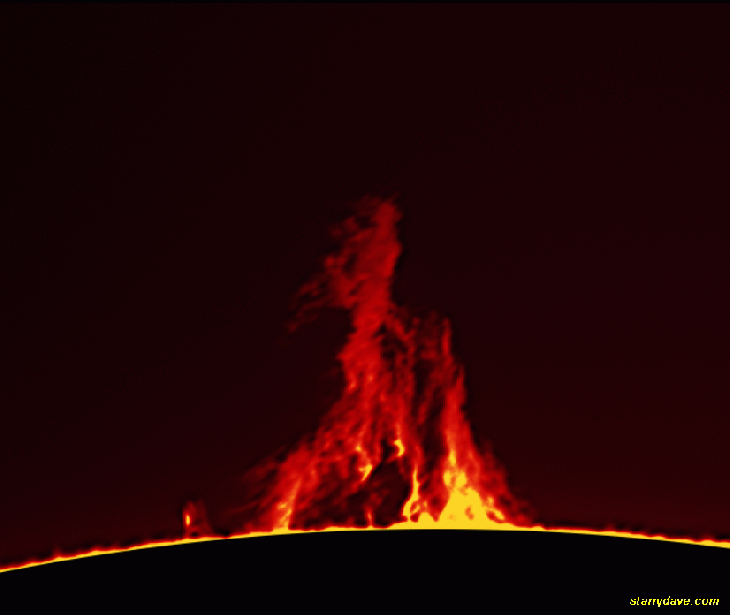
“Bonfire” of hydrogen on the sun. A solar prominence. Loop of gas in the sun magnetic field.
Unveiling the Sun’s Fiery Spectacle: The Solar “Bonfire” of Hydrogen
Title: Solar Prominence: The Sun’s Mesmerizing Hydrogen “Bonfire” Explained
Meta Description: Discover how solar prominences—massive loops of hydrogen gas trapped in the Sun’s magnetic field—create a cosmic “bonfire” on our star. Explore their science, risks, and beauty here.
Introduction: The Sun’s Dancing Flames
Imagine a bonfire towering hundreds of thousands of miles high, fueled not by wood, but by superheated hydrogen gas—etched across the Sun’s surface like a celestial work of art. These fiery structures, known as solar prominences, are among the most awe-inspiring phenomena in our solar system. In this article, we dive into how these loops of gas form, why they matter, and what they reveal about the Sun’s magnetic power.
What Is a Solar Prominence? The Science Behind the Fire
A solar prominence is a colossal loop or arch of ionized gas (plasma) that erupts from the Sun’s surface, extending into its corona—the outermost layer of the solar atmosphere. These structures are:
- Composed of Hydrogen: Primarily made of hydrogen heated to over 10,000°C.
- Magnetic Sculptures: Shaped and anchored by the Sun’s twisting magnetic field lines.
- Massive in Scale: Often larger than Earth itself, stretching up to 500,000 kilometers (310,000 miles) long.
Unlike solar flares (sudden energy bursts), prominences can persist for days or even months, suspended like fiery curtains above the Sun’s surface.
How Do Prominences Form? The Magnetic Firestarter
The Sun’s magnetic field is the invisible architect behind these hydrogen “bonfires.” Here’s the process:
- Magnetic Chaos: The Sun’s plasma is electrically charged, generating dynamic magnetic fields.
- Field Lines Tangling: Oppositely charged magnetic regions collide, creating loops that surge upward.
- Trapped Plasma: Hydrogen gas becomes ensnared along these loops, cooling and glowing brilliantly against the darker corona.
When these magnetic loops destabilize, they can unleash coronal mass ejections (CMEs)—massive bursts of solar wind that threaten satellites and power grids on Earth.
Types of Prominences: Quiet vs. Eruptive
Not all prominences are created equal:
- Quiescent Prominences: Stable, long-lasting loops often seen near the Sun’s poles.
- Eruptive Prominences: Explosive arcs that break free, hurling plasma into space as CMEs.
The largest eruptive prominences can accelerate gas at speeds exceeding 600 km/s—enough to reach Earth in just days.
Why Study Solar Prominences? Risks and Revelations
These cosmic bonfires aren’t just stunning—they’re scientifically vital:
- Space Weather Forecasting: Eruptive prominences trigger geomagnetic storms, risking disruptions to GPS, aviation, and power infrastructure.
- Solar Secrets: They reveal how the Sun’s magnetic field governs energy transfer from its core to the corona.
- Aesthetic Wonders: During solar eclipses, prominences appear as crimson wisps framing the Moon’s silhouette—a sight cherished by astronomers.
Observing the “Bonfire”: From Earth to Space
While the Sun’s glare hides prominences in plain sight, specialized tools reveal their glory:
- H-Alpha Telescopes: Filter light to highlight hydrogen’s red spectral line (656 nm).
- NASA’s SDO & ESA’s Solar Orbiter: Capture ultra-high-definition images of prominences in action.
- Citizen Science: Projects like Solar Dynamics Observatory public datasets let amateurs track prominences in real time.
Did You Know?
- A 2022 prominence eruption stretched half a million miles—long enough to wrap around Earth 20 times!
- Prominences glow red due to hydrogen emitting H-alpha light, the same color seen in neon signs.
Safety First: Never Observe the Sun Directly
Warning: Staring at the Sun without proper filters can cause permanent eye damage. Use certified solar viewing glasses or telescopes with solar filters.
FAQs About Solar Prominences
Q: How hot is a solar prominence?
A: Ranges from 10,000°C (surface temperature) to over 1,000,000°C in the corona.
Q: Can we see prominences from Earth?
A: Only during total eclipses or with hydrogen-alpha telescopes.
Q: Do prominences affect Earth?
A: Indirectly—when they erupt as CMEs, they can trigger auroras and disrupt technology.
Conclusion: The Sun’s Eternal Flame
Solar prominences are more than just hydrogen bonfires—they’re dynamic reminders of our star’s magnetic might and fragility of our tech-dependent world. By studying these loops of fire, scientists unlock secrets of solar storms, space weather, and the universe itself.
Next Time You Look Up: Remember—a raging cosmic fire show is unfolding 93 million miles away, unseen but never inactive.
SEO Keywords: Solar prominence, hydrogen bonfire Sun, Sun’s magnetic field loops, solar plasma arcs, coronal mass ejection, solar astronomy, space weather, H-alpha telescopes, NASA solar dynamics.
Image Alt Text Tips: “Solar prominence hydrogen loop,” “Sun magnetic field arch,” “Red plasma eruption Sun.”