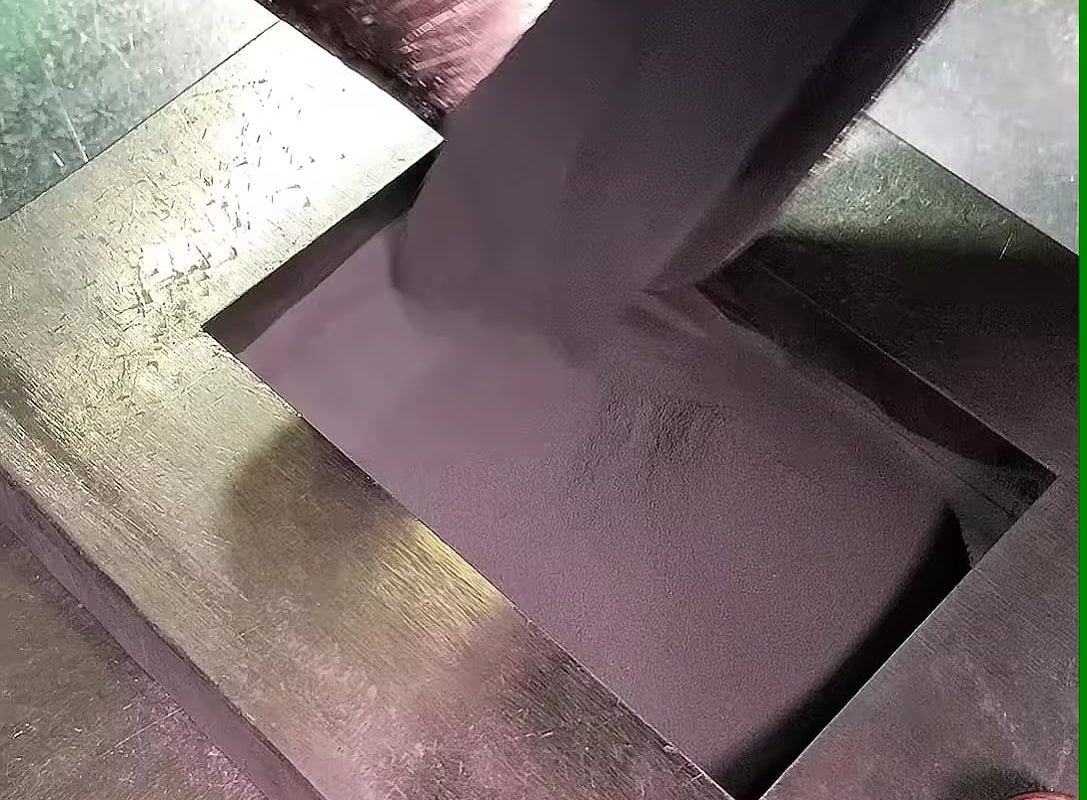
By ‘gently’ pressing with a 70-ton press, The powder then turns into cemented carbide plates
Title: The Precision Power of 70-Ton Presses: How Gentle Pressure Forges Unbreakable Cemented Carbide Plates
Meta Description: Discover how high-pressure precision at 70 tons transforms tungsten carbide powder into ultra-durable cemented carbide plates, the backbone of industrial cutting tools and wear-resistant components.
Introduction
Cemented carbide plates—known for their incredible hardness, wear resistance, and toughness—are critical components in industries from mining to aerospace. But how are these industrial marvels made? The secret lies in a delicate alchemy of advanced materials science and precision engineering, where a colossal 70-ton press applies controlled, “gentle” pressure to transform loose metal powder into solid, indestructible plates. In this article, we unravel the science behind this high-stakes process and explore why “gentle” pressure at monumental force is key to perfection.
What Are Cemented Carbide Plates?
Cemented carbides (often called “hard metals”) are composite materials made from tungsten carbide (WC) particles bonded with a cobalt (Co) or nickel binder. The result is a material that outperforms steel in hardness by up to 3x while resisting extreme heat, abrasion, and corrosion. These plates are used for:
- Cutting tools (drills, saw blades)
- Wear parts (mining machinery, valves)
- Automotive and aerospace components
The Manufacturing Miracle: From Powder to Plate
Step 1: Powder Metallurgy – The Foundation
The process begins with ultrafine tungsten carbide powder (grain sizes of 1–10 microns) mixed with a cobalt binder. This blend is carefully homogenized to ensure uniform density and composition.
Step 2: Pressing – Where “Gentle” Force Meets 70 Tons
Unlike traditional forging, which relies on impact, cemented carbide plates are formed using cold isostatic pressing (CIP) or uniaxial pressing. Here’s how the magic unfolds:
- Mold Filling: The powder mixture is poured into a mold shaped like the final plate.
- Controlled Compression: A hydraulic press applies up to 70 tons of pressure—slowly and uniformly—across the powder.
- Why “Gentle”? The press exerts steady pressure (vs. sudden force), letting particles rearrange without cracking. This prevents internal flaws and ensures even density.
- Formation of a “Green” Compact: The pressed powder becomes a fragile “green” plate, holding its shape but not yet hardened.
Key Insight: 70 tons might sound extreme, but in precision pressing, control matters more than raw power. Overpressing can destroy particle bonds, while under-pressing risks porosity.
Post-Pressing: Cementing Strength Through Sintering
Pressing alone isn’t enough. To achieve full strength, the green compact undergoes sintering—a high-temperature (1,400–1,600°C) process in a vacuum or hydrogen furnace. Here:
- The cobalt binder liquefies, welding tungsten grains into a solid matrix.
- The plate shrinks by ~20% but gains its legendary density and hardness.
- Final properties are fine-tuned by adjusting sintering time, temperature, and binder ratios.
Why a 70-Ton Press? The Science of Precision
- Optimal Density: 70 tons strikes the balance for maximum compaction without fracturing brittle carbide particles.
- Uniformity: Even pressure distribution eliminates weak spots—critical for plates facing uneven stress in drills or crushers.
- Scalability: Presses of this capacity efficiently produce plates in bulk while maintaining tolerances within microns.
Real-World Impact: Where Cemented Carbide Plates Excel
- Mining & Construction: Crushing jaws and drill bits that last 10x longer than steel.
- Manufacturing: Precision cutting inserts that slice through titanium without dulling.
- Energy: Valve seals and pump parts resisting extreme pressures in oil/gas extraction.
FAQs About Cemented Carbide Plate Production
Q: Why use cobalt as a binder?
A: Cobalt optimizes toughness and wettability (bonding with WC), but nickel or iron may be used for corrosion resistance.
Q: Can higher pressure (e.g., 100 tons) improve quality?
A: Not necessarily—excessive force may crush particles, creating defects. 70 tons is a proven standard for WC-Co blends.
Q: How thin or complex can pressed plates be?
A: With optimized pressing, plates as thin as 0.5mm can be made, though intricate shapes often require additional machining post-sintering.
The Future of Pressing Technology
Innovations like field-assisted sintering (FAST) and AI-driven pressure control promise even finer-grained carbides and lower energy use. Meanwhile, recycled tungsten powders are making the process more sustainable—without compromising quality.
Conclusion
The creation of cemented carbide plates is a testament to the marriage of brute force and microscopic precision. By applying 70 tons of carefully calibrated pressure, manufacturers compact powders into “green” plates that, after sintering, become virtually indestructible industrial workhorses. As industries demand ever tougher materials, this niche yet vital process will keep evolving—proving that sometimes, gentle force at a colossal scale is the ultimate key to strength.
Call to Action
Need cemented carbide solutions tailored to your industry? [Contact us/Explore our products] to leverage cutting-edge materials engineered for extreme performance.
SEO Keywords:
Cemented carbide plates manufacturing process, 70-ton press, tungsten carbide pressing, cold isostatic pressing, carbide sintering, industrial carbide components, wear-resistant materials, carbide plate density, powder metallurgy.