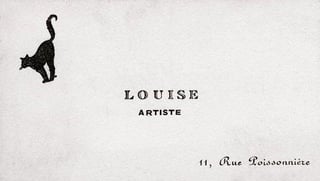
Calling cards of Parisian call girls (1920s and 30s)
The Secret Signals: Uncovering the Calling Cards of Parisian Call Girls (1920s-1930s)
Meta Title: Parisian Call Girls’ Calling Cards: Jazz Age Secrets & Designs | 1920s-30s History
Meta Description: Explore the clandestine world of 1920s-30s Parisian courtesans through their calling cards—subtle advertisements of seduction in the City of Light’s golden age.
Introduction: Whispers in the Shadows of the City of Light
Paris in the 1920s and 1930s pulsed with contradiction. Beneath the glittering surface of jazz-filled cabarets, avant-garde art, and Hemingway’s “Moveable Feast,” a shadow economy thrived. For Parisian filles de joie (women of joy)—especially high-end courtesans—discretion was paramount. Their most ingenious tool? Artfully coded calling cards, tiny paper keys to a hidden world of luxury and desire.
The Golden Age of Vice: Paris as a Haven for Demi-Monde Culture
Post-WWI Paris drew writers, artists, and wealthy émigrés seeking freedom. Areas like Montmartre, Pigalle, and Montparnasse hummed with boîtes de nuit (nightclubs) and discreet rendezvous spots. Amid this decadence, high-class sex workers (“horizontales“) operated as elite companions, requiring subtle marketing tools to attract affluent clients without scandal.
Anatomy of a Calling Card: Decoding the Symbols
Unlike standard business cards, these cartes de visite used visual sleight-of-hand. Key features included:
-
Elegant Ambiguity
- Names: Pseudonyms like “Suzanne de Lyon” (hinting at origins) or “La Tigresse” (suggesting personality).
- No Explicit Offers: Cards implied—never declared—services via suggestive symbolism. A red rose, a pair of lips, or a feline motif hinted at sensuality.
-
Luxury Materials
- Thick cardstock, gold foil accents, or Art Deco borders signaled exclusivity and clientele expectations.
-
Discreet Contact Details
- Phone numbers (a new luxury in the 1920s) or cryptic addresses (“Near Place Vendôme”) replaced street names. Some listed trusted maisons closes (brothels).

Example of a reconstructed design—actual cards were rarely photographed for obvious reasons.
Distribution: Where the Cards Found Hands
These cards didn’t appear in shop windows. Instead, they circulated through:
- Porters & Taxi Drivers: Tip-friendly staff at luxury hotels or theaters discretely passed cards to wealthy guests.
- Fashion Houses & Bars: Elite spaces like Le Fouquet’s or Chanel’s salon allowed subtle exchanges.
- Underworld Networks: Pimps (souteneurs) placed cards in men’s clubs or racetracks.
The Double-Edged Sword: Risks and Realities
While cards offered relative safety, dangers persisted:
- Legal Crackdowns: Though regulated brothels were legal until 1946 (Loi Marthe Richard), street solicitation risked fines or jail.
- Violence & Exploitation: Many women, particularly immigrants or working-class grisettes, faced coercion from gangs.
- Class Divide: Only elite cocottes (kept women) could afford lavish cards. Most sex workers relied on street solicitations.
Cultural Legacy: From Taboo to Collectible
These cards now fascinate historians and collectors as:
- Artifacts of Feminist Resistance: Some view them as tools of female agency in a patriarchal economy.
- Ephemera of the Lost Generation: Linked to icons like Kiki de Montparnasse or Josephine Baker’s liberated Paris.
- Pop Culture Inspiration: Films like Moulin Rouge! and Midnight in Paris romanticize this era’s underworld.
FAQs: The Hidden Truths of Parisian Calling Cards
-
Were these cards illegal?
Technically no—unless linked to unregistered sex work. Most police turned a blind eye for bribes. -
Do original cards still exist?
Extremely rare. Many were destroyed for privacy, but a few survive in private collections. -
How much did services cost?
Elite courtesans could charge 500 francs/night (≈$1,400 today), while street workers earned pennies.
Conclusion: Fading Traces of a Bygone Era
Parisian call girls’ calling cards were masterclasses in subtlety—a fusion of marketing, survival, and Jazz Age allure. More than titillating relics, they reflect the grit beneath the era’s glamour, where women navigated a world of both opportunity and oppression. Today, they remain ghostly whispers of Paris’s most clandestine history.
SEO Keywords:
Parisian call girls 1920s, courtesan calling cards, vintage French prostitution, Montmartre nightlife history, 1930s Paris demi-monde, Jazz Age sex work, French brothel artifacts, historical escorts, Paris underground culture.
Internal Linking Opportunities:
- [The Role of Maisons Closes in Pre-WWII Paris]
- [Fashion and Femininity in the Jazz Age]
- [Josephine Baker and the Avant-Garde Underground]
Note: This topic involves historical societal struggles. While we highlight cultural context, we acknowledge the exploitation many sex workers faced.