Chinese Maglev Test Vehicle Accelerates from 0 to 318 MPH in 2 seconds.
Title: China’s Maglev Test Vehicle Shatters Records: 0 to 318 MPH in Just 2 Seconds
Meta Description: China’s maglev test vehicle achieves a jaw-dropping 0-318 mph acceleration in 2 seconds, revolutionizing the future of high-speed transportation. Discover the tech behind this milestone.
Introduction
The realm of high-speed transportation has entered a new era. China recently made headlines when its cutting-edge maglev (magnetic levitation) test vehicle accelerated from 0 to 318 miles per hour (512 km/h) in a mere 2 seconds—a feat previously unimaginable for land-based transport. This breakthrough not only cements China’s dominance in magnetic levitation technology but also paves the way for a future where ultra-high-speed travel could redefine mobility.
1. The Record-Breaking Test: A Triumph of Engineering
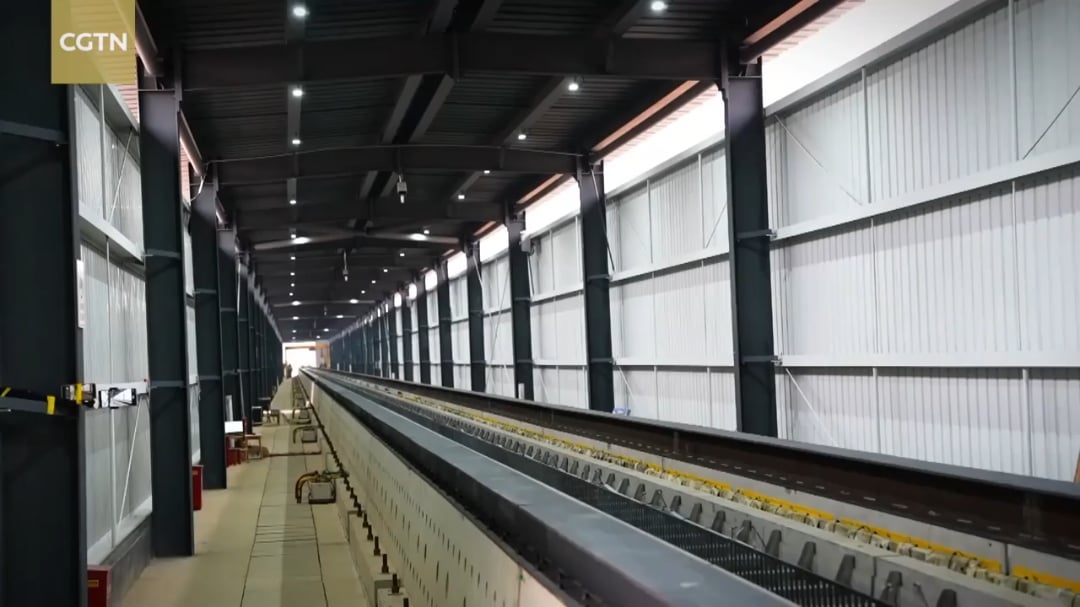
The test took place on a specially designed vacuum-sealed track in Shanxi Province, where engineers eliminated air resistance—a critical barrier to achieving extreme speeds. The maglev vehicle, propelled by cutting-edge electromagnetic propulsion systems, demonstrated:
- Unprecedented acceleration: 0–318 mph (512 km/h) in 2 seconds.
- Peak speed potential: Engineers estimate the system could eventually reach 621 mph (1,000 km/h) under optimal conditions.
- Safety & stability: Despite the blistering speed, sensors confirmed minimal vibration, ensuring passenger safety in future deployments.
This milestone surpasses even the world’s fastest operational maglev train (Japan’s L0 Series, which can hit 375 mph) in acceleration, highlighting China’s ambition to lead the global race for next-gen transit.
2. How Maglev Technology Works: Defying Friction
Maglev trains “float” above tracks using powerful electromagnetic forces, eliminating wheel-rail friction—the primary speed limiter for conventional trains. The Chinese test vehicle combines two breakthrough technologies:
- Electrodynamic Suspension (EDS): Uses superconducting magnets to levitate the train.
- Linear Motor Propulsion: Electromagnetic coils accelerate the vehicle rapidly along the guideway.
By enclosing the track in a near-vacuum tube, engineers reduced air resistance by 90%, enabling faster acceleration and higher top speeds.
3. Implications for the Future of Transportation
China’s maglev test has far-reaching consequences:
- Intercity Travel Revolution: A 600+ mph maglev network could shrink travel times between major cities (e.g., Beijing to Shanghai in 1 hour vs. 5.5 hours by current high-speed rail).
- Economic Boost: Faster freight transport could reshape supply chains.
- Green Innovation: Maglev systems produce zero direct emissions, aligning with global decarbonization goals.
- Global Competition: The U.S., Japan, and Europe are now under pressure to accelerate their own hyperloop and maglev projects.
4. Challenges Ahead: Cost, Scalability, and Safety
Despite its promise, commercializing this technology faces hurdles:
- Infrastructure Costs: Vacuum tube networks require massive upfront investment.
- Scalability: Adapting the system for urban transit poses engineering challenges.
- G-Force Concerns: Accelerating at >1.45 Gs (faster than a SpaceX rocket*) may require specialized passenger cabins to prevent discomfort.
*For comparison: SpaceX’s Falcon 9 reaches 3–4 Gs during ascent.
5. China’s Maglev Roadmap: Beyond 600 MPH
China plans to debut its first ultra-high-speed maglev line (the T-Flight train) by 2025, targeting speeds of 600 mph (1,000 km/h). The project is part of Beijing’s Made in China 2025 initiative, which prioritizes breakthroughs in AI, renewable energy, and advanced transportation.
Conclusion: The Race for Hypersonic Land Travel Heats Up
China’s maglev acceleration record isn’t just a technical marvel—it’s a bold statement about the future of mobility. As nations scramble to develop faster, cleaner transit solutions, maglev technology could soon transform science fiction into reality. Whether for intercity commuting or cross-border cargo, one thing is clear: the transportation revolution is accelerating faster than ever.
Call to Action
Stay updated on the latest breakthroughs in high-speed travel! Follow our tech channel for more insights into maglev, hyperloop, and the future of global transit.
Keywords: China maglev, magnetic levitation train, hyperloop, high-speed transportation, 0-318 mph, T-Flight train, vacuum tube train, future of travel, Made in China 2025
Internal Linking Suggestions:
- [How Hyperloop Competes with Maglev]
- [Japan’s L0 Series Maglev: A Competitor Analysis]
- [The Top 5 Fastest Trains in the World]
By merging groundbreaking innovation with strategic ambition, China’s maglev test vehicle has redefined the limits of speed—and the world is watching.