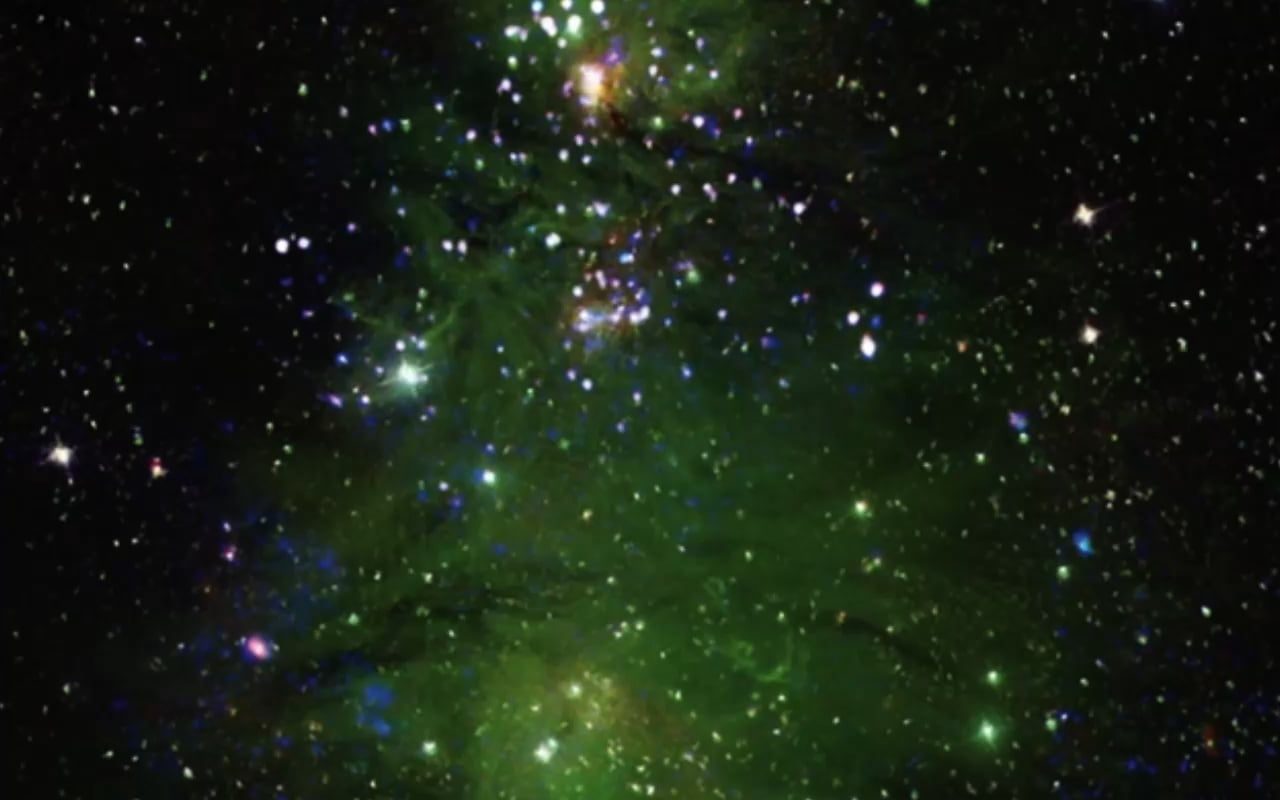
‘Christmas Tree Cluster’
Title: Christmas Tree Cluster: Discover NGC 2264’s Festive Stellar Wonder
Meta Description: Explore the Christmas Tree Cluster (NGC 2264), a dazzling star-forming region that lights up the cosmos like a holiday tree. Learn how to observe it and why it fascinates astronomers!
Introduction: A Cosmic Holiday Celebration
Deep within the constellation Monoceros, the Christmas Tree Cluster (NGC 2264) sparkles like a celestial tribute to the festive season. Named for its distinct triangular shape reminiscent of a decorated evergreen, this young star cluster is nestled within a vibrant nebula, making it a stunning deep-sky spectacle. In this guide, we’ll uncover its secrets—from how to spot it to the science behind its twinkling stars.
What Is the Christmas Tree Cluster?
The Christmas Tree Cluster is part of the larger NGC 2264 region, which includes the Cone Nebula and the Fox Fur Nebula. Located roughly 2,600 light-years from Earth, this open cluster is a stellar nursery brimming with hot, newborn stars.
Key Features:
- Shape & Structure: When imaged with specialized filters, the cluster’s stars align in a triangular pattern, with the massive variable star S Monocerotis acting as the “tree topper.”
- Surrounding Nebula: Ionized hydrogen gas (H-II) glows red, while dust clouds reflect starlight, creating a blue-white “frosting” effect.
- Youthful Stars: Most stars here are under 5 million years old—infants by cosmic standards.
How to Observe the Christmas Tree Cluster
While invisible to the naked eye, amateur astronomers can spot NGC 2264 with modest equipment:
Best Viewing Tips:
- When to Look: Visible in the Northern Hemisphere from November to March (prime time: January–February).
- Equipment Needed: A small telescope or binoculars under dark skies. Averted vision helps detect faint details.
- Location Guide: Find it 2.5° north of the star Propus in Gemini, or scan between Orion and Canis Minor.
👉 Pro Tip: Long-exposure photography reveals the cluster’s “festive” colors, resembling ornaments on a tree!
The Science Behind the Sparkle
This region is a hotbed for astrophysical research:
- Star Formation Turbulence: Gravity collides with stellar winds, sculpting pillars like the Cone Nebula and triggering new star births.
- Variable Stars: S Monocerotis (15 times the Sun’s mass) pulses in brightness, affecting the surrounding gas.
- Hubble & JWST Insights: Recent infrared studies reveal protostars shrouded in dust, offering clues about planetary system formation.
Fun Facts & Trivia
- Upside-Down Tree: The cluster appears inverted in telescopic views—earthbound observers see the “tree” pointing downward!
- A Shared Home: The Snowflake Cluster (a group of newborn stars) lies within the same NGC 2264 complex.
- Ancient Nickname: Early 20th-century astronomers coined the name due to its seasonal visibility and whimsical shape.
Conclusion: A Year-Round Cosmic Gift
The Christmas Tree Cluster isn’t just a holiday marvel—it’s a year-round window into the dynamic process of star birth. Whether you’re an aspiring stargazer or a seasoned astronomer, this glittering cluster invites wonder and discovery. Bundle up, grab your telescope, and let NGC 2264 remind you that the universe is full of magical surprises.
🔭 Ready to explore? Share your observations with #ChristmasTreeCluster or tag local astronomy clubs to join the cosmic conversation!
SEO Keywords: Christmas Tree Cluster, NGC 2264, star cluster, Monoceros constellation, how to find NGC 2264, S Monocerotis, Cone Nebula, astronomy for beginners, deep-sky objects, star formation.
Image Suggestion: Pair this article with a labeled telescope image of NGC 2264 (credit: NASA/ESA) to highlight the “tree” shape and key stars.