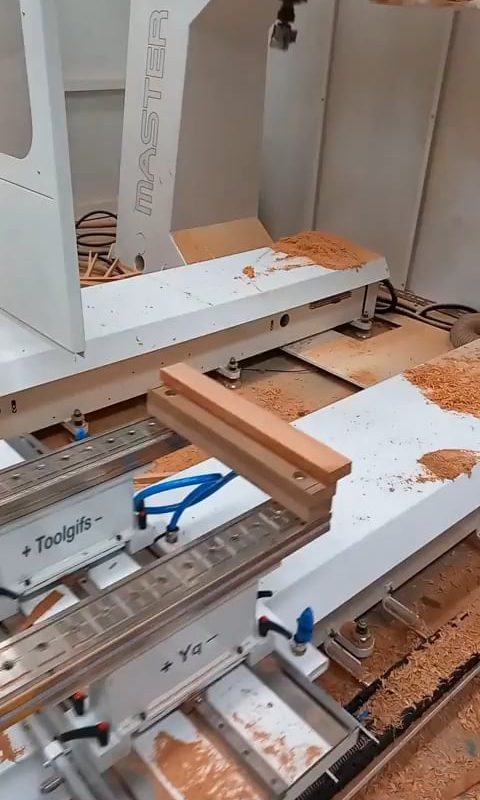
CNC Woodworking with Automatic Tool Changer
Title: Revolutionize Your Woodworking: Unleash Efficiency with CNC Machines Featuring Automatic Tool Changers
Meta Description: Discover how CNC woodworking machines with Automatic Tool Changers (ATCs) boost productivity, precision, and profitability for woodshops and manufacturers.
Introduction
CNC (Computer Numerical Control) woodworking has transformed the industry, enabling intricate designs, flawless repeats, and unmatched speed. However, frequent manual tool changes can bottleneck production — especially for complex jobs. Enter the Automatic Tool Changer (ATC), a game-changing innovation that allows CNC machines to swap tools automatically without human intervention. In this guide, we’ll explore how ATCs supercharge woodworking workflows, what to consider when investing, and why they’re reshaping the future of precision woodcraft.
Why Automatic Tool Changers Matter in CNC Woodworking
Manual tool changes eat into productivity and increase labor costs. An ATC solves this by:
- Slashing Downtime
Swap tools in seconds (often ≤10 sec), keeping machines running longer. - Enabling Complex Projects
Use drills, end mills, engravers, and more in a single program. - Improving Precision
Eliminate human error in tool alignment. - Scaling Production
Run lights-out operations for high-volume batches.
How ATCs Work: The Tech Behind the Tool Swap
Most CNC woodworking ATCs operate via:
- Rack-Based Systems: Tools are stored vertically/horizontally in a rack. A robotic arm retrieves and replaces them.
- Carousel/Drum Systems: Rotating drum holds tools, rapidly indexing the needed tool into position.
The CNC controller’s software manages the entire process, executing pre-programmed toolpaths with pinpoint accuracy.
Top Benefits of Using ATCs in Woodshops
- 20–50% Faster Production
Eliminating pauses for manual swaps lets you finish jobs faster. - Lower Labor Costs
Reduce reliance on operators for routine changes. - Material Waste Reduction
Consistent tool positioning minimizes errors and rework. - 24/7 Automation Potential
Unattended runs overnight maximize ROI.
Key Applications of ATC-Equipped CNC Woodworking Machines
- Custom Cabinetry: Seamlessly switch between dados, grooves, and decorative edges.
- Furniture Manufacturing: Combine drilling, carving, and trimming in one cycle.
- Signage & Carvings: Alternate between roughing and finishing bits for intricate 3D art.
- Architectural Millwork: Handle complex moldings and joinery without stopping.
Choosing the Right ATC CNC Machine
Consider these factors before investing:
- Tool Capacity: Machines offer 6 to 24+ tool slots. Match this to your project variety.
- Speed & Torque: High RPM spindles (18,000–24,000 RPM) ensure clean cuts in hardwoods.
- Software Compatibility: Ensure compatibility with industry standards (e.g., G-code, CAD/CAM).
- Footprint & Power: Industrial ATCs require space and robust electrical setups.
Potential Challenges & Solutions
- Upfront Cost: Higher investment than manual CNCs → offset by long-term ROI.
- Maintenance Needs: Regular cleaning/lubrication prevents sawdust buildup in the changer.
- Training: Staff must learn CAM programming for multi-tool projects.
Conclusion
For woodshops serious about scaling production, improving quality, and staying competitive, a CNC router with an Automatic Tool Changer is no longer a luxury—it’s a necessity. By automating tool swaps, you unlock unprecedented efficiency, consistency, and versatility, empowering your team to tackle ambitious projects profitably.
Whether you’re crafting bespoke furniture or batch-producing cabinets, an ATC-equipped CNC machine transforms woodworking from a manual craft into a streamlined, high-tech enterprise.
FAQs
Q1: Can ATCs handle router bits and drills?
Yes! Most support multiple tool types (e.g., V-bits, ball-nose end mills, drills).
Q2: How much do ATC CNC woodworking machines cost?
Prices range from $20,000–$100,000+, depending on size, brand, and features.
Q3: Can I retrofit an ATC to an existing CNC?
Limited options exist, but dedicated ATC machines offer better reliability.
Optimized Keywords: CNC woodworking, Automatic Tool Changer, ATC router, CNC automation, woodshop efficiency, CNC productivity, multi-tool CNC, precision woodworking.
Call to Action
Ready to upgrade your woodshop? Explore ATC-equipped CNCs today and discover how automation can elevate your craftsmanship, capacity, and profits.