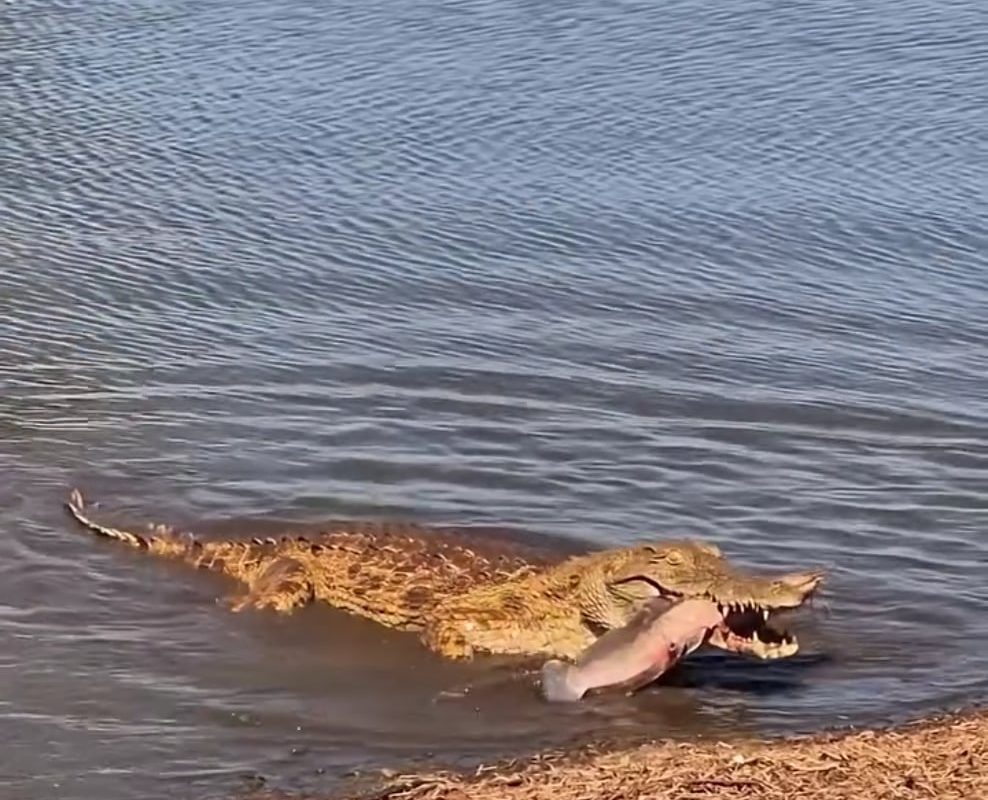
Crocodiles take terrestrial prey into the water, but bring aquatic prey to shore
Title: Crocodile Hunting Tactics: Why They Drag Land Prey to Water and Aquatic Prey to Land
Crocodiles are apex predators that have dominated Earth’s waterways for millions of years. Their stealth, power, and intelligence make them formidable hunters, but one of their most fascinating behaviors involves a strategic prey-handling tactic: terrestrial prey are dragged into the water, while aquatic prey are hauled onto shore. This dual approach isn’t random—it’s a calculated survival strategy fine-tuned by evolution.
In this article, we explore the science behind this behavior, uncovering how crocodiles optimize their energy, minimize risk, and secure their meals in diverse environments.
The Dual Hunting Strategy: A Breakdown
Crocodiles are opportunistic ambush predators, meaning they adapt their tactics based on the habitat and type of prey.
1. Terrestrial Prey → Dragged Into Water
Land animals like antelope, zebras, or wildebeest that approach water sources are pulled into the crocodile’s aquatic domain. Here’s why:
- Drowning the Prey: Crocodiles lack the jaw strength to chew or tear flesh instantly. Submerging land animals quickly drowns them, making the kill efficient.
- Safety from Competitors: On land, scavengers like hyenas or jackals may steal the carcass. Water provides a “safe zone” where crocodiles dominate.
- Reduced Effort: Larger prey can thrash on land, risking injury to the crocodile. Water neutralizes resistance, allowing the reptile to use buoyancy to control the victim.
2. Aquatic Prey → Brought onto Land
Fish, turtles, or water birds are often carried to shore before consumption. Why?
- Easier Handling: In water, agile prey like fish can wriggle free. On land, movement is restricted, allowing crocodiles to reposition their grip.
- Avoiding Losses: Eating in water risks pieces floating away or being snatched by other aquatic predators (e.g., other crocodiles). Land minimizes waste.
- Dismemberment: Crocodiles use a “death roll” to tear flesh. Performing this maneuver is easier on solid ground than in water.
The Science Behind the Behavior
Researchers studying Nile crocodiles and saltwater crocodiles have observed these patterns repeatedly. This strategy demonstrates:
- Energy Efficiency: Crocodiles conserve strength by letting water (or land) do the work—drowning prey or immobilizing it naturally.
- Risk Mitigation: By relocating prey to their “stronghold,” they reduce vulnerability to theft or counterattacks.
- Trophic Adaptability: Crocodiles exploit food sources in both aquatic and terrestrial ecosystems, making them versatile survivors.
Real-World Examples
- Terrestrial Hunts: During the Great Migration in Africa, Nile crocodiles drown wildebeest in river crossings, storing carcasses underwater to eat later.
- Aquatic Hunts: Estuarine crocodiles in Australia snatch fish from rivers but often retreat to mudbanks to consume them safely.
Why This Matters for Ecosystems
Crocodiles play a critical role as ecosystem engineers:
- They control prey populations in both land and water habitats.
- Their feeding habits redistribute nutrients (e.g., dragging land prey into water fertilizes aquatic ecosystems).
Conclusion: Mastery of Two Worlds
Crocodiles’ ability to hunt across land-water boundaries highlights their evolutionary brilliance. By dragging terrestrial prey underwater and hauling aquatic meals ashore, they turn both environments to their advantage—proving why these ancient reptiles remain unrivaled predators.
Keywords for SEO: crocodile hunting behavior, crocodile prey tactics, how crocodiles kill prey, crocodile feeding strategy, aquatic vs terrestrial hunting, crocodile adaptations, Nile crocodile hunting, crocodile ecosystem role.
Discover more wildlife insights! Explore how crocodiles’ hunting skills reflect 200 million years of survival expertise—subscribe for updates on predator behavior. 🐊🌍