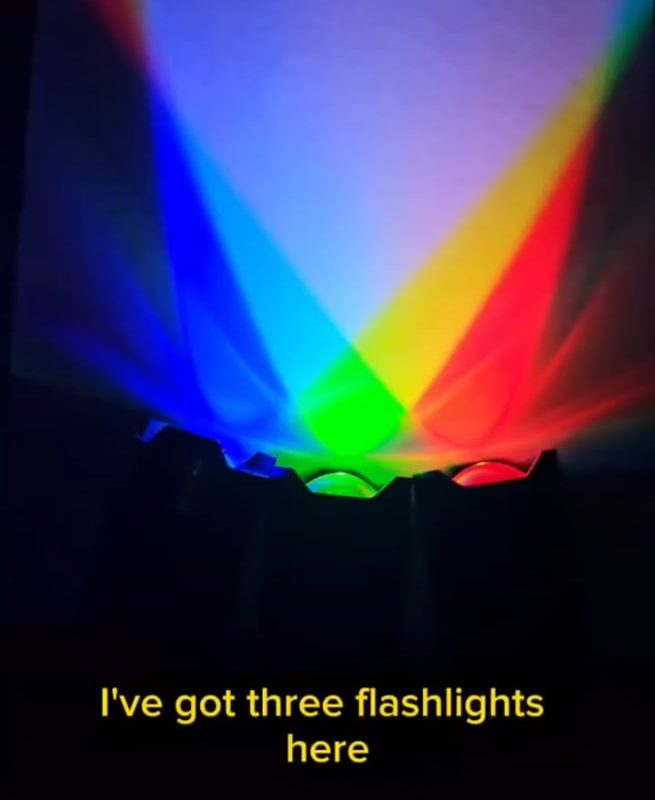
Display of additive and subtractive mixture of monochromatic lights
The Science of Color Mixing: Additive vs. Subtractive Methods with Monochromatic Light
Understanding how monochromatic lights combine through additive and subtractive mixing is fundamental to color theory, digital displays, printing, and artistic design. Whether you’re a designer, photographer, or STEM enthusiast, this guide breaks down the mechanics behind these two critical color systems, their real-world applications, and why they matter.
What Is Monochromatic Light?
Monochromatic light consists of a single wavelength (or a very narrow band) in the visible spectrum. Unlike broad-spectrum white light, monochromatic light appears as a “pure” color, such as red (700 nm) or blue (475 nm). These colors are foundational to experiments and technologies involving additive and subtractive color mixing.
Additive Color Mixing: Combining Light Sources
The Basics
Additive mixing occurs when light waves combine to create new colors. This system relies on the principle that human eyes perceive different wavelengths of light as distinct colors. When monochromatic lights overlap, their wavelengths add together, stimulating our cone cells to interpret blended hues.
Primary Colors and Key Rules
- Primary Colors: Red (R), Green (G), and Blue (B) — the “RGB” model.
- Mixing Combinations:
- Red + Green = Yellow
- Red + Blue = Magenta
- Green + Blue = Cyan
- R + G + B = White
Real-World Applications
- Digital Screens: TVs, smartphones, and monitors use tiny RGB pixels to create millions of colors.
- Stage Lighting: Theater and concert lighting combines colored LEDs to achieve dynamic effects.
- Astrophotography: Capturing nebulas in RGB wavelengths and blending them additively.
**Scientific Insight*
Our eyes and brains interpret additive mixtures based on trichromatic vision**. For example, overlapping red (700 nm) and green (546 nm) monochromatic lights triggers both red and green cones, creating the perception of yellow—even though no single 570-nm yellow light is emitted.
Subtractive Color Mixing: Filtering Light
The Basics
Subtractive mixing involves removing wavelengths from light using pigments, dyes, or filters. Unlike additive mixing (which emits light), subtractive systems work by absorbing (subtracting) certain wavelengths and reflecting others.
Primary Colors and Key Rules
- Primary Colors: Cyan (C), Magenta (M), and Yellow (Y) — the “CMY” model.
- Mixing Combinations:
- Cyan + Magenta = Blue
- Cyan + Yellow = Green
- Magenta + Yellow = Red
- C + M + Y = Black (in theory; often supplemented with black ink, hence “CMYK”)
Real-World Applications
- Printing: CMYK inks absorb specific wavelengths to create colors on paper.
- Photography Filters: A yellow lens subtracts blue light, enhancing contrast in skies.
- Paints/Dyes: Artists mix pigments to control reflected light.
Simulating Subtractive Mixing with Monochromatic Light
While subtractive mixing typically involves pigments, we can demonstrate it using colored filters and white light:
- Shine white light (which contains all wavelengths) through a yellow filter.
- The filter absorbs blue light, allowing only red and green to pass.
- If this filtered light passes through a cyan filter, green is absorbed, leaving only blue.
Key Differences: Additive vs. Subtractive Mixtures
| Factor | Additive Mixing | Subtractive Mixing |
|---|---|---|
| Principle | Emitting combined light | Absorbing/reflecting light |
| Primary Colors | RGB | CMY/K |
| Result of Full Mix | White light | Black/dark brown |
| Used In | Screens, projectors, LEDs | Printing, painting, photography |
| Light Source | Direct emission | Reflected/transmitted light |
Why Does This Matter?
- Design & Media: RGB is crucial for digital work, while CMYK ensures accurate prints.
- Lighting Engineering: Understanding additive mixing helps create immersive environments.
- Education: Demonstrating color mixing with monochromatic lights clarifies physics concepts.
Conclusion: Two Systems, One Colorful World
Additive and subtractive color mixing govern how we create and perceive color in technology and art. Additive mixing builds hues by combining light (ideal for displays), while subtractive mixing relies on selective absorption (perfect for physical media). By experimenting with monochromatic lights and filters, we unlock the principles behind everything from smartphone screens to classic paintings.
Pro Tip: Test these concepts yourself using RGB LEDs and color filters to visualize the science in action!
Keyword Focus: Additive vs Subtractive Color Mixing | Monochromatic Light | RGB vs CMYK | Color Theory | Light Wavelengths
Meta Description: Discover how additive and subtractive color mixing with monochromatic lights transform digital displays, printing, and art—explained with practical examples and science.