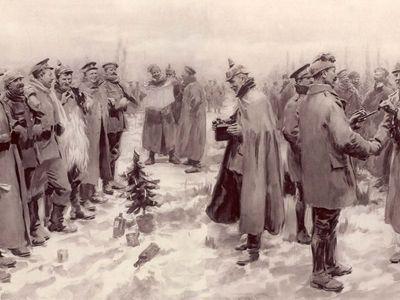
During WWI in 1914, enemy soldiers stopped fighting on Christmas, left their trenches, exchanged gifts, buried their dead, and played soccer together in No Man’s Land
Title: The WWI Christmas Truce of 1914: When Enemies Became Friends on the Battlefield
Meta Description: Discover the remarkable story of the 1914 Christmas Truce during WWI, when soldiers laid down their weapons, exchanged gifts, and played soccer in No Man’s Land. Explore the humanity amid war.
Introduction: A Pause in the Carnage
World War I (1914–1918) was one of history’s deadliest conflicts, defined by brutal trench warfare and relentless bloodshed. Yet, in December 1914, a series of unofficial ceasefires occurred along the Western Front, culminating in an event now legendary: the Christmas Truce. During this fleeting moment, soldiers from opposing sides—British, German, and French—emerged from their trenches, laid down their weapons, and shared moments of camaraderie. This article delves into the origins, events, and legacy of this extraordinary display of humanity.
The Lead-Up to the Truce: War Weariness and the Christmas Spirit
By December 1914, the Western Front had settled into a grim stalemate. Soldiers endured freezing trenches, disease, and the constant threat of death. As Christmas approached, morale dwindled, and longing for home intensified.
Key Factors:
- Pope Benedict XV’s Appeal: The Pope had urged a temporary ceasefire for Christmas, though official military commands refused.
- Cultural Sharedness: Many German troops hailed from regions with strong Christmas traditions, while British soldiers recalled Victorian-era ideals of goodwill.
- Small Gestures Before the Truce: In the days leading up to Christmas, sporadic instances of singing, shouted greetings, and even mock “fireworks” (flare exchanges) hinted at a desire for peace.
Christmas Eve 1914: The Truce Begins
On December 24, 1914, German soldiers near Ypres, Belgium, began decorating their trenches with candles, lanterns, and makeshift Christmas trees. Voices rose in song—first German carols like Stille Nacht (Silent Night), soon answered by British troops singing O Come, All Ye Faithful.
By morning, soldiers cautiously peered over parapets. In some sectors, white flags appeared, and men ventured into No Man’s Land—the deadly strip between opposing trenches.
Christmas Day in No Man’s Land: Gifts, Games, and Graves
What unfolded next defied logic:
- Burial of the Dead: Soldiers jointly buried fallen comrades trapped in No Man’s Land, holding impromptu services.
- Gift Exchanges: Troops swapped small luxuries—cigarettes, chocolate, buttons, and alcohol.
- Shared Meals: Accounts describe Germans sharing sausages and beer, while British soldiers offered plum puddings.
- The Famous Soccer Matches: In several areas, soldiers improvised football games using empty cans, sacks, or even a real ball (reportedly gifted by a German lieutenant). Matches were lighthearted, with no official scores kept.
📸 Imagine the Scene:
- Photo Suggestion: A 1914 illustration of British and German soldiers shaking hands in No Man’s Land.
- Alt Text: WWI Christmas Truce of 1914 – Soldiers from opposing sides meet during ceasefire.
Why Did the Truce Happen?
- Early War Phase: In 1914, soldiers hadn’t yet been fully dehumanized by years of slaughter.
- Shared Misery: Both sides suffered equally in the trenches, fostering empathy.
- Leadership Turned a Blind Eye: Junior officers tacitly allowed the truces, though High Command disapproved.
The truce wasn’t universal—some sectors saw fierce fighting. But where it occurred, the ceasefire lasted hours or even days.
Aftermath: Suppression and Legacy
Military Disapproval:
Senior commanders, fearing fraternization would undermine discipline, banned future truces. By 1915, artillery barrages were ordered on Christmas Eve to prevent repeats.
A Symbol of Hope:
The Christmas Truce endures as a poignant reminder that even in war, humanity can prevail. It’s memorialized in songs, films, and monuments, including a statue in Staffordshire, England, depicting soldiers mid-handshake.
Lessons from the Christmas Truce
- Peace Is Possible: Ordinary people can choose empathy over enmity.
- War’s Absurdity: The Truce highlighted the senselessness of fighting over muddy strips of land.
- Cultural Bridges: Shared traditions (like Christmas) can transcend nationalism.
Frequently Asked Questions (FAQ)
Q: How long did the Christmas Truce last?
A: Most ceasefires ended by December 26, though some lasted until New Year’s Day.
Q: Did soldiers return to fighting after the truce?
A: Yes—reluctantly. Many later wrote of the surreal experience of resuming fire on former “friends.”
Q: Was there a truce in 1915?
A: Isolated attempts occurred but were suppressed by military orders. The 1914 Truce remains unique.
Q: Where did the football games happen?
A: Reported at multiple locations, including near Ypres and Frelinghien (France).
Conclusion: A Flicker of Light in Darkness
The WWI Christmas Truce of 1914 stands as an enduring testament to our shared humanity. In the midst of industrialized slaughter, soldiers chose—even briefly—to see each other not as enemies, but as fathers, brothers, and sons. As we reflect on this event over a century later, its message of peace and solidarity remains urgently relevant.
Call to Action: Share this article to keep the memory alive. Follow #ChristmasTruce on social media for annual tributes and educational resources.
💡 SEO Optimization Tips for This Content:
- Keywords: WWI Christmas Truce, 1914 truce, No Man’s Land soccer, WWI soldiers, Christmas in WWI
- Internal Links: Link to related articles (e.g., “Life in WWI Trenches” or “Notable WWI Battles”).
- Backlinks: Reference authoritative sources (e.g., Imperial War Museums, BBC History).
- Images/Videos: Embed archival photos or animations of the Truce for engagement.
Let this story remind us that even in our darkest hours, hope and kinship can emerge—unexpected and unforgettable.