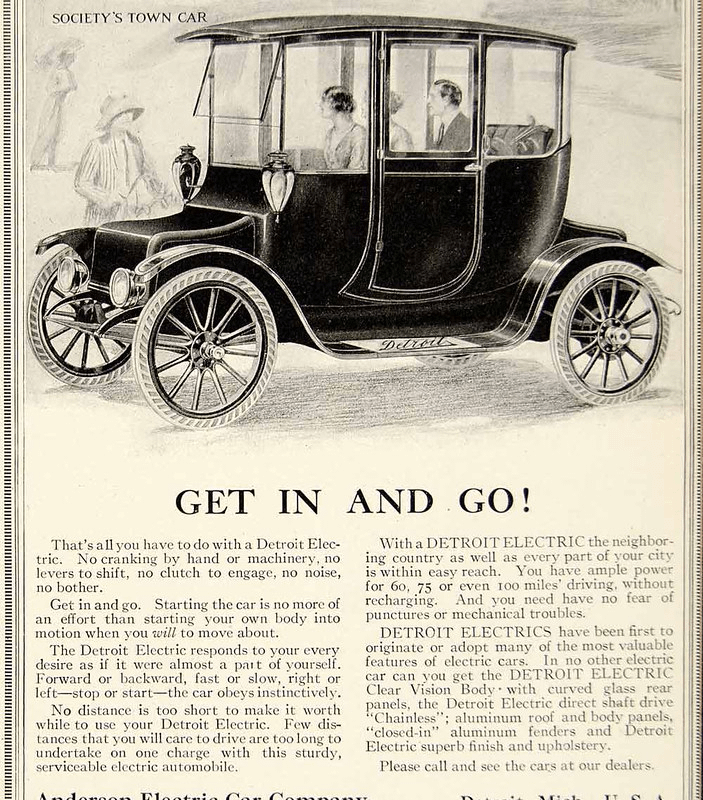
Early ad for a “Detroit” Electric car, from the anderson electric car company, circa 1913.
Title Tag: Charging Into History: The 1913 Detroit Electric Car Ad & Anderson’s Early EV Legacy
Meta Description: Explore the 1913 Detroit Electric car advertisement by Anderson Electric Car Company—a pioneering EV that rivaled gasoline models with quiet power, reliability, & elite appeal.
The 1913 Detroit Electric Car Ad: A Pioneering EV Marketing Classic
Before Tesla dominated headlines, electric vehicles (EVs) were already making waves in Detroit—over a century ago. One iconic artifact from this era? A 1913 advertisement for the Detroit Electric car, produced by the Anderson Electric Car Company. This vintage ad isn’t just a relic; it’s a testament to a forgotten era of automotive innovation, targeting affluent urbanites with promises of clean, quiet, and “hassle-free” motoring long before gas cars ruled the roads.
A Glimpse into the Early Electric Vehicle Market
In 1913, electric cars accounted for 38% of the U.S. auto market, competing fiercely with steam and gasoline-powered models. The Detroit Electric stood out as a premium choice, especially among women and city dwellers, thanks to its:
- Silent operation (no vibrating engines or exhaust fumes).
- Ease of use (no hand-crank starters—a major selling point before electric starters became standard).
- Impressive range: Up to 80 miles on a single charge with Edison batteries.
The Anderson Electric Car Company—originally a carriage maker—leveraged its expertise to build stylish, reliable EVs marketed as the “aristocrat of motordom.” Their ads emphasized sophistication, safety, and practicality, targeting an audience wary of noisy, smelly gasoline cars.
Decoding the 1913 Detroit Electric Advertisement
Vintage ads for the Detroit Electric car reveal clever marketing tactics still relevant today. A typical 1913 ad would feature:
1. Bold Claims of Superiority
Headlines like “Why Risk the Danger and Discomfort of Gasoline?” played on fears of unstable early gas cars, which required risky hand-cranking and emitted fumes. Detroit Electric positioned itself as the safer, cleaner alternative.
2. Elite Social Proof
Celebrity endorsements weren’t new even then! Ads highlighted high-profile owners like Clara Ford (Henry Ford’s wife), who drove a Detroit Electric Model 47. This appealed to affluent buyers seeking status symbols.
3. “Women-Friendly” Design
Early EV ads heavily targeted women, who favored electric cars for their simplicity. The Detroit Electric featured:
- Low-step entry (no climbing into high chassis).
- Simple tiller steering (easier than gear-shifting).
- Enclosed bodies for all-weather comfort.
4. Reliability & Range Assurance
Ads boasted slogans like “A full charge overnight!”—a nod to the convenience of home charging. Photographs showcased well-dressed drivers gliding through cities, reinforcing the car’s urban practicality.
Why the Detroit Electric Mattered—and Why It Faded
The Detroit Electric’s success peaked in the 1910s, with nearly 13,000 units sold by 1920. Yet gasoline cars eventually won the market due to:
- Cheaper mass production (Ford’s Model T).
- Improved road networks (enabling longer trips impractical for early EVs).
- Texas oil booms, making gas affordable.
Anderson Electric (later “Detroit Electric”) ceased production in 1939, but its legacy lives on. Modern EVs like the Nissan Leaf and Tesla Model 3 echo its promises: emission-free driving, intuitive controls, and urban adaptability.
The 1913 Ad’s SEO & Historical Goldmine
For collectors and historians, this advertisement offers rich insights into:
- Early 20th-century marketing psychology.
- Gender roles in automotive history.
- The cyclical nature of EV innovation.
Keyword Tip: Pair phrases like “1913 Detroit Electric ad” with terms like “vintage EV,” “Anderson Electric Car Company,” or “early electric vehicle history” to attract collectors, EV enthusiasts, and academic researchers.
Conclusion: A Century-Old Blueprint for Modern EVs
The 1913 Detroit Electric ad wasn’t just selling a car—it was selling a lifestyle of refinement and modernity. Over 100 years later, its core message resonates as automakers return to electric propulsion. As we race toward an EV future, Anderson’s pioneering vision reminds us: sometimes, the future is rediscovered in the past.
CTA: Did you know early EVs outsold gas cars in cities? Share your thoughts on vintage electric cars in the comments!
(Image suggestion: Embed a scanned 1913 Detroit Electric ad with alt-text: “1913 Detroit Electric car advertisement targeting urban elites with silent, rechargeable motoring.”)
Optimized Keywords: Detroit Electric 1913, Anderson Electric Car Company, vintage electric car ad, early 20th century EV, Clara Ford electric car, history of electric vehicles, pre-Tesla EVs.