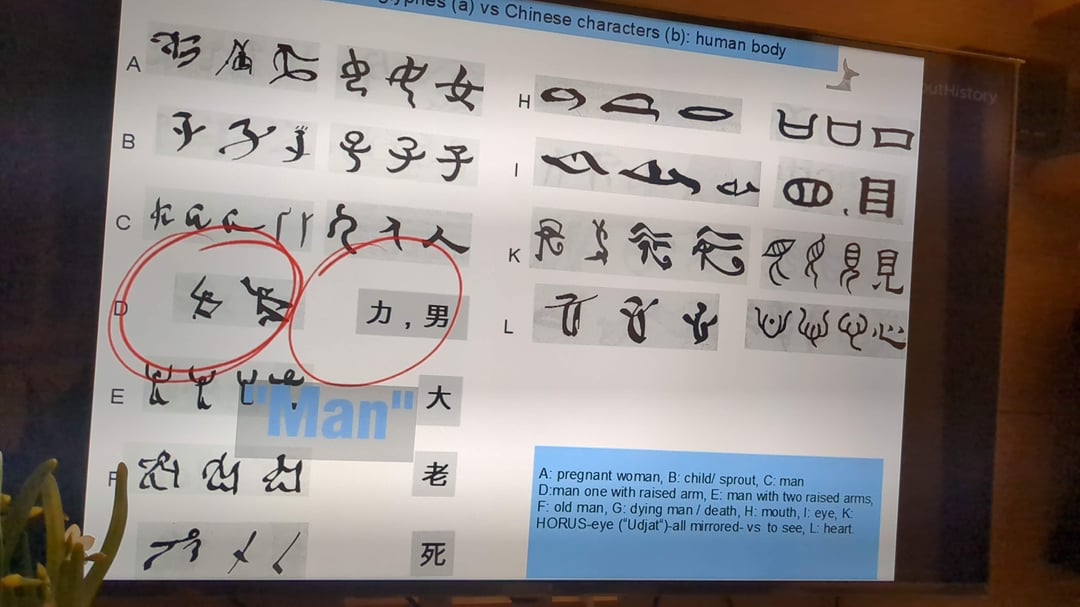
Egyptian Hieroglyphs vs Chinese Characters
Hieroglyphs vs. Hanzi: A Deep Dive into Ancient Writing Systems and Modern Legacies
Egyptian hieroglyphs and Chinese characters (Hanzi) are two of the world’s oldest, most visually striking writing systems. Both evolved from pictorial representations, yet their development, structure, and legacies diverged dramatically. This article explores how these ancient scripts shaped civilizations, their similarities and differences, and their enduring impacts today.
1. Origins and Historical Context
Egyptian Hieroglyphs (3200 BCE – 400 CE)
- Roots in Prehistory: Developed in Ancient Egypt as early as 3300 BCE, hieroglyphs (Greek for “sacred carvings”) first appeared on ivory tablets and ceremonial artifacts like the Narmer Palette.
- Purpose: Used primarily for religious texts, monumental inscriptions, and royal decrees. Hieroglyphs were reserved for tombs, temples, and elite communication.
- Decline: By the 4th century CE, hieroglyphs faded as Coptic and Greek took precedence. Knowledge of their meaning was lost until the 1822 decipherment of the Rosetta Stone by Jean-François Champollion.
Chinese Characters (1600 BCE – Present)
- Oracle Bones to Standardization: The earliest Chinese characters emerged as oracle bone script during the Shang Dynasty (c. 1600 BCE), inscribed on turtle shells for divination.
- Evolution: Over millennia, characters morphed through bronzeware script, seal script, clerical script, and finally, modern standardized Hanzi. The Qin Dynasty (221 BCE) unified writing under Small Seal Script.
- Longevity: Unlike hieroglyphs, Chinese characters remain in daily use, evolving continuously into simplified and traditional variants.
Key Difference: Hieroglyphs vanished as a living script, while Hanzi survived via adaptation.
2. Structure: Logographic Systems with Unique Mechanics
How Hieroglyphs Worked
- Logograms vs. Phonetics: Hieroglyphs combined:
- Logograms: Symbols representing words/concepts (e.g., 𓊃 [pronounced “wsir”] meaning “Osiris”).
- Phonograms: Symbols denoting sounds (e.g., 𓈖 = “n” sound).
- Determinatives: Silent glyphs clarifying word categories.
- Direction Flexibility: Written left-to-right, right-to-left, or top-to-bottom, depending on artistic needs.
How Chinese Characters Work
- Logographic Foundation: Each character represents a syllable and a meaning (e.g., 水 = “water,” pronounced shuǐ).
- Components: Characters combine:
- Radicals: Semantic clues (e.g., 氵 = water-related).
- Phonetic components: Hints for pronunciation (e.g., 湖 hú for “lake” shares sound with 胡 hú).
- Structured Writing: Written top-to-bottom (historically) or left-to-right today.
Key Similarity: Both use logograms, but Chinese radicals create a systematic framework absent in hieroglyphs.
3. Cultural Roles: Communication and Power
Hieroglyphs in Egypt
- Sacred and Exclusive: Literacy in hieroglyphs was limited to scribes, priests, and nobles. They reinforced pharaonic divinity and cosmic order (ma’at).
- Artistic Integration: Hieroglyphs were art – carved into stone, painted on papyrus, and integrated into architecture.
Hanzi in China
- Civilizational Glue: Unified diverse dialects; Mandarin, Cantonese, and others share Hanzi despite differing pronunciations.
- Scholarly Prestige: Mastery of characters became central to Confucian education and imperial bureaucracy.
Key Difference: Hieroglyphs emphasized religion and elite power; Hanzi fostered administrative unity and literacy.
4. Decipherment: Lost Knowledge vs. Living Tradition
- Hieroglyphs: Knowledge vanished post-Rome, making them a mystery until Champollion’s work in the 19th century.
- Hanzi: Never “died” but evolved. Early Western scholars like Matteo Ricci studied them through living speakers.
5. Modern Legacy: From Museums to Keyboards
Egyptian Hieroglyphs Today
- Studied by archaeologists and linguists.
- Inspire pop culture (e.g., films, video games), though often misrepresented.
- Unicode includes over 1,000 hieroglyphic symbols.
Chinese Characters in the Digital Age
- Used by 1.3 billion people in China, Taiwan, Singapore, and diasporas.
- Simplified (China) vs. Traditional (Taiwan/Hong Kong) debates reflect cultural identity.
- Technology adapted via Pinyin input, allowing digital use despite complexity.
Comparison Table: Hieroglyphs vs. Hanzi
| Feature | Egyptian Hieroglyphs | Chinese Characters (Hanzi) |
|---|---|---|
| Time Period | c. 3300 BCE – 400 CE | c. 1600 BCE – Present |
| Primary Use | Religious/monumental | Administrative, literary |
| Script Type | Logographic + phonetic | Logographic + phonetic radicals |
| Direction | Flexible (LTR, RTL, vertical) | Historically vertical, now LTR |
| Modern Users | None (deciphered dead script) | 1.3+ billion |
| Key Artifact | Rosetta Stone | Oracle bones |
Conclusion: Echoes of Ancient Ingenuity
Egyptian hieroglyphs and Chinese characters exemplify humanity’s quest to encode language visually. While hieroglyphs captivate us as relics of a lost world, Hanzi thrive as a living bridge to antiquity. Studying both reveals universal truths: writing systems shape power, identity, and cultural memory. As we type emojis today, we honor the legacy of these ancient innovators who first turned pictures into words.
SEO Keywords: Egyptian hieroglyphs vs Chinese characters, Hanzi history, logographic writing systems, ancient scripts compared, Rosetta Stone decipherment, evolution of Chinese writing.
Explore more ancient scripts: [Mayan Glyphs vs. Cuneiform] or [The Indus Valley Script Mystery].