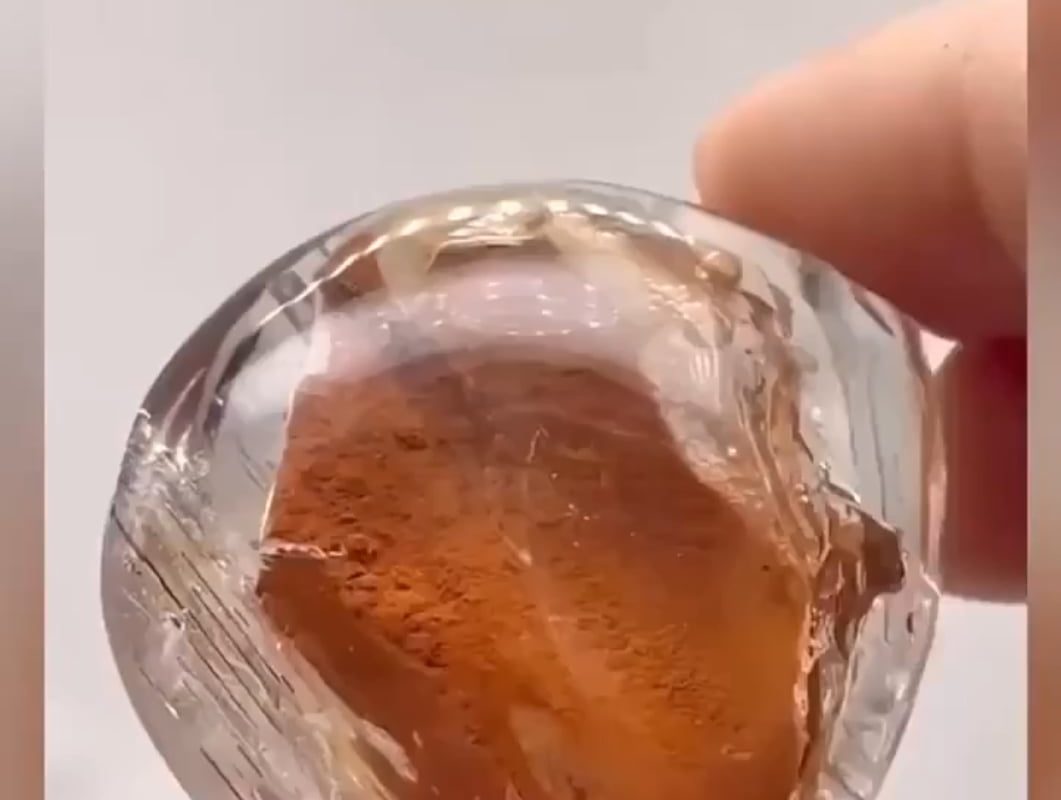
Fine sand and water trapped inside an enhydro quartz crystal for hundreds of millions of years
Enhydro Quartz: Exploring Ancient Water & Sand Trapped in Crystals for 100 Million Years
For centuries, quartz crystals have captivated humanity with their beauty and metaphysical allure. Among their many enigmatic varieties, Enhydro quartz stands out as one of geology’s most fascinating marvels—a crystal that imprisoned tiny pockets of water, air, or even fine sand within its structure hundreds of millions of years ago. These natural time capsules offer a glimpse into Earth’s primordial past, blending geological wonder with spiritual intrigue. In this article, we explore the science, mystery, and allure of enhydro quartz crystals containing ancient water and sand.
What Is Enhydro Quartz?
Enhydro quartz (from the Greek enhydros, meaning “water within”) is a type of quartz crystal that forms with hollow cavities containing liquids, gases, or solid particles. These trapped substances—often water, air bubbles, or fine silica sand—were sealed inside the crystal during its growth, creating a perfectly preserved “inclusion” that dates back to the crystal’s formation.
- Water Inclusions: The trapped liquid is typically groundwater or mineral-rich fluid from the crystal’s original environment.
- Sand or Particulate Inclusions: Fine grains of sand, clay, or minerals sometimes accompany the water, revealing clues about the ancient geological landscape.
How Enhydro Quartz Forms: A 100-Million-Year Journey
Enhydro quartz originates in hydrothermal environments, where silica-rich water flows through rock fissures under high pressure and temperature. Over millennia, quartz crystals grow layer by layer around microscopic imperfections or vapor bubbles in the solution. Here’s how ancient water and sand became trapped:
- Cavity Creation: A small void forms within the growing crystal due to shifts in pressure, temperature, or mineral saturation.
- Fluid Entrapment: Groundwater or silica-rich fluid fills the cavity. In some cases, microscopic sand particles are swept in.
- Sealing Process: As quartz continues to grow, it encases the fluid or sand tightly, often leaving a visible air bubble that moves when tilted.
- Geological Survival: Over hundreds of millions of years, tectonic shifts and erosion bring these crystals closer to Earth’s surface, where they’re discovered intact.
Why Sand and Water Inclusions Matter
Scientific Significance
Enhydro quartz provides scientists with a window into Earth’s distant past:
- Ancient Climate Clues: Isotopic analysis of trapped water can reveal atmospheric conditions from the Cretaceous or Jurassic eras.
- Mineral Evolution: Sand inclusions reflect the mineral composition of prehistoric riverbeds, deserts, or volcanic regions, aiding in reconstructing lost landscapes.
- Dating the Crystal: While the quartz itself is measured via radiometric dating, inclusions help verify timelines (some enhydros are over 1 billion years old).
Spiritual & Metaphysical Properties
In crystal healing, enhydro quartz is revered as a powerful amplifier of energy, symbolizing:
- Fluidity of Time: Linked to ancestral wisdom and patience, as it bridges eons in a single stone.
- Emotional Purification: The water element represents emotional release and intuition.
- Earth Connection: Sand grounds the crystal’s energy, embodying resilience and ancient history.
Identifying Authentic Enhydro Quartz
To confirm a crystal contains genuine trapped water or sand:
- Look for Moving Bubbles: Tilt the crystal under light—an air bubble inside liquid will shift.
- Check Seams or Fractures: Some inclusions are visible as “phantom” layers.
- Use Magnification: Sand grains appear as tiny particles suspended within or beside water pockets.
- Consult Experts: Reputable gemologists can verify enhydros using X-rays or spectroscopy.
Beware of imitations: Some sellers inject water into cracked quartz. Authentic enhydros have sealed, naturally formed cavities.
Where Are Enhydro Quartz Crystals Found?
- Brazil: Renowned for large, clear quartz with pristine water inclusions.
- Madagascar: Produces enhydros with colorful sand or mineral traces.
- Arkansas, USA: Home to Herkimer-like “diamonds” occasionally containing enhydros.
FAQs About Enhydro Quartz
Q: How does water stay trapped for millions of years?
A: The quartz’s molecular structure is impermeable, preserving its contents in a vacuum-like seal.
Q: Can you drink enhydro water?
A: No—the microscopic amount is scientifically invaluable but unsafe to extract due to contaminants.
Q: Do sand inclusions increase rarity?
A: Yes! “Dual inclusions” (water + sand) are exceptionally rare and prized by collectors.
Conclusion: A Capsule of Deep Time
Enhydro quartz crystals are nature’s ultimate time travelers—housing droplets of ancient oceans, whispers of primordial air, and grains of eroded mountains from ages before humanity existed. Whether studied for geologic insights or cherished as spiritual talismans, these stones remind us of Earth’s patient artistry. For collectors, scientists, and seekers alike, enhydro quartz bridges the unfathomable expanse of deep time with a single, mesmerizing crystal.
Explore More:
- The Science of Mineral Inclusions
- How to Cleanse & Charge Quartz Crystals
- Rare Crystals Every Collector Needs
Keywords for SEO: Enhydro quartz, water in quartz crystals, ancient sand inclusions, geologic time capsule, fluid inclusions, metaphysical quartz, quartz with trapped water, how enhydro quartz forms, how old is enhydro quartz.