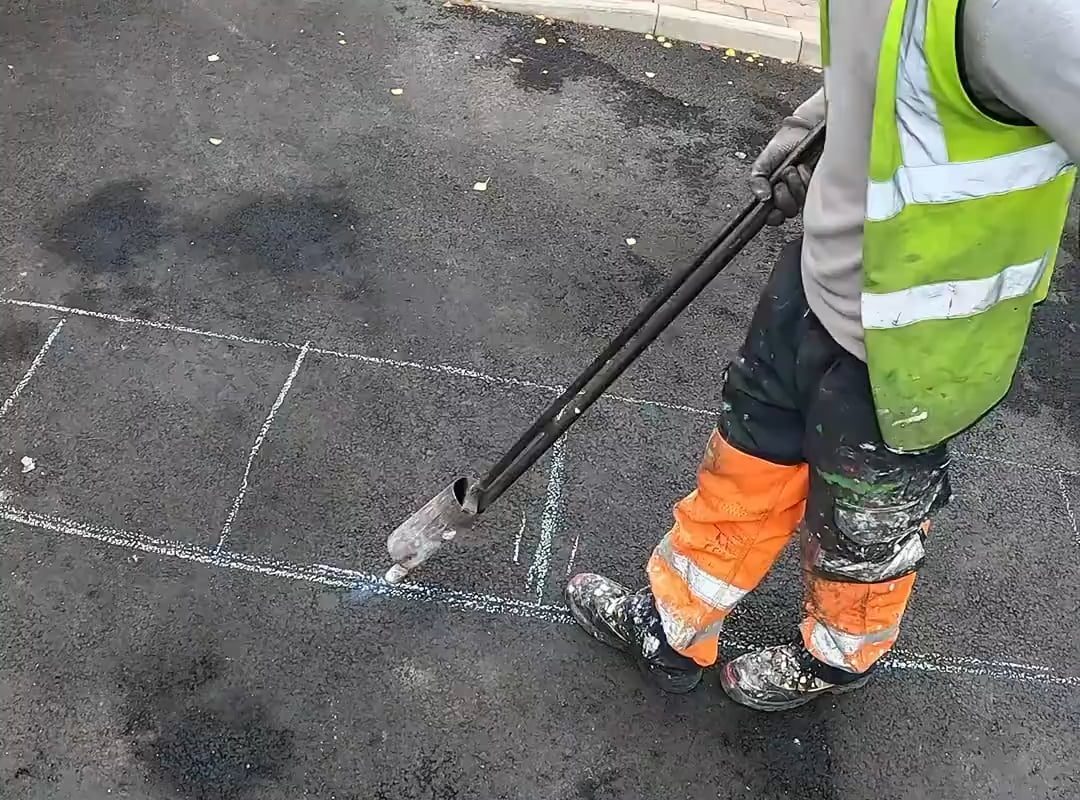
First-person view of precise road marking.
Meta Title: Inside Precision Road Marking: A First-Person Journey of Safety & Accuracy
Meta Description: Step into the boots of a road marking professional. Discover the technology, challenges, and meticulous process behind precision road striping—the backbone of safe highways.
First-Person View of Precise Road Marking: The Unseen Science of Safe Roads
Introduction: Dawn on the Asphalt Canvas
5:00 AM. The air is cool, the city still asleep. My team and I arrive at the highway stretch scheduled for renewal—a blank asphalt canvas waiting for the lines, symbols, and signals that guide millions of drivers. Precision road marking isn’t just about painting lines; it’s about creating a language for safe navigation. As a road marking technician, I know that millimeters matter, weather is a nemesis, and perfection is non-negotiable.
Here’s what it’s really like to be the unseen hand behind the stripes that save lives.
The Daily Grind: Tools, Tech & Teamwork
1. Pre-Deployment: The Blueprint Comes Alive
Before a single drop of paint hits the road, preparation reigns supreme.
- Surveying & Staking: Using GPS-enabled lasers, we plot every curve, arrow, and crosswalk from digital blueprints. Even a 1-degree deviation can mislead drivers at high speeds.
- Environmental Checks: Humidity, temperature, and road surface conditions dictate the type of paint (water-based, thermoplastic, or epoxy) and drying time. Rain? The job stops.
2. Machine Precision: Advanced Striping Trucks in Action
Modern road marking isn’t hand-painted—it’s a symphony of technology:
- Auto-Striping Trucks: Computer-guided rigs spray lines at 6–12 km/h, maintaining millimetric accuracy. Sensors adjust paint flow for consistent thickness (0.7–4 mm).
- Glass Bead Dispensers: Tiny reflective beads are embedded into wet paint, boosting night visibility. Too few? The line fades. Too many? It cracks.
- Thermoplastic Applications: For high-traffic zones, molten plastic at 200°C bonds to asphalt, lasting 5x longer than paint.
Personal Insight: “One lapse in calibrating the bead sprayer, and a highway’s reflectivity fails. That’s the difference between a safe curve and a collision.”
3. Human Oversight: When Tech Isn’t Enough
Machines aren’t infallible. My job includes:
- Edge Monitoring: Ensuring skip lines (dashed markings) align perfectly with road geometry.
- Symbol Stencils: Hand-placing templates for bike lanes, arrows, or school zones. A wonky pedestrian symbol? That’s a liability.
- Quality Scans: Using retroreflectometers to measure light bounce-off. Standards demand ≥ 400 mcd/lx/m²—anything less fails inspection.
The Science of Precision: Why Every Millimeter Counts
The Physics Behind the Paint
- Retroreflection: Glass beads bend light from headlights directly back to drivers. Precise bead size (300–850 microns) and embedment depth (50–60% submerged) are critical.
- Skid Resistance: Anti-slip additives in paint prevent hydroplaning, tested via British Pendulum Testers pre-deployment.
Regulatory Tightropes
Road markings must comply with:
- MUTCD (US) or ISO 13489 (Global): Dictating width, spacing, and color (e.g., yellow for no-pass zones, white for lanes).
- Accessibility Laws: ADA-compliant tactile paving for crosswalks.
Challenges: Battling Chaos for Clarity
1. Weather Wars
- Heat: Thermoplastic cools too fast? Adhesion fails.
- Cold: Paint won’t cure below 10°C without additives.
- Rain: A downpour can wash away hours of work.
2. Time Crunches & Traffic
We often work overnight to dodge traffic, racing against dawn. A single lane closure costs cities $10K/hour—delays aren’t an option.
3. Invisible Stakeholders: Autonomous Vehicles
Self-driving cars “read” road markings via LiDAR and cameras. Faded or irregular lines confuse AI, making our precision mission-critical for the future of transport.
The Ripple Effect: How Precision Saves Lives
Flawless road markings reduce accidents by 33% (NHTSA).
- Lane Departure Prevention: Clear edges lower sideswipe crashes.
- Pedestrian Safety: High-vis crosswalks cut fatalities by 44%.
My Perspective: “Seeing dashcam footage where ‘my’ lines guided a driver through black ice? That’s pride no paycheck matches.”
Conclusion: The Unsung Backbone of Mobility
Precision road marking blends art, science, and grit. Next time you drive past a freshly painted arrow or bike lane, remember the meticulous measurement, sweat, and tech that placed it there—to the millimeter.
In a world racing toward autonomy and smart cities, our craft isn’t fading. It’s evolving into a keystone of safer, smarter roads.
Keywords for SEO:
Precision road marking, highway striping technology, thermoplastic road markings, retroreflective glass beads, road safety standards, autonomous vehicle infrastructure, lane marking techniques, MUTCD compliance, road marking challenges, nighttime visibility road paint.
CTA for Engagement:
Did you know road markings need to reflect 400 mcd of light? Share your thoughts on the tech behind safer roads in the comments!