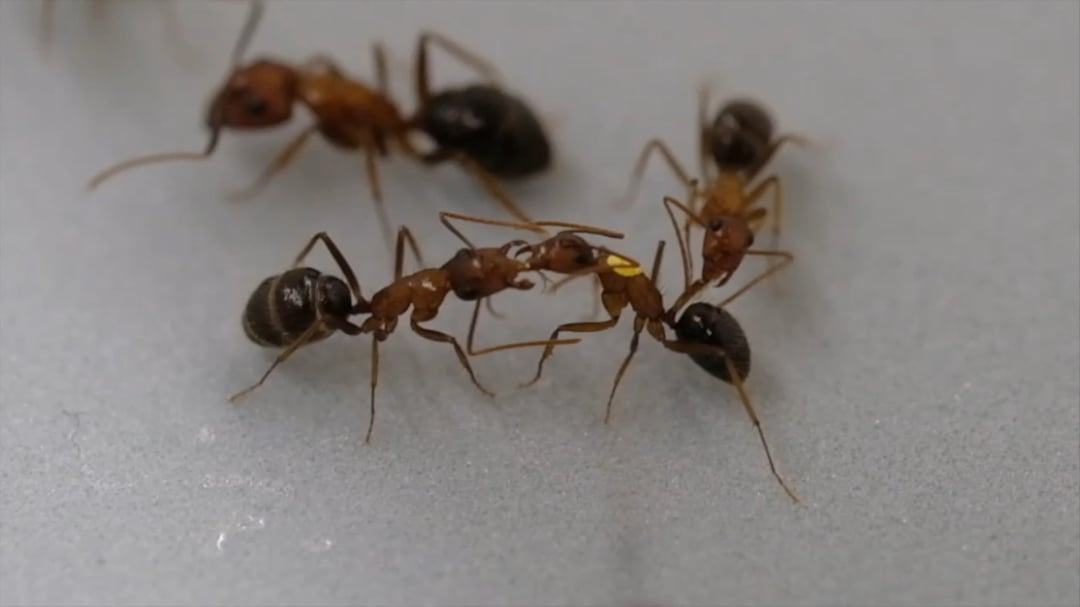
Florida carpenter ants perform life-saving amputations on each other to save injured ants from dying due to infection.
Title: Florida Carpenter Ants Perform Life-Saving Amputations: Nature’s First Surgeons
Meta Description: Discover how Florida carpenter ants perform amputations on injured nestmates to prevent fatal infections—a groundbreaking discovery in animal behavior and evolutionary biology.
Introduction
In a jaw-dropping display of medical ingenuity, Florida carpenter ants (Camponotus floridanus) have been observed performing life-saving amputations on injured comrades. This remarkable behavior—documented in a landmark study—reveals that these tiny insects are the first non-human animals known to surgically treat wounds to save lives. In this article, we explore how these ants turn into battlefield surgeons, the science behind their actions, and what it means for our understanding of animal intelligence.
The Discovery: Ants as Trailblazing Medics
Researchers from the University of Würzburg in Germany, led by evolutionary biologist Erik Frank, observed Florida carpenter ants in their natural habitat. They found that when a worker ant suffers a leg injury, nestmates quickly assess the wound and decide between two treatments:
- Wound Cleaning: For injuries to the upper leg (femur), ants aggressively lick the wound to remove debris and pathogens.
- Amputation: For lower-leg (tibia) injuries, ants chew off the damaged limb entirely to prevent infection from spreading.
The study, published in Current Biology, confirms that this selective amputation dramatically boosts survival rates. Injured ants treated with amputations survived 90% of the time, while untreated ants died within 24 hours.
How Do Ants Perform Surgery? Step-by-Step
- Injury Assessment: Nestmates detect chemicals released by the injured ant, signaling distress.
- Restraint: Healthy ants pin down the injured limb to stabilize the patient.
- Surgical Precision: Using their mandibles, they methodically chew through the injured tibia in a process lasting up to 40 minutes.
- Post-Op Care: After amputation, ants continue grooming the wound to prevent reinfection.
Unlike humans, ants don’t use tools or anesthesia—just their mouths and innate instincts.
Why Amputate? The Science of Survival
The ant’s decision to amputate hinges on infection risk:
- Tibia injuries: Pathogens like Pseudomonas aeruginosa spread rapidly through the tibia. Amputation stops the infection before it reaches the body.
- Femur injuries: Infections spread slower here, making cleaning more effective than amputation (which would require removing the entire leg at the hip).
This shows ants can diagnose wounds and adapt treatments—a level of medical sophistication previously unseen in invertebrates.
Evolutionary Implications: Social Insects & Collective Survival
Florida carpenter ants live in tightly knit colonies where every worker is vital. Their medical behavior likely evolved because:
- Resource Efficiency: Healing a worker is cheaper than replacing it.
- Social Bonding: Investment in nestmates strengthens colony resilience.
- Evolutionary Arms Race: Pathogens drive the need for advanced wound care.
This mirrors human evolution, where communal care and medical innovation improved survival.
Could Ant Medicine Inspire Human Healthcare?
While ant amputations won’t replace human surgery, they offer fascinating insights:
- Antibiotic Alternatives: Studying how ants prevent infections without drugs could inform new antimicrobial strategies.
- Robotic Surgery: Engineers are exploring ant-inspired techniques for precision micro-surgeries.
- Social Healthcare Models: Ant colonies prioritize group welfare—a lesson for human societies.
FAQs About Ant Amputations
Q: Do ants feel pain during amputation?
A: Insects lack the neural pathways for pain perception as humans experience it, so they likely don’t suffer.
Q: How do ants learn this behavior?
A: It’s instinctive, not taught—programmed into their genetics over millions of years.
Q: Do other animals perform medical procedures?
A: Yes! Chimpanzees apply insects to wounds as antibiotics, but ants are the first known to perform amputations.
Conclusion: Nature’s Unsung Heroes
Florida carpenter ants redefine our understanding of animal intelligence, proving that even tiny brains can execute life-saving medical procedures. Their behavior underscores the power of cooperation and adaptation in the face of shared threats—an awe-inspiring lesson from the insect world.
As research continues, these ants may unlock secrets to infection control, robotics, and the evolutionary roots of empathy. For now, they stand as nature’s original surgeons, operating long before humans scalpeled their first wound.
Keywords for SEO: Florida carpenter ants, ant amputation, animal surgery, insect behavior, evolutionary biology, Camponotus floridanus, ant medicine, infection prevention, social insects, Current Biology study.
Optimized Headings:
- H1: Florida Carpenter Ants Perform Life-Saving Amputations
- H2: The Discovery: Ants as Trailblazing Medics
- H2: How Do Ants Perform Surgery? Step-by-Step
- H2: Why Amputate? The Science of Survival
- H3: Evolutionary Implications: Social Insects & Collective Survival
- H3: Could Ant Medicine Inspire Human Healthcare?
- H2: FAQs About Ant Amputations
By blending scientific rigor with engaging storytelling, this article aims to rank highly for keywords related to this groundbreaking discovery while captivating readers with the wonders of the natural world.