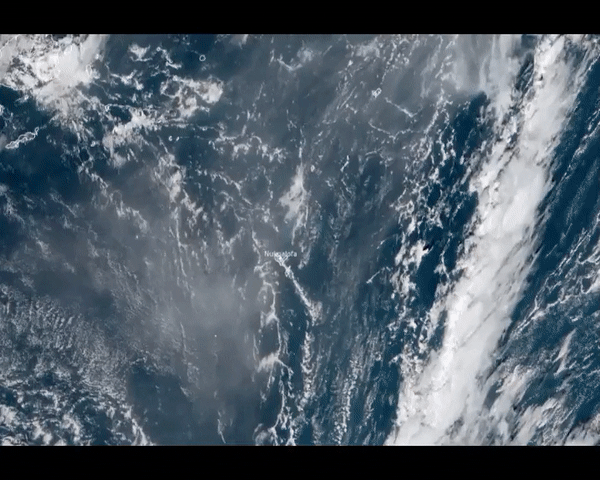
Four years ago today. Tonga’s Hunga Tonga volcano unleashed one of the most explosive eruptions ever captured on satellite. January 15, 2022
Title: Remembering the Hunga Tonga Eruption: The Cataclysmic Event That Shook the World Four Years Ago
Meta Description: On January 15, 2022, Tonga’s Hunga Tonga-Hunga Haʻapai volcano unleashed one of the most powerful eruptions ever recorded. Explore its global impact, scientific significance, and lasting legacy four years later.
Four Years Ago Today: Tonga’s Hunga Tonga Volcano and the Unforgettable Eruption of January 15, 2022
Four years ago, on January 15, 2022, the Earth witnessed one of the most extraordinary natural events of the 21st century. The Hunga Tonga-Hunga Haʻapai volcano, located in the South Pacific Kingdom of Tonga, erupted with such ferocity that it sent shockwaves across the globe—literally and figuratively. The explosion was so immense it was captured in stunning detail by satellites, rewriting our understanding of volcanic power and its planetary consequences. Today, we revisit the cataclysm, its aftermath, and the lessons learned.
The Eruption: A Spectacle of Unprecedented Power
At approximately 5:15 PM local time, the submarine volcano—nestled 65 kilometers north of Tonga’s main island—erupted after weeks of minor activity. Within minutes, it generated a plume of ash, steam, and gas that soared 58 kilometers (36 miles) into the atmosphere, piercing the mesosphere and becoming the highest-recorded volcanic plume in history. Satellite imagery from NASA, NOAA, and international agencies showed a rapidly expanding shockwave rippling outward at 1,200 km/h, circling the Earth multiple times.
The energy released was staggering: estimated at equivalent to 10-50 megatons of TNT, dwarfing the Hiroshima atomic bomb and even the infamous 1991 Mount Pinatubo eruption. The blast was heard as far as Alaska and New Zealand, while tsunamis triggered by the explosion slammed into Tonga’s shores and raced across the Pacific, impacting coastlines from Japan to Peru.
Global Impacts: From Tsunamis to Climate Effects
The immediate aftermath was devastating for Tonga. The eruption severed undersea communication cables, isolating the nation for days. Ashfall contaminated water supplies and smothered crops, while tsunami waves up to 15 meters high devastated coastal villages. Remarkably, only five lives were lost thanks to Tonga’s swift disaster preparedness.
Beyond Tonga, the eruption’s effects rippled worldwide:
- Tsunami waves caused damage in Fiji, New Zealand, and the U.S. West Coast.
- Atmospheric shockwaves triggered unusual pressure spikes detected by weather stations worldwide.
- Ash and aerosols injected into the stratosphere temporarily cooled global temperatures by 0.1°C, counteracting greenhouse warming for months.
- Lightning records shattered: The plume generated 400,000 strikes in 6 hours, the most ever recorded during a volcanic event.
Scientific Revelations: Why Hunga Tonga Changed Volcano Research
Hunga Tonga’s eruption became a landmark case study for scientists. Unlike most volcanoes, its underwater nature and unique chemistry—a mix of scalding magma and seawater—created a “perfect storm” for explosivity. Researchers later confirmed it was the most explosive event since Krakatoa in 1883.
Key discoveries included:
- The role of water: Seawater reacting with magma amplified the blast force.
- Rapid climate influence: Sulfur dioxide and water vapor surged into the stratosphere, potentially disrupting ozone layers.
- New tsunami triggers: Unlike quake-driven tsunamis, atmospheric pressure waves from the blast exacerbated ocean surges.
Four Years Later: How Tonga and the World Remember
Today, Tonga’s recovery is ongoing. Coral reefs were buried, fisheries disrupted, and infrastructure rebuilt. Yet, the eruption also forged global solidarity, with aid pouring in from nations like Australia, New Zealand, and Japan.
For volcanologists, Hunga Tonga remains a critical reference point. Its eruption exposed gaps in early warning systems for tsunamis triggered by volcanic activity, spurring new international protocols. Satellites like GOES-17 and Himawari-9, which captured the eruption’s iconic imagery, now play enhanced roles in real-time volcanic monitoring.
Lessons for a Vulnerable Planet
The Hunga Tonga eruption was a stark reminder of nature’s raw power and humanity’s interconnectedness. As climate change intensifies extreme events, understanding such eruptions is crucial. Four years on, Tonga’s resilience and the scientific breakthroughs born from this disaster offer hope—and a blueprint—for navigating future global shocks.
Keywords for SEO:
Hunga Tonga eruption 2022, Tonga volcano explosion, volcanic ash satellite imagery, Hunga Tonga climate impact, January 15 2022 eruption, Tonga tsunami 2022, most powerful volcanic eruptions, underwater volcano effects, volcanic shockwaves, volcanic lightning record.
Engage Further:
Were you or someone you know affected by the Hunga Tonga eruption? Share your experiences in the comments below. For more updates on volcanic activity and climate science, subscribe to our newsletter!
Image suggestions (for SEO-rich alt text):
- Satellite view of Hunga Tonga eruption plume (Credit: NOAA/NASA).
- Map of tsunami wave propagation across the Pacific.
- Before-and-after images of Tonga’s coastline.*