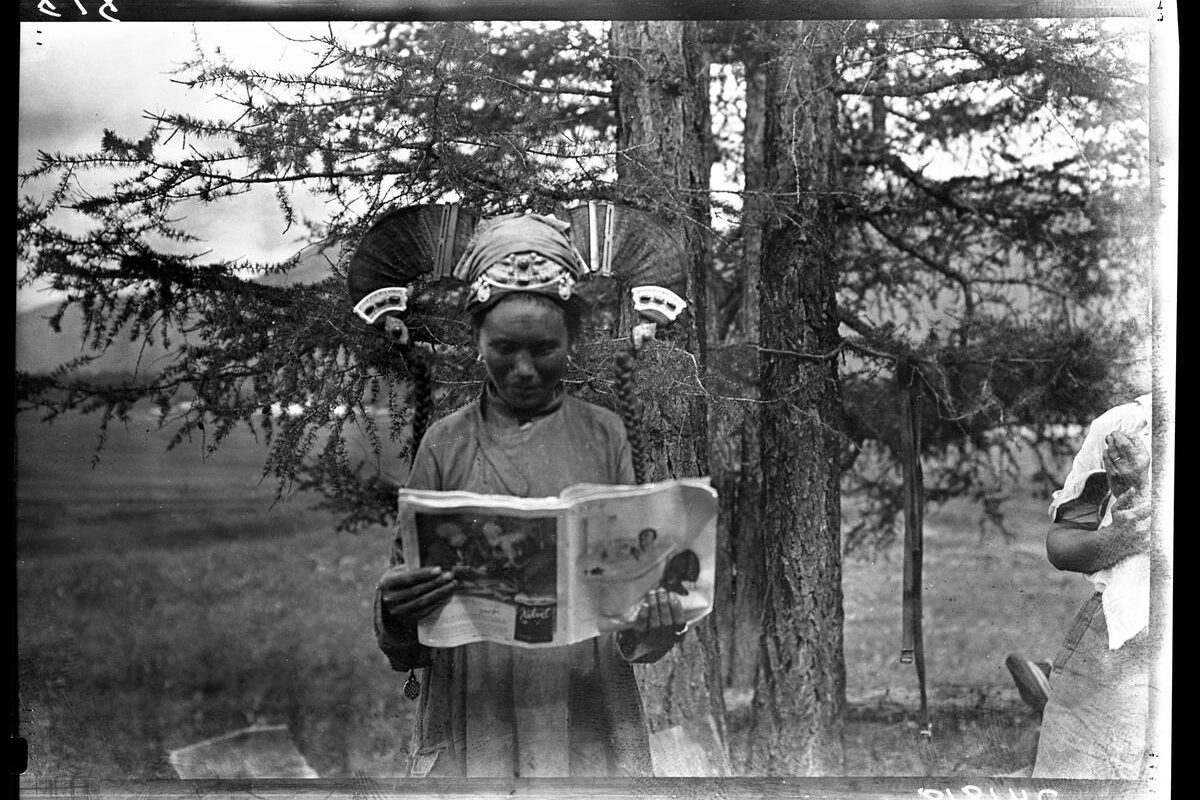
Glass negative of a Mongolian lady dressed in her traditional clothes, introduced to”Cosmopolitan” Magazine, 1919.
Rediscovering History: The 1919 Glass Negative of a Mongolian Lady in Cosmopolitan Magazine
In an era defined by rapid globalization and curiosity about distant cultures, a remarkable glass negative photograph of a Mongolian lady in traditional attire found its way into the pages of Cosmopolitan magazine in 1919. This captivating image offers more than just a glimpse into early 20th-century photography—it bridges continents, celebrates cultural heritage, and reveals how Western media grappled with portraying non-European cultures. Let’s explore the story behind this historical artifact and its enduring legacy.
The Photograph: A Moment Frozen in Time
The glass negative—a fragile yet enduring medium popular before film became mainstream—captures a Mongolian woman adorned in exquisite traditional clothing. Her pose is dignified, her gaze steady, reflecting both individuality and cultural pride.
Details of Her Attire
Traditional Mongolian clothing in the early 1900s was designed for both practicality and symbolism, suited to the steppe’s harsh climate and nomadic lifestyle:
- The Deel: A long, robe-like garment worn by men and women, often made from silk, cotton, or wool. Hers likely featured intricate embroidery at the cuffs and collar, possibly symbolizing nature or tribal identity.
- Headwear: A pointed or rounded hat, adorned with silver ornaments, beads, or fur, indicating her regional or marital status.
- Accessories: Silver jewelry (like the khadag necklace), leather belts, and embroidered boots completed the ensemble, each piece imbued with cultural significance.
Why Cosmopolitan? Context in 1919
In 1919, Cosmopolitan was far from today’s lifestyle-focused magazine. Under editor-in-chief Ray Long, it emphasized literary fiction, investigative journalism, and—crucially—exotic photography to satiate post-WWI curiosity about the world.
Cultural Fascination vs. Exoticism
The Mongolian lady’s photograph fit into a trend of showcasing non-Western cultures, though often through a lens of exoticism. While well-intentioned, such features sometimes reduced complex societies to “mystical” curiosities. Yet, this image also served as a rare portal for Western audiences to witness Mongolia’s rich heritage at a pivotal historical moment:
- Mongolia in 1919: Fresh from the fall of the Qing Dynasty (1911), Mongolia operated under the Bogd Khanate, navigating fragile independence amidst Chinese and Russian pressures.
- Photography as Diplomacy: Images like this may have aimed to humanize Mongolia globally, countering stereotypes of remoteness.
The Significance of Glass Negatives
The medium itself tells a story. Glass negatives (popular 1850s–1920s) required skillful handling:
- Process: Coated with light-sensitive emulsion, they produced sharper images than paper but were prone to breakage.
- Rarity: Surviving glass negatives of non-Western subjects are scarce, making this Mongolian portrait doubly valuable for historians and archivists.
Cultural Legacy: Why This Image Matters Today
Beyond its aesthetic appeal, the photograph is a testament to resilience. Traditional Mongolian clothing, nearly erased during Soviet-era cultural suppression, has seen a revival since the 1990s. Images like this one:
- Preserve Heritage: Document styles and techniques at risk of being forgotten.
- Inspire Reclamation: Modern designers reference historical attire in contemporary fashion.
- Spark Dialogue: Encourage respectful cultural exchange, contrasting 1919’s often superficial portrayals.
FAQs About the 1919 Mongolian Photograph
Q: Who might have taken the photograph?
A: Likely a Western explorer, missionary, or commercial photographer, given Cosmopolitan’s access to international networks.
Q: Where is the glass negative today?
A: If preserved, it could reside in a museum or private collection. Similar artifacts are held by institutions like the Smithsonian or the National Museum of Mongolia.
Q: How can we view traditional Mongolian clothing today?
A: Visit Mongolia’s Naadam Festival, explore the Mongolian Costumes Museum in Ulaanbaatar, or study digitized archives like Harvard’s Peabody Museum collections.
Conclusion: A Window into Shared Humanity
The 1919 glass negative of a Mongolian lady transcends time. It reminds us that even in an age of imperialism and cultural misunderstanding, art and photography could foster fragile connections. Today, as Mongolia celebrates its cultural renaissance, this image stands as a tribute to the elegance and endurance of its people—and a call to preserve the world’s diverse heritage with reverence.
Keywords for SEO:
Mongolian traditional clothing, 1919 glass negative photograph, Cosmopolitan Magazine 1919, historical Mongolian attire, early 20th century Mongolia, cultural heritage preservation, Bogd Khanate era, traditional deel, Mongolian cultural revival.
Image Alt-Text (for reference):
“Vintage black-and-white glass negative portrait of a Mongolian woman in embroidered deel and headdress, featured in Cosmopolitan Magazine, 1919.”
By exploring this artifact, we honor not just the unnamed Mongolian lady, but the power of photography to immortalize culture against the tides of time.