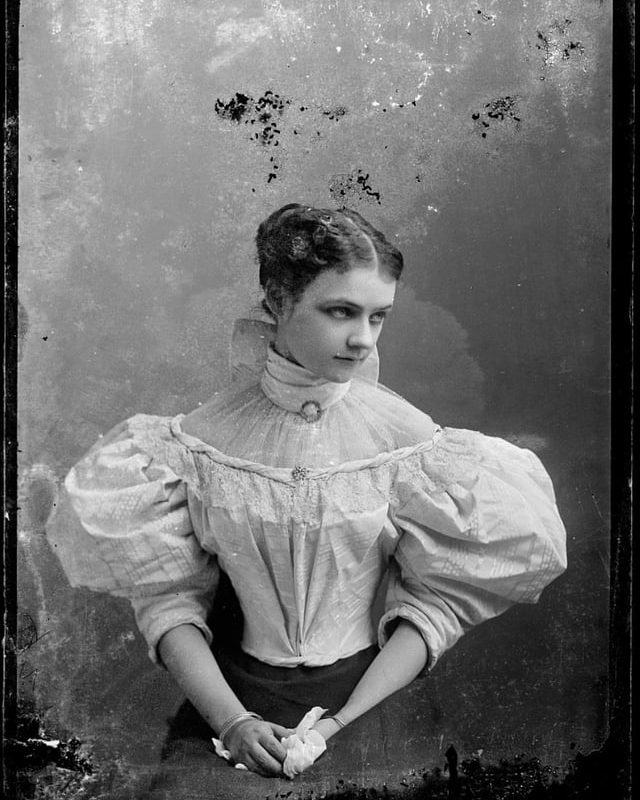
Glass negatives that show women with the fashionable at the time “Leg of mutton” sleeves, circa 1890.
Title: Capturing 1890s Fashion: Glass Negatives & the Iconic “Leg of Mutton” Sleeve
Meta Description: Explore the world of 1890s fashion through rare glass negatives showcasing the dramatic “leg of mutton” sleeve—an iconic symbol of Victorian women’s style.
The late 19th century was an era of bold silhouettes and intricate details in women’s fashion, and few trends embodied the drama of the 1890s more than the legendary “leg of mutton” sleeve. Surviving today through fragile glass negatives—early photographic plates that predate film—these images offer a stunning glimpse into the lavish style of Victorian women, immortalizing a fleeting moment in fashion history.
What Are Glass Negatives?
Glass negatives were the primary medium for professional photography in the late 1800s. Created using the collodion wet plate process, these delicate plates captured high-detail images ranging from studio portraits to candid street scenes. Surviving examples are rare treasures, often fragmented or damaged by time, but those that endure—like those featuring 1890s fashion—provide invaluable insights into daily life and style over a century ago.
The Rise of the “Leg of Mutton” Sleeve
Fashion in the 1890s embraced extremes: tight corsets created hourglass silhouettes, while gigantic sleeves, nicknamed “leg of mutton” (or gigot) for their resemblance to a sheep’s hindquarter, ballooned from shoulders to elbows before tapering sharply to the wrist. This daring look:
- Symbolized status: The voluminous sleeves required extra fabric and skilled tailoring, making them a mark of wealth.
- Rebelled against minimalism: After decades of slender sleeves, the exaggerated shape signaled a shift toward opulence.
- Balanced proportions: Paired with cinched waists and A-line skirts, the sleeves created an illusion of dramatic curves.
Glass negatives from this era often showcase women in tailored day dresses or evening gowns, their sleeves meticulously posed to highlight their grandeur. In studio portraits, subjects leaned gently against chairs or held parasols to accentuate the sculptural shape of their garments.
Why Glass Negatives Matter to Fashion History
These photographic relics do more than document trends—they tell stories of craftsmanship, social norms, and cultural ideals.
- Preservation of Detail: Glass negatives captured textures like silk, lace, and stiffened cotton with remarkable clarity, revealing how fabrics were manipulated to create those iconic sleeves.
- Everyday Context: Unlike polished fashion plates, photographs depict real women adapting the trend—wrinkled sleeves, imperfect draping, and all.
- Cultural Insight: The popularity of the sleeve coincided with the New Woman movement, a push for female independence. Some historians argue the bold sleeves mirrored growing assertiveness in women’s roles.
The Legacy of 1890s Sleeves in Modern Fashion
Though the leg of mutton sleeve faded by 1905, its impact endures. Modern designers like Alexander McQueen and Vivienne Westwood have reimagined the silhouette, celebrating its theatricality. Meanwhile, historical reenactors and costume designers rely on glass negatives to recreate authentic Victorian garments—sleeves and all.
Did You Know?
Conservators at institutions like The Metropolitan Museum of Art and the Victoria and Albert Museum carefully digitize glass negatives to make these fragile artifacts accessible worldwide, ensuring 1890s fashion remains alive for generations.
Conclusion: A Window Into Victorian Style
The glass negatives of the 1890s do more than freeze a moment—they immortalize an era’s aspirations, artistry, and cultural shifts. Through images of women wearing the audacious leg of mutton sleeve, we see a society balancing tradition and transformation, one lavish stitch at a time.
Explore Further: Visit digital archives like the Library of Congress or your local historical society to uncover more glass negatives—and let these stunning snapshots inspire your own appreciation for fashion’s past.
Keywords: Glass negatives fashion history, leg of mutton sleeves 1890s, Victorian photography women, 1890s clothing trends, historical fashion photography, Victorian era sleeves, women’s fashion 1890, antique photography style.