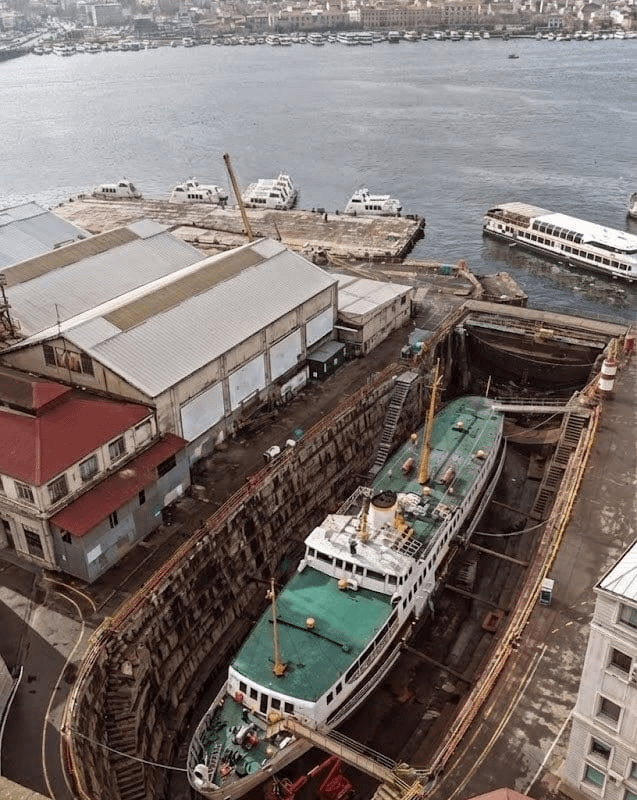
Haliç Shipyard (Tersane-i Amire) in Istanbul, Turkey, founded by the Ottomans in 1455, is often cited as the oldest operating shipyard in the world.
Title: Haliç Shipyard (Tersane-i Amire): Istanbul’s 600-Year-Old Maritime Legacy
Meta Description: Discover Haliç Shipyard (Tersane-i Amire), the world’s oldest operating shipyard, founded by the Ottomans in 1455. Explore its history, significance, and modern-day role in Istanbul.
Haliç Shipyard: The Ancient Heart of Ottoman Naval Power
Nestled along the shimmering waters of the Golden Horn (Haliç) in Istanbul, the Haliç Shipyard (Tersane-i Amire) stands as a living testament to maritime history. Founded in 1455 by the Ottoman Empire, this iconic shipyard is widely recognized as the world’s oldest continuously operating shipyard, symbolizing Turkey’s seafaring prowess for over five centuries. From building warships that dominated the Mediterranean to its modern-day role in naval construction, Tersane-i Amire remains an enduring symbol of Istanbul’s imperial past and industrial resilience.
A Legacy Forged in Conquest: The Birth of Tersane-i Amire
The Haliç Shipyard’s story begins just two years after the Ottoman conquest of Constantinople (1453). Sultan Mehmed II (“the Conqueror”) recognized the strategic importance of controlling sea routes to secure the empire’s expansion. The Golden Horn’s natural harbor provided ideal conditions for shipbuilding, sheltered from storms and close to the imperial capital’s resources.
Key Historical Milestones:
- 1455: Officially established as the Ottoman Imperial Naval Arsenal (Tersane-i Amire).
- 16th Century: Expanded dramatically under Suleiman the Magnificent, reaching 200 docks at its peak.
- 17th–19th Centuries: Built legendary warships, including galleys and later steamships, securing Ottoman dominance in the Black Sea and Mediterranean.
- 1923: Transitioned to the Turkish Republic, continuing its naval operations under state supervision.
Engineering Marvels of the Ottoman Era
Tersane-i Amire was more than a shipyard—it was a sprawling industrial complex employing thousands of craftsmen, engineers, and sailors. Innovations pioneered here reshaped naval warfare:
- Galleys & Galleons: Massive oar-powered galleys and sail-driven ships were constructed for the Ottoman Navy.
- Steam Revolution: In the 19th century, Tersane-i Amire adapted to steam-powered shipbuilding, launching Turkey’s first modern warships.
- Architectural Heritage: The site still houses original Ottoman-era dry docks, workshops, and administrative buildings, blending functionality with grandeur.
Why Tersane-i Amire Mattered to the Empire
- Military Supremacy: The shipyard fueled Ottoman naval campaigns, enabling victories like the 1571 Battle of Preveza.
- Global Trade Hub: Ships built here connected Istanbul to Venice, Alexandria, and beyond, enriching the empire’s economy.
- Technological Innovation: It served as a center for maritime R&D, adopting cutting-edge European designs while preserving traditional techniques.
Haliç Shipyard in the Modern Age
Today, the shipyard operates under Turkey’s Ministry of Defense, maintaining its original purpose while embracing modernity:
- Active Naval Production: It builds patrol boats, military vessels, and repairs commercial ships for the Turkish Navy.
- Urban Regeneration: Parts of the Golden Horn’s historic dockyards have been revitalized as cultural spaces, including museums and event venues.
- UNESCO Recognition: Efforts are underway to nominate the Golden Horn industrial landscape, including Tersane-i Amire, as a World Heritage Site.
Visiting Tersane-i Amire: A Journey Through Time
While the shipyard remains a working facility with restricted access, visitors can explore its legacy through:
- Nearby Attractions: The Rahmi M. Koç Museum (located in a restored Ottoman-era dock) showcases maritime artifacts.
- Golden Horn Views: Walk along the Haliç coastline to see the historic dry docks from afar.
- Cultural Events: The annual Istanbul Biennial and festivals occasionally utilize the shipyard’s atmospheric spaces.
How to Get There:
- Public Transport: Take the Tram (T1 Line) to Eminönü or buses to Fener, followed by a short walk.
- Best Photo Spots: Galata Bridge or the hills of Fener for panoramic views of the Golden Horn’s shipyard skyline.
Conclusion: Anchoring Istanbul’s Past and Future
From Mehmed the Conqueror’s vision to today’s high-tech shipbuilding, the Haliç Shipyard (Tersane-i Amire) remains a cornerstone of Istanbul’s identity. As the world’s oldest operating shipyard, it embodies the ingenuity, ambition, and resilience of an empire that once ruled the seas. For history buffs, maritime enthusiasts, or anyone captivated by Istanbul’s layered past, Tersane-i Amire is a silent yet powerful storyteller of Turkey’s enduring maritime spirit.
Plan Your Visit: Combine a trip to Haliç with explorations of nearby landmarks like the Süleymaniye Mosque, Eyüp Sultan, and the vibrant Balat district to experience Istanbul’s living history.
Keywords: Haliç Shipyard, Tersane-i Amire, oldest shipyard in the world, Ottoman shipyard Istanbul, Golden Horn Istanbul, Turkish naval history, Istanbul historical sites, maritime heritage, Mehmed the Conqueror.