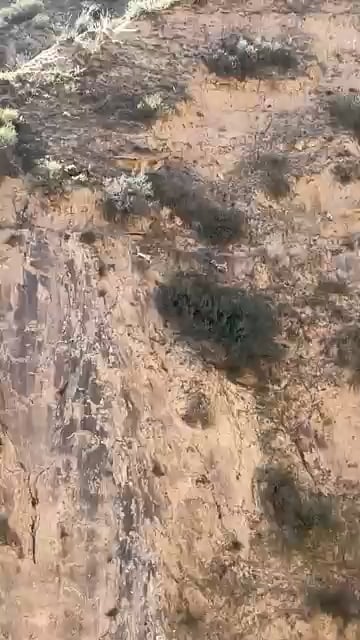
Himalayan Bharal (blue sheep) running along the side of the mountains
Himalayan Bharal: Masters of Mountain Terrain – Unveiling the Secrets of the Blue Sheep
The Himalayas – a realm of snow-capped peaks, sheer cliffs, and windswept plateaus – harbor some of Earth’s most extraordinary wildlife. Among these rugged landscapes, few sights captivate adventurers more than the Himalayan Bharal (Pseudois nayaur), also known as the blue sheep, effortlessly sprinting across near-vertical mountain faces. This elusive ungulate, neither a true sheep nor a goat, thrives where few mammals dare to tread. In this article, we explore the biology, behavior, and breathtaking adaptability of the Bharal, revealing why it’s a symbol of high-altitude survival.
The Blue Sheep: A Himalayan Icon
With a name hinting at the bluish-gray tint of their coarse winter coat (especially pronounced in males), the Bharal blends seamlessly into the rocky Himalayan backdrop. Found at elevations of 9,800–17,000 feet (3,000–5,200 meters), these agile climbers inhabit regions spanning Nepal, India (Ladakh, Himachal Pradesh, Uttarakhand), Bhutan, Tibet, and Pakistan. Their ability to traverse seemingly impossible slopes has earned them local names like Bharal (Nepali) and Nayan (Tibetan).
Anatomy of a Mountain Acrobat: Built for the Cliffs
How does the Bharal defy gravity on terrain that would challenge even expert mountaineers? Evolution has equipped them with remarkable adaptations:
-
Hooves Built for Grip:
- Their wide, concave hooves act like natural suction cups, gripping loose scree and rock ledges.
- Soft, rubbery pads provide traction on smooth surfaces, while sharp edges prevent slipping.
-
Powerful Legs & Low Center of Gravity:
- Compact, muscular bodies (weighing 35–75 kg) enable explosive jumps and rapid direction changes.
- Short legs lower their center of mass, enhancing balance on unstable slopes.
-
Keen Senses:
- Large, laterally placed eyes grant near 360-degree vision to spot predators like snow leopards or wolves.
- Acute hearing detects distant threats in the thin mountain air.
Why Do Bharal “Run” the Mountains?
Bharal are often seen darting along cliff faces not for sport, but survival:
- Escape Strategy: When threatened, they flee upward to inaccessible ridges where predators can’t follow.
- Foraging Efficiency: They traverse steep slopes to graze on grasses, lichens, and herbs growing in alpine meadows and rocky outcrops.
- Seasonal Migration: Herds move vertically with the seasons, descending to lower valleys in winter and ascending to high pastures in summer.
Predators and Ecosystem Role
The Bharal is a linchpin of the Himalayan food chain:
- As primary prey for snow leopards, they sustain this endangered big cat.
- Wolves, lynx, and Himalayan golden eagles also hunt juveniles or weak individuals.
- Their grazing habits help maintain alpine vegetation biodiversity.
Interestingly, Bharal coexist peacefully with livestock (like goats) in some regions, though competition for pasture is a growing concern.
Where to Spot Bharal in the Wild
For wildlife enthusiasts and photographers, these parks offer prime Bharal viewing:
- Hemis National Park, Ladakh (India): One of the best places to see Bharal alongside snow leopards.
- Valley of Flowers National Park, Uttarakhand (India): Summer blooms backdrop their high-altitude herds.
- Sagarmatha National Park, Nepal: Near Everest, Bharal thrive amidst glaciers and valleys.
- Tibetan Plateau (China): Vast, remote habitats support large populations.
Best Time: Early morning/late evening during spring (April-June) or autumn (September-November), when visibility is clear, and herds are active.
Conservation Status and Threats
Listed as Least Concern by IUCN due to stable populations, Bharal still face mounting pressures:
- Habitat Fragmentation: Roads, mining, and tourism infrastructure disrupt migration routes.
- Climate Change: Altered snowfall patterns affect food availability.
- Human-Wildlife Conflict: Overgrazing by livestock reduces forage, forcing competition.
Conservation efforts focus on protecting corridors (e.g., Trans-Himalayan initiatives) and promoting coexistence with local communities.
Conclusion: Guardians of the High Peaks
The Himalayan Bharal exemplifies nature’s genius – an animal sculpted by millennia to conquer the world’s most extreme environment. Watching these blue-gray silhouettes dance across cliffs isn’t just a visual marvel; it’s a testament to resilience in the thin air of the roof of the world. By safeguarding their habitats, we ensure that future generations can witness the Bharal’s fearless mountain runs, a symbol of wild, untamed heights.
SEO Keywords: Himalayan Bharal, blue sheep, mountain-running animals, Pseudois nayaur, snow leopard prey, high-altitude wildlife, Himalayan wildlife trek, where to see Bharal, Hemis National Park, cliff-climbing ungulates.
Meta Description: Discover the Himalayan Bharal (blue sheep), masters of vertical terrain! Learn how they sprint across cliffs, their role in the ecosystem, and the best places to witness these alpine acrobats.