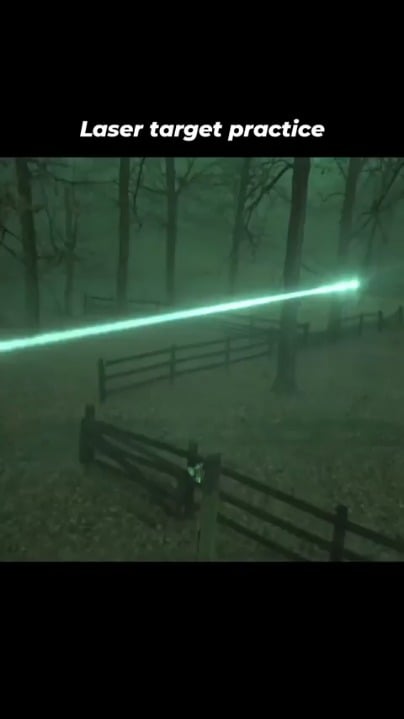
“Homemade” laser.
Title: The D.I.Y. Guide to Homemade Lasers: Safety, Science, and Building Basics
Introduction:
Lasers – those beams of concentrated light – have fascinated scientists, hobbyists, and gadget enthusiasts for decades. While commercial lasers are powerful tools used in medicine, industry, and entertainment, the allure of building a homemade laser has captivated the imagination of DIYers. However, this project comes with serious risks, legal considerations, and ethical responsibilities. In this article, we explore the science behind lasers, basic construction methods, safety protocols, and alternatives to ensure responsible experimentation.
Understanding Lasers: A Quick Science Primer
A laser (Light Amplification by Stimulated Emission of Radiation) emits coherent, focused light through the excitation of atoms or molecules. Unlike a flashlight, laser light travels in a narrow beam with minimal divergence, making it intensely powerful even at low power outputs. Key components include:
- Gain Medium: The material that amplifies light (e.g., gas, crystal, or semiconductor diode).
- Energy Source: Powers the excitation process (batteries, electrical circuits).
- Optical Cavity: Mirrors that reflect light back and forth to amplify it.
For DIY projects, laser diodes (like those from DVD burners) are the most accessible starting point due to their affordability and simplicity.
How to Build a Basic Homemade Laser
Disclaimer: Building lasers poses significant safety and legal risks. Proceed only if you understand local regulations and safety protocols.
Materials Needed:
- Laser Diode: Salvaged from old devices (DVD/Blu-ray burners, laser pointers). High-power diodes (e.g., 500mW–1W) emit visible red or blue light.
- Driver Circuit: Regulates current to prevent diode burnout (e.g., LM317 voltage regulator circuit).
- Power Source: Batteries (e.g., 3V–5V lithium-ion or AA cells).
- Heat Sink: Aluminum block or cooling module to dissipate heat.
- Focusing Lens: Collimates the beam (salvaged from old optics or purchased online).
- Housing: Case for components (plastic/metal tube).
Assembly Steps:
- Extract the Diode: Carefully remove the diode from a DVD burner using pliers and a soldering iron.
- Build the Driver Circuit: Solder a constant-current circuit to stabilize power delivery.
- Mount the Diode: Secure it to a heat sink with thermal paste.
- Attach the Lens: Align the lens to focus the beam into a tight spot.
- Test Safely: Use low power first, wear safety goggles, and never point the beam at people or reflective surfaces.
Critical Safety Precautions
Lasers, even low-power ones, can cause permanent eye damage, fires, or legal trouble. Follow these rules:
- Always Wear Safety Goggles: Rated for the laser’s wavelength (e.g., OD4+ for blue lasers).
- Avoid Skin Exposure: High-power beams can burn skin.
- Never Point at Aircraft, Vehicles, or People: This is illegal in most countries.
- Label Your Device: Clearly mark it as a laser hazard.
- Respect Power Limits: Class 3R (≤5mW) lasers are safer for beginners.
Why Build a Homemade Laser? Responsible Uses
While homemade lasers are risky, they can be educational tools for:
- Science Education: Demonstrating optics, light polarization, or spectroscopy.
- Astronomy: Star pointing (low power only!) or aligning telescopes.
- Creative Projects: Laser engraving/cutting (with proper ventilation).
- Soldering & Repair: Low-power diodes assist in precision tasks.
Alternatives to DIY Lasers
For safer experimentation:
- Buy a Commercial Laser Pointer: Low-cost, pre-tested, and compliant with safety standards.
- Use Online Simulations: Virtual optics labs to learn laser principles.
- Join a Makerspace: Access professional-grade tools under expert supervision.
Legal and Ethical Considerations
Many countries regulate laser ownership, especially high-power devices (e.g., >5mW in the U.S.). Unrestricted laser use can interfere with aviation, violate privacy, or cause public hazards. Always check local laws before building or using lasers.
Frequently Asked Questions (FAQ)
Q: Can I build a laser powerful enough to cut metal?
A: Not without industrial-grade equipment. Homemade diode lasers lack the power for metal cutting.
Q: Are burning lasers illegal?
A: Laser pointers capable of igniting objects (Class 4 lasers) are restricted in many jurisdictions.
Q: What’s the cheapest way to get a laser diode?
A: Salvage from discarded electronics, but wear ESD protection during handling.
Q: How far can a homemade laser beam travel?
A: A 100mW visible laser can travel miles in darkness but diverges unless collimated with optics.
Conclusion:
Building a homemade laser is a thrilling blend of engineering and physics, but it demands caution, respect for safety, and adherence to legal guidelines. Prioritize low-power projects for educational purposes, and never compromise on protective gear. With responsible use, lasers can illuminate the wonders of light — literally and figuratively.
Keywords: homemade laser, DIY laser build, laser diode projects, laser safety precautions, laser components, DIY science experiments, how to make a laser, laser pointer modification.