How A Christmas Carol (2009) was filmed
How Disney’s A Christmas Carol (2009) Was Filmed: A Behind-the-Scenes Look
Meta Description: Discover how Robert Zemeckis brought Dickens’ classic to life using groundbreaking motion-capture technology, stunning 3D visuals, and Jim Carrey’s transformative performance.
Introduction
Disney’s 2009 adaptation of A Christmas Carol reimagined Charles Dickens’ timeless tale with dazzling visuals and cutting-edge filmmaking techniques. Directed by Robert Zemeckis (Back to the Future, Forrest Gump), this version blended traditional storytelling with revolutionary motion-capture (mo-cap) technology. But how exactly was this dark, immersive holiday film created? Here’s a deep dive into the production process.
1. The Vision: Zemeckis’ Mo-Cap Obsession
After experimenting with motion capture in The Polar Express (2004) and Beowulf (2007), Zemeckis saw A Christmas Carol as the perfect project to push the technology further. His goal? To create a visually stunning, hyper-realistic world while preserving the emotional core of Dickens’ story.
- Why Mo-Cap? Zemeckis believed performance capture allowed actors’ nuances to shine through digital characters, enabling fantastical sequences (like Scrooge’s flight across London) that would be impossible with live-action.
- The Dickens Challenge: Balancing spectacle with the tale’s moral gravity required meticulous attention to tone and period detail.
2. Filming the Performances: Motion Capture in Action
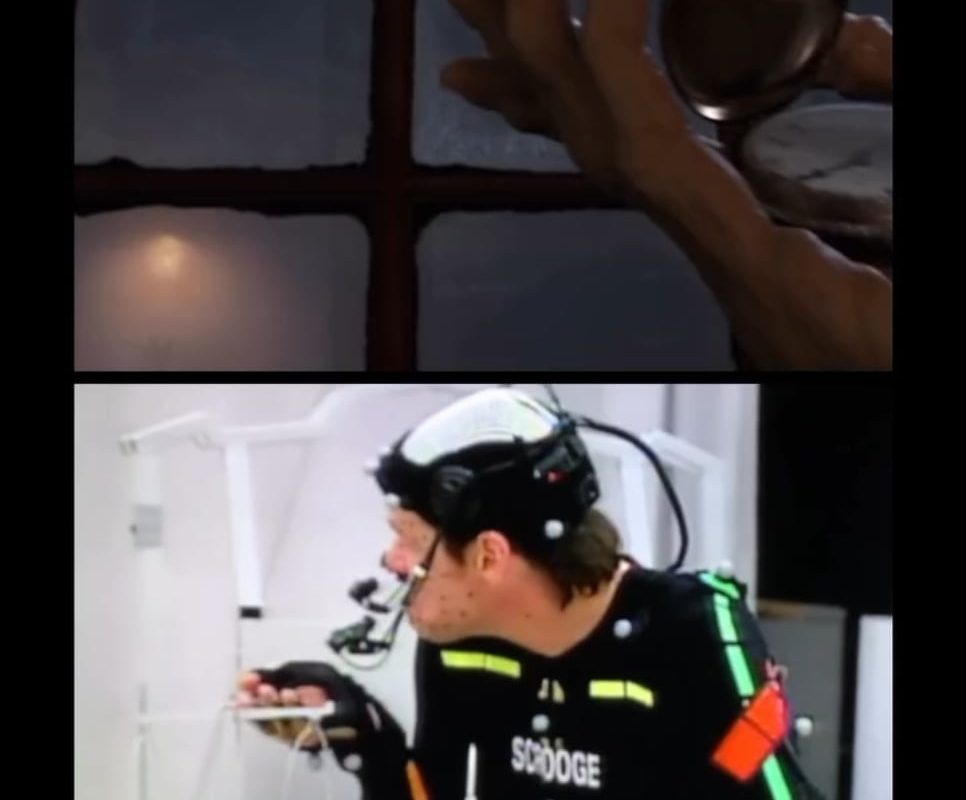
The cast, including Jim Carrey (Scrooge and the three Ghosts), Gary Oldman (Bob Cratchit/Marley), and Colin Firth (Fred), performed on a sparse mo-cap stage adorned with sensors and cameras.
- The Volume Stage: Actors wore skintight suits covered in reflective markers tracked by 150 cameras, capturing every facial twitch and body movement.
- Carrey’s Transformative Role: Carrey played not only Scrooge but also the Ghosts of Christmas Past, Present, and Yet to Come. His physicality—like contorting his body for the towering Ghost of Christmas Present—was enhanced digitally but rooted in live performance.
- Emotional Authenticity: Despite the tech-heavy process, Zemeckis insisted on traditional rehearsals to ensure emotional authenticity.
3. Building Victorian London: From Data to Design
The film’s eerie yet enchanting aesthetic was crafted by combining historical research with digital artistry.
- Virtual Sets: Production designers created a 3D Victorian London using historical maps and Dickens’ descriptions. The city’s narrow streets and gas lamps were rendered digitally.
- Hyper-Realistic Details: Artists studied 19th-century clothing, architecture, and lighting to ensure accuracy. Snow effects were digitally layered to enhance the chilling atmosphere.
4. The 3D Revolution: Shooting for Depth
A Christmas Carol was filmed and released in 3D, capitalizing on the post-Avatar boom. Zemeckis used RealD 3D cameras to create depth—not gimmicks.
- Key Scenes: Scrooge’s flight with the Ghost of Christmas Past and the nightmarish carriage chase were optimized for 3D, immersing audiences in the action.
- Color Palette: Cinematographer Robert Presley used cold blues and stark shadows for Scrooge’s isolation, contrasted with warm golds during redemptive moments.
5. Post-Production: Bringing Ghosts to Life
The mo-cap data was translated into animation over two years, with teams refining textures, lighting, and expressions.
- Digital Enhancements: Jim Carrey’s Scrooge was aged using wrinkles and thinning hair, while the Ghost of Christmas Past became an ethereal candle-like figure.
- Sound Design: Haunting choirs and eerie soundscapes amplified the supernatural elements. Composer Alan Silvestri (Forrest Gump) blended Victorian carols with orchestral grandeur.
6. Challenges & Innovations
- The Uncanny Valley: Critics noted some characters’ faces looked eerie, but Zemeckis argued stylization was intentional.
- Technical Hurdles: Snow simulations and cloth physics required breakthroughs in rendering tech.
- Legacy: Though divisive, the film paved the way for mo-cap use in modern blockbusters like Avatar and The Jungle Book.
Legacy of Disney’s A Christmas Carol
Despite mixed reviews, the film’s bold visual style and technical ambition secured its place as a unique holiday classic. Its blend of old-world storytelling and new-world tech remains a testament to Zemeckis’ innovative spirit.
SEO Keywords:
- How A Christmas Carol 2009 was filmed
- Disney Christmas Carol behind the scenes
- Robert Zemeckis motion capture
- Jim Carrey Scrooge mo-cap technology
- Making of A Christmas Carol 2009
- 3D filming techniques
Alt Text Suggestions for Images:
- “Jim Carrey wearing motion-capture suits as Scrooge”
- “Digital rendering of Victorian London in A Christmas Carol”
- “Robert Zemeckis directing mo-cap performance on set”
Internal Links Opportunities:
- How motion-capture changed animation
- Best holiday movies of the 2000s
- Robert Zemeckis’ filmography explained
Whether you love its ambition or find its visuals unsettling, A Christmas Carol (2009) remains a fascinating case study in marrying classic literature with groundbreaking tech. 🎩🔮