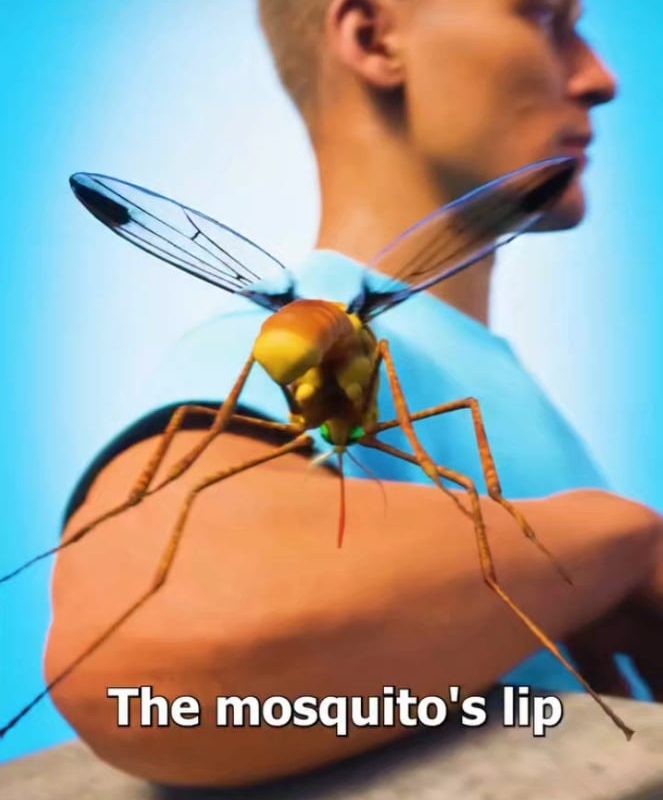
How a mosquito needle works
How a Mosquito’s Needle Works: The Fascinating Science Behind Nature’s Tiny Syringe
Mosquitoes are infamous for their itchy, irritating bites. But behind that nuisance lies a marvel of evolutionary engineering: their needle-like mouthparts, known as a proboscis. Far from a simple “straw,” this sophisticated tool allows mosquitoes to pierce skin, find blood vessels, and feed efficiently. In this article, we’ll dissect how a mosquito’s needle works, revealing the hidden complexity of one of nature’s most specialized tools.
Anatomy of a Mosquito’s Proboscis: More Than Meets the Eye
Contrary to popular belief, a mosquito’s “needle” isn’t a single structure—it’s a bundle of six ultra-thin, interlocking tools housed inside a flexible sheath called the labium. When a mosquito lands on your skin, the labium bends back to expose these microscopic instruments, which work in unison:
- Two Serrated Mandibles: Act like tiny saws to cut through skin.
- Two Maxillae: Stabilize the proboscis while probing for blood vessels.
- The Hypopharynx: Delivers mosquito saliva (containing anticoagulants to prevent blood clotting).
- The Labrum: The actual suction tube that draws blood into the mosquito’s body.
This coordinated system allows the mosquito to penetrate skin layers, locate capillaries, and feed in seconds.
Step-by-Step: How Mosquitoes Bite Without You Noticing
1. Skin Penetration
Using heat and chemical sensors on their antennae and feet, mosquitoes first identify a “sweet spot” on your skin. Their mandibles and maxillae vibrate rapidly, slicing through the epidermis like microscopic knives. Remarkably, this process is often painless, as the needles are finer than human nerve endings can detect.
2. Searching for Blood Vessels
Once the outer skin layer is breached, the mosquito’s labrum acts as a flexible probe, exploring the tissue for a capillary. Research shows mosquitoes can detect blood vessels in less than 20 seconds using chemo-sensors at the tip of the labrum.
3. Saliva Injection & Blood Suction
Before feeding, the mosquito injects saliva via the hypopharynx. This saliva contains:
- Anticoagulants (to keep blood flowing)
- Anesthetics (to numb the bite site)
- Proteins (to suppress the host’s immune response)
The labrum then sucks blood at rapid speed, often taking 3–5 microliters (about 1.5 times the mosquito’s body weight) in under a minute.
4. Withdrawal
After feeding, the mosquito retracts its proboscis, and the labium snaps back into place. Often, the bite isn’t felt until the immune system reacts to the foreign proteins in saliva, causing itching and swelling.
Why Are Mosquito Needles So Efficient?
- Ultra-Thin Design: The proboscis is 40–100 microns wide—thinner than a human hair (75 microns)—enabling painless penetration.
- Flexible Micro-Needles: The fascicle (inner needle bundle) bends to navigate through tissue without snapping.
- Dual-Channel System: Separate pathways allow simultaneous saliva injection and blood suction.
- Sensory Intelligence: Mosquitoes avoid capillaries too deep or too large to feed from, optimizing success rates.
FAQ: Quick Facts About Mosquito Bites
Q: Why do mosquito bites itch?
A: Your immune system reacts to proteins in mosquito saliva, releasing histamine that causes swelling and itching.
Q: Do all mosquitoes bite humans?
A: No—only female mosquitoes bite. They need blood proteins to produce eggs. Males feed on plant nectar.
Q: How do mosquitoes transmit diseases?
A: Pathogens like malaria or Zika virus hitchhike in mosquito saliva and enter your bloodstream during feeding.
Q: Can mosquitoes “choose” where to bite?
A: Yes! They detect body heat, CO2 from breath, and chemicals like lactic acid in sweat to pinpoint targets.
Conclusion: A Marvel of Evolution with Deadly Consequences
The mosquito proboscis is a triumph of biological engineering—a precision tool refined over 200 million years. Yet this ingenious mechanism also makes mosquitoes the deadliest animals on Earth, responsible for over 700,000 human deaths annually through disease transmission. Understanding how their needle works isn’t just fascinating science—it’s key to developing better repellents, vaccines, and genetic strategies to combat these pervasive pests.
SEO Keywords: mosquito needle, how mosquitoes bite, proboscis function, mosquito feeding mechanism, why mosquito bites itch, malaria transmission, mosquito anatomy.
Got bitten? Resist the urge to scratch—apply anti-itch cream instead! For more bite-sized science insights, explore our guides on [mosquito-borne diseases] or [natural mosquito repellents].