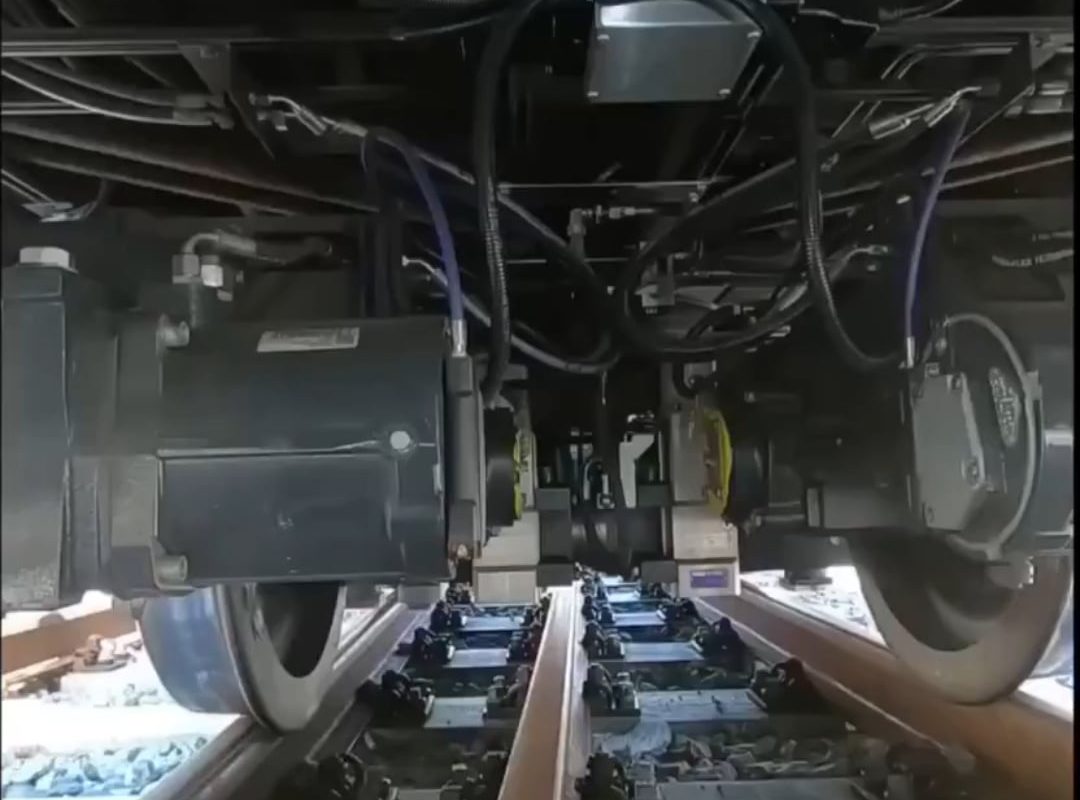
How a train switches from a 1000 mm gauge to a 1435 mm one
Title: How Trains Seamlessly Switch Between 1000 mm and 1435 mm Gauges: A Technical Deep Dive
Meta Description: Discover how trains transition between different railway gauges (like 1000 mm to 1435 mm) using advanced technology. Learn about gauge-changing systems, real-world applications, and why it matters for global rail networks.
How a Train Switches from a 1000 mm Gauge to a 1435 mm Gauge
Railway networks worldwide operate on different track gauges—the distance between the inner sides of a rail. While 1435 mm (standard gauge) dominates in North America, Europe, and China, 1000 mm (meter gauge) systems are common in parts of Asia, Africa, and heritage railways. But how can a single train switch between these gauges seamlessly? The answer lies in ingenious engineering solutions that enable cross-gauge interoperability.
Why Gauge Changes Matter
Gauge incompatibility disrupts cross-border travel and freight logistics. For example:
- Japan blends meter-gauge regional lines with Shinkansen’s standard gauge.
- Spain and Portugal reconcile Iberian gauge (1668 mm) with Europe’s standard gauge.
- Tanzania uses meter gauge, but neighboring countries might require standard gauge.
Sending passengers or cargo across gauge differences used to require costly, time-consuming transfers—until variable-gauge technology changed the game.
Methods for Switching Gauges
Here’s how trains transition from 1000 mm to 1435 mm tracks (or vice versa):
1. Variable Gauge Wheelsets (Automatic Gauge Changeover Systems)
This is the most efficient method. Specialized wheelsets allow wheels to unlock, slide outward or inward, and relock at a new gauge width—all without stopping.
- How It Works:
- As the train enters a gauge-changer track section, guide rails nudge the wheels apart (for widening) or together (for narrowing).
- The wheels’ axles use retractable locking mechanisms (like Talgo’s RD System or CAF’s BRAVA).
- Hydraulic or mechanical forces adjust wheel positions in seconds.
- Speed: Trains can pass through at reduced speeds (e.g., 15–30 km/h).
2. Bogie Exchange (Manual Gauge Adjustment)
In regions lacking automated systems, trains stop at bogie exchange stations.
- The entire wheelset assembly (bogie) is lifted off the train.
- A new bogie, preconfigured for the target gauge, replaces the old one.
- Drawbacks: Time-consuming (hours) and labor-intensive.
3. Dual-Gauge Tracks & Portable Ramps
Some networks install three- or four-rail tracks to accommodate multiple gauges. Portable track ramps can also guide wheels during slow transitions.
Real-World Examples
- Spain-France Border (Talgo Trains): Talgo’s RD system shifts trains from Iberian gauge (1668 mm) to standard gauge (1435 mm) in minutes, linking Madrid to Paris.
- Japan’s Mini-Shinkansen: Narrow-gauge lines feed into standard-gauge high-speed corridors via variable-gauge trains.
- Poland’s SUW 2000: A Polish-designed system adjusts wheelsets at 200 km/h, ideal for freight.
Challenges & Limitations
- Cost: Gauge-changing infrastructure requires significant investment.
- Speed Constraints: Transitions typically slow trains temporarily.
- Compatibility: Not all rolling stock can be retrofitted for variable axles.
Future of Gauge-Changing Tech
Innovations aim to streamline transitions further:
- Magnetic or Smart Sensors: For smoother, faster adjustments.
- Modular Freight Containers: Decoupling cargo from gauge shifts.
- Standardization Initiatives: Promoting uniform gauges in new rail projects (e.g., Africa’s proposed standard-gauge network).
FAQ
Q: Can any train switch gauges?
A: No—only trains equipped with variable wheelsets or swappable bogies can transition.
Q: Does the ride feel different during a gauge change?
A: Passengers might notice a slight jolt or vibration, but modern systems minimize discomfort.
Q: Why don’t all countries use the same gauge?
A: Historical choices, terrain needs, and isolationist policies led to regional gauge differences.
Key Takeaway
Gauge-changing technology eliminates rail network fragmentation, enabling seamless international travel and trade. As railways globalize, systems like Talgo RD and CAF BRAVA showcase engineering’s power to bridge even stubborn physical divides.
Optimized Keywords: train gauge change, variable gauge system, meter gauge to standard gauge, Talgo RD, CAF BRAVA, railway interoperability, automatic gauge changing.
Liked this guide? Share it with fellow rail enthusiasts! For more deep dives into rail tech, subscribe to our newsletter.