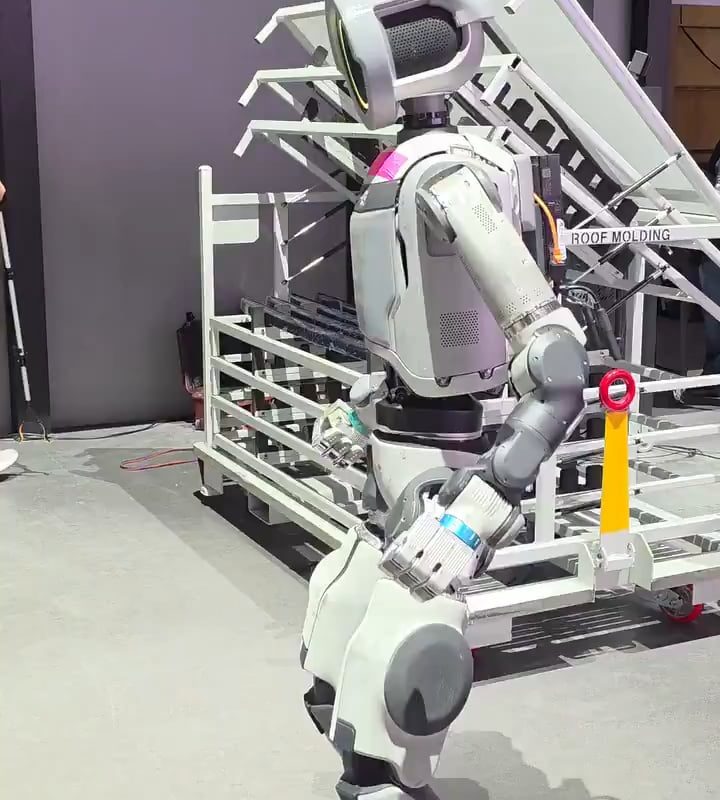
How Boston Dynamics’ Atlas lies down
Title: How Boston Dynamics’ Atlas Robot Lies Down: The Engineering Marvel Behind the Move
Meta Description: Discover the fascinating mechanics behind how Boston Dynamics’ humanoid robot, Atlas, lies down with precision. Learn about its sensors, software, and why this simple movement redefines robotics.
Boston Dynamics’ Atlas robot is a marvel of modern engineering, captivating audiences with its parkour moves, backflips, and uncanny human-like agility. But one of its most deceptively simple yet complex maneuvers is how Atlas lies down. While it might look effortless, this action embodies years of innovation in robotics, combining advanced sensors, machine learning, and precise motor control. In this article, we’ll break down the step-by-step process and explain why this action is far from ordinary.
Why Lying Down Matters in Robotics
Lying down is not just about making a robot appear human-like. For Atlas, this movement serves critical practical purposes:
- Testing durability: Dropping safely protects hardware during falls.
- Real-world applications: Robots working in disaster zones or tight spaces might need to crawl or lie flat to enter hazardous areas.
- Dynamic balance training: Engineers use this to refine the robot’s ability to recover from instability or collisions.
How Atlas Lies Down: Step-by-Step Breakdown
The process involves a symphony of sensors, adaptive software, and joint coordination. Here’s how it works:
1. Intent Planning
Atlas begins by analyzing its environment using LiDAR and depth-sensing cameras. Software determines the optimal path to the ground, avoiding obstacles and uneven surfaces. This is similar to how self-driving cars navigate.
2. Center of Mass Adjustment
As Atlas prepares to descend, it shifts its center of mass backward, bending its knees to lower its torso. This mimics how humans “sit” before reclining, preventing an uncontrolled fall.
3. Controlled Joint Articulation
The robot’s hydraulic joints and actuators work in harmony to lower its body segment-by-segment:
- Hips and knees bend incrementally.
- Arms extend outward to stabilize the torso.
- The spine flexes to maintain balance, just like a human would.
4. Impact Mitigation
To avoid damaging itself, Atlas uses force sensors in its limbs to detect contact with the ground. Software adjusts torque in real-time to absorb shock, ensuring a gentle touchdown.
5. The Final Position
In its “downed” state, the robot lies flat on its back or side with limbs splayed—a stable, energy-efficient posture useful for low-power standby mode or recovery.
The Tech Behind the Motion
Atlas’ ability to lie down is powered by three core innovations:
A. Model Predictive Control (MPC)
Advanced algorithms predict how every joint movement affects balance, recalculating motions 1,000 times per second to avoid falls.
B. Proprioceptive Sensing
Atlas “feels” its limbs’ position via joint angle sensors, pressure detectors in its feet, and inertial measurement units (IMUs) that track orientation.
C. Reinforcement Learning
Boston Dynamics trains Atlas using simulated environments where the robot learns to adapt movements to diverse terrains (e.g., slippery floors, rubble).
Why Can’t Most Robots Do This?
Simple robots use “hard-coded” movements that fail in unpredictable scenarios. Atlas, however, employs real-time adaptability—adjusting to unexpected variables:
- Slippery surfaces.
- Sudden external forces (e.g., being pushed).
- Uneven terrain.
This makes lying down far more complex than just falling over.
The Future of Humanoid Robots
Atlas’ graceful descent hints at a future where robots seamlessly integrate into human spaces—think factories, emergency response, or elder care. Boston Dynamics’ progress proves that fluid, safe movements are key to real-world utility.
See It in Action
Want to watch Atlas lie down? Check out Boston Dynamics’ official YouTube videos showcasing the robot’s parkour routines—each ending with a deliberate and stable lying-down sequence.
FAQ
Q: How does Atlas get back up after lying down?
A: The reverse process requires even more power! Atlas uses its arms to push off the ground and its legs to regain balance (often in a squat-to-stand motion).
Q: Could this technology be used in prosthetics?
A: Absolutely. The balance algorithms and force-feedback systems could revolutionize next-gen robotic limbs.
Q: How much does Atlas cost?
A: While Boston Dynamics hasn’t disclosed a price, experts estimate $2+ million per unit due to its custom hydraulic actuators and AI software.
Final Thoughts
Watching Atlas lie down is a masterclass in robotics—where physics, AI, and mechanical design collide. This “simple” move represents a leap toward robots that move, adapt, and survive in our world as gracefully as humans. As Boston Dynamics refines Atlas, expect even more astonishing feats in autonomy and mobility.
Keywords for SEO:
Boston Dynamics Atlas lying down, Atlas robot mechanics, humanoid robot movement, robotic balance systems, how Atlas robot works, Boston Dynamics technology, humanoid robot parkour, robotic joint control.