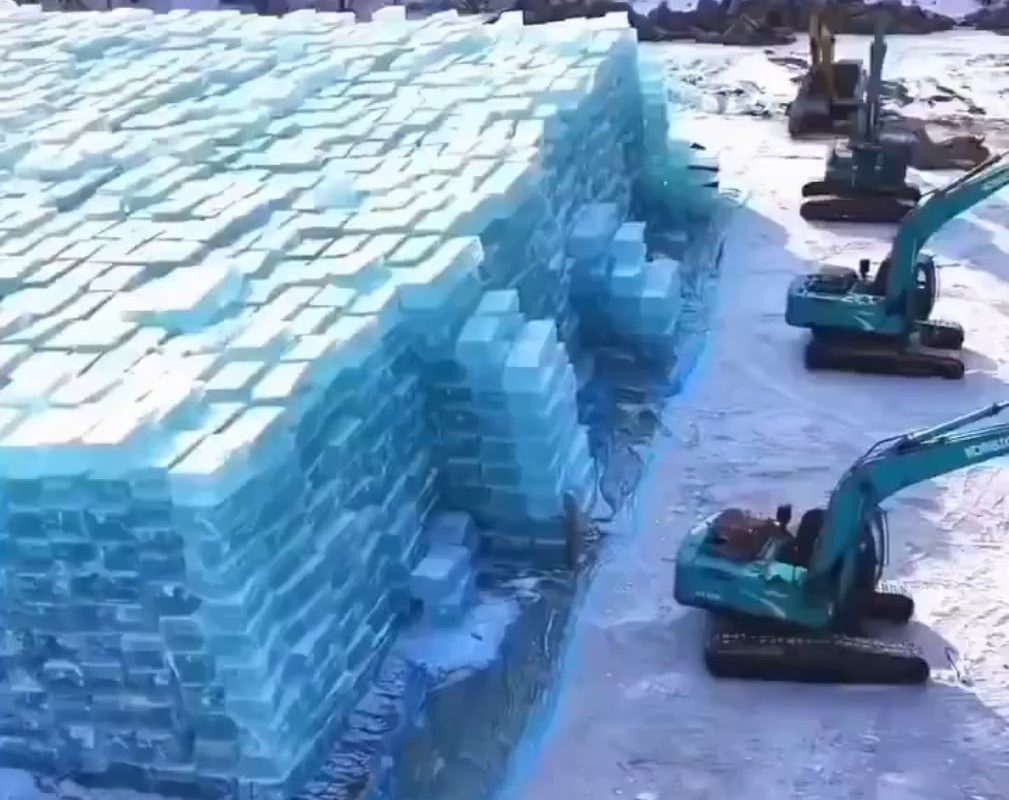
How China Farms Ice for the Harbin Snow Festival!
Title: Behind the Frost: How China Harvests Ice for the Spectacular Harbin Snow Festival
Meta Description: Discover the fascinating process of how China farms ice from the frozen Songhua River to build the dazzling sculptures of the Harbin Snow Festival. Learn about the science, labor, and artistry behind this frozen wonder.
Every winter, the city of Harbin in China’s northeastern Heilongjiang Province transforms into a shimmering kingdom of ice and snow. The Harbin International Ice and Snow Festival, one of the world’s largest winter festivals, draws millions of visitors to witness its colossal ice castles, lifelike sculptures, and illuminated wonderlands. But before the artistry begins, there’s an extraordinary feat of engineering and tradition: ice farming.
In this article, we reveal how China “harvests” thousands of tons of ice from nature to create the festival’s iconic structures—a blend of ancient techniques and modern innovation.
The Source: Harvesting Ice from the Songhua River
The lifeline of the Harbin Snow Festival’s ice supply is the Songhua River, which freezes solid during northeastern China’s harsh winters, with temperatures plunging to -30°C (-22°F). This natural deep-freeze creates ice blocks that are crystal-clear, dense, and ideal for sculpting.
Why the Songhua River?
- Purity: The river’s slow flow and mineral content produce exceptionally transparent ice.
- Thickness: Ice layers reach 1–1.5 meters (3–5 feet) thick, perfect for carving sturdy structures.
- Tradition: Harbin has relied on the Songhua for ice since the festival began in 1963.
Step-by-Step: How China “Farms” Ice for the Festival
Ice farming is a meticulous process involving timing, precision, and teamwork. Here’s how it’s done:
1. Timing the Harvest (Late December)
Workers wait until mid-to-late December, when the ice is thick enough to support heavy machinery but still pristine (before snowfall clouds its clarity).
2. Surveying and Marking the Ice
Teams survey the frozen river, marking grids with ropes or GPS-guided tools. Blocks are typically cut into rectangles measuring 1.6m x 0.8m x 0.5m (5.2ft x 2.6ft x 1.6ft)—weighing nearly a ton each!
3. Cutting the Ice
Traditional hand saws have been replaced by industrial chainsaws and ice-cutting machines that score the frozen surface. Workers then use chisels or hydraulic tools to free each block.
4. Extraction and Transport
Cranes lift the ice blocks onto trucks or sleds, which haul them to the festival site. Speedy transport is critical: if ice melts even slightly, it weakens the structure.
5. Storage and Preparation
Blocks are kept in insulated warehouses or buried in snow until artists begin carving. Some are dyed with LED-friendly colors for dazzling nighttime displays.
The Science of Perfect Festival Ice
Not all ice is created equal! For the Harbin Festival, clarity and strength are non-negotiable.
- Clarity: Slow-freezing river ice traps fewer air bubbles, making it glass-like.
- Density: Thicker ice withstands Harbin’s winds and the weight of intricate carvings.
- Sustainability: Ice farming has minimal ecological impact—the river replenishes each year.
From Blocks to Masterpieces: The Art of Ice Sculpting
Once harvested, the ice enters the hands of over 10,000 artists—including teams from China, Russia, and Japan. Using chisels, lasers, and even 3D printing molds, they transform raw blocks into:
- 40-meter-tall ice castles
- Replicas of global landmarks (like the Great Wall or the Taj Mahal)
- Interactive slides, theaters, and temples
Fun Fact: Over 200,000 cubic meters of ice are used annually—enough to fill 80 Olympic swimming pools!
Sustainability Challenges
While ice farming is low-waste, the festival’s scale raises environmental questions:
- Energy Use: Lighting millions of LEDs requires significant electricity (partially offset by solar power).
- Melting: Melted ice returns to the Songhua, but plastic supports and dyes require careful cleanup.
Organizers now prioritize eco-friendly dyes and reusable frameworks.
Why the Harbin Festival Matters
Beyond tourism, the festival celebrates human ingenuity and Harbin’s cultural heritage. Ice farming—once a survival skill for northern Chinese fishermen—is now a symbol of resilience and creativity.
FAQs About Harbin’s Ice Farming
Q: How long does the ice last before melting?
A: The festival runs from late December to February/March. Sculptures can withstand sub-zero temps but gradually melt in spring.
Q: How much ice is used in the Harbin Festival?
A: Up to 200,000 cubic meters annually—equivalent to 12,000 dump trucks!
Q: Can tourists participate in ice harvesting?
A: While harvesting is done by professionals, visitors can try sculpting at workshops.
Conclusion
The Harbin Snow Festival’s magic begins long before the first tourist arrives—with teams braving frigid winds and cracking ice to “farm” nature’s most ephemeral resource. It’s a stunning marriage of art and science, rooted in tradition yet pushing technological boundaries.
Whether you’re marveling at a glowing ice palace or sliding down a crystalline slide, remember: each block tells a story of human determination and the frozen beauty of China’s winter.
Plan Your Visit: The Harbin International Ice and Snow Festival opens annually on January 5th. Bundle up! ❄️
(Word Count: 800)
Target Keywords:
- Harbin Snow Festival ice farming
- How China harvests ice sculptures
- Songhua River ice harvesting
- Harbin Ice Festival construction
- Ice sculpture process China