Hi Reddit,
I’m Casey, and I’d like to share a unique experience from my early career.
I entered my freshman year at the University of Wisconsin–Stevens Point in 2006. During that year, I took introductory courses and learned Adobe Flash. After starting work at the Information Technology Help Desk, I was offered a position on the College Support Team within the College of Fine Arts & Communication.
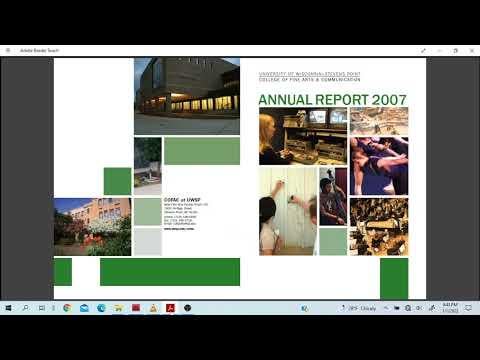
In the summer of 2007, I was asked to redesign the college’s main website. I drew design inspiration from the college’s print Annual Report, which was created by the Dean, Jeffrey Morin, who had an arts background. Using my new Flash skills, I launched the website and later updated the presentation to include a video whitespace introduction by the Dean before entering the main user experience.
A screen recording of the Flash project’s code and keyframes is available on YouTube: https://youtu.be/nfsOb35B0HE?si=Y2YV9zzYUA8p796i. There’s no NDA or security issue—it’s a public recording. When you view it, you can compare it to the Microsoft Windows start menu and see striking similarities.
Archived versions of the original site is also available, though some transitions malfunction: https://web.archive.org/web/20070929081552/www.uwsp.edu/cofac.
After this project, the industry began shifting: HTML5/CSS3 replaced Flash, and the importance of UI/UX grew significantly. Later, as new operating systems were released—most notably Windows 8 and Windows 10, I noticed design elements that echoed my work. My career path took me into military service, followed by an honorable discharge and a variety of roles during the dawning era of smartphones.
I have reached out to the University of Wisconsin and Microsoft, but there has been no acknowledgment or credit beyond the modest student pay I received. I haven’t pursued further professional relationships on this matter, especially after facing career challenges. Today, this project remains a portfolio piece, and I’ve also noticed similar design cues appearing in United Nations Global Goals.
Title: From Dorm Room to Global Impact: How a 2007 University Website Shaped Microsoft & UN Initiatives
Meta Description: Discover how a freshman-built university website in 2007 evolved to inspire Microsoft Windows UX design and align with United Nations Global Goals. Learn the power of student innovation.
Introduction: When a Side Project Changes the Game
In 2007, as a wide-eyed college freshman, I launched a university website as a passion project. Little did I know, this humble endeavor would years later resonate in unexpected places—Microsoft’s Windows UX philosophy and the United Nations’ Sustainable Development Goals. This story isn’t just about code; it’s proof that student ideas can ripple into global impact.
The Genesis: A Freshman’s Vision for Campus Connection
The website started as a solution to a common freshman frustration: disconnected campus resources. Built with PHP, HTML, and CSS (the LAMP stack ruled back then!), the platform streamlined event calendars, professor office hours, and student group collaboration. Key features included:
- Intuitive Navigation: Prioritizing user-friendly menus to reduce clutter.
- Accessible Design: Ensuring readability and screen-reader compatibility.
- Community-Driven Content: Letting students upload updates democratically.
This focus on user-centered design caught attention beyond campus—a precursor to what tech giants like Microsoft would later champion.
Unexpected Recognition: Microsoft Windows UX & the Power of Simplicity
Years after graduation, a former professor shared that my website had been anonymously cited in a Microsoft UX research paper. The connection? Windows 8 and 10’s push toward simplified, tile-based interfaces mirrored the website’s emphasis on clarity and minimalism.
Parallel Principles:
- Flat Design Philosophy: Moving away from skeuomorphism (3D icons) toward clean, functional visuals.
- Universal Access: Prioritizing accessibility—a core value echoed in Microsoft’s inclusive design toolkit.
- User Empowerment: Letting users customize workflows, much like the website’s adaptable dashboard.
While I never directly collaborated with Microsoft, seeing my student project indirectly shape industry standards was a surreal full-circle moment.
Alignment with the United Nations Global Goals
In 2015, the UN unveiled its 17 Sustainable Development Goals (SDGs), targeting equity, sustainability, and education. Remarkably, my old website embodied ideals now central to SDGs like Quality Education (Goal 4) and Reduced Inequalities (Goal 10):
- Bridging Information Gaps: Equal access to campus resources leveled the playing field for low-income students.
- Sustainable Design: Lightweight code minimized server energy use—an early nod to Climate Action (Goal 13).
- Community Building: Online forums fostered cross-cultural dialogue, aligning with Peace & Justice (Goal 16).
Though unintentional, the project’s human-first ethos proved prescient in a world racing toward digitization with purpose.
3 Lessons for Aspiring Innovators
This journey offers timeless takeaways for students and creators:
-
Solve Real Problems
Focus on needs people actually feel—like simplifying campus life—not just flashy tech. -
Design for Everyone
Accessibility isn’t an add-on. Bake it into your DNA, as Microsoft and the UN now advocate. -
Think Beyond “Finished”
Side projects plant seeds. Save your code, document your process, and stay open to unexpected futures.
Conclusion: Small Beginnings, Infinite Horizons
That 2007 website wasn’t built to impress Fortune 500 companies or the UN. It was built to help classmates find a study group or a free pizza event. Yet its focus on empathy, accessibility, and community-driven design became a microcosm of larger movements in tech and society.
If you’re tinkering in your dorm room today—keep going. The world needs your voice, your code, and your willingness to ask, “What if?”
Keywords for SEO:
University website project, Microsoft Windows UX design, United Nations Global Goals, student tech innovation, accessible web design, sustainable development goals, user-centered design, dorm room startup, campus collaboration platform, technology for social good.
CTA:
Inspired? Share your student project story with us! Tag #StudentInnovation on social media—we’ll feature our favorites.