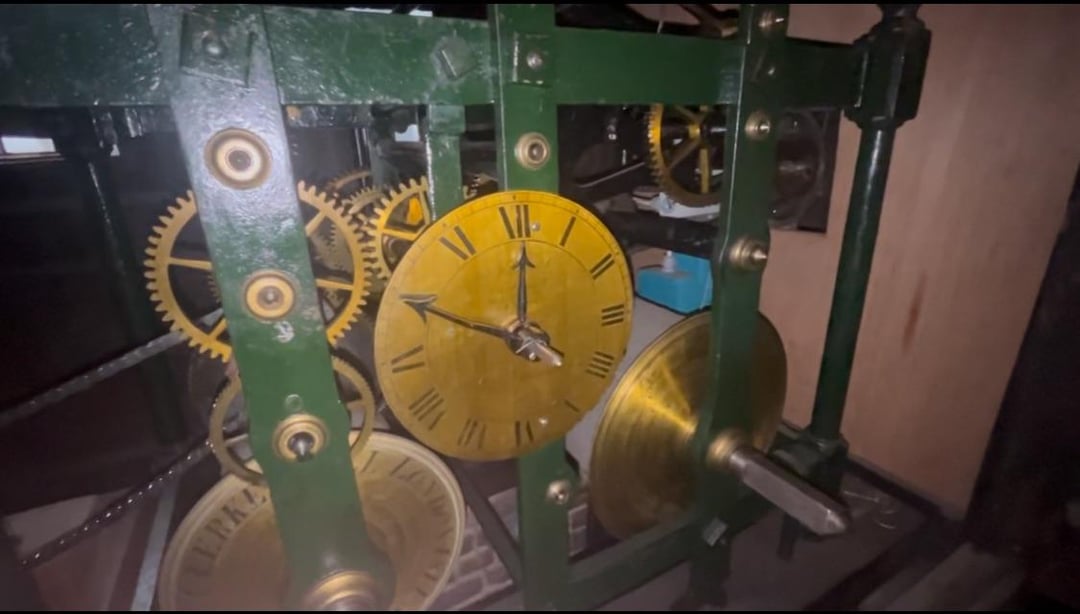
If you’ve ever wondered what’s driving a clock tower.. part of my research is to visit them!
Title: Inside the Heart of Time: Discovering the Fascinating Mechanics Behind Historic Clock Towers
Meta Description: Uncover the secrets of clock tower mechanics—from ancient gears to modern marvels. Explore how these timeless giants work and why their heartbeat still captivates us today.
Introduction: The Enigma of Clock Towers
Standing tall in town squares, churches, and civic buildings, clock towers have long been symbols of precision, community, and engineering ingenuity. But what really makes them tick? As someone who’s made it part of my research to visit these towering timekeepers, I’ve peered into their inner workings and uncovered the captivating blend of history and mechanics that keeps them alive. In this article, we’ll explore what drives clock towers—and why their heartbeat remains irresistible to curious minds.
The Core Mechanics: What Drives a Clock Tower?
At their core, clock towers run on intricate mechanical systems—often centuries-old designs that have stood the test of time. Here’s a breakdown of their key components:
1. The Escapement: Time’s Gatekeeper
The heart of any clock tower is the escapement mechanism. This ingenious device regulates the release of energy from the weights or springs, controlling the speed at which gears turn. Older towers often use a gravity-driven pendulum escapement, where a swinging pendulum ensures the gears move at a precise, rhythmic pace.
Fun fact: The foliot escapement, found in medieval clocks, predates pendulums and resembles a seesaw with weights!
2. Power Source: Weights, Springs & Beyond
- Weight-Driven Systems: Most historic clock towers rely on heavy weights hanging from cables or chains. As gravity pulls them downward, they turn gears linked to the clock hands.
- Spring-Driven Systems: Smaller clocks might use coiled springs, but towers typically favor weights for their consistent force.
- Modern Electrification: Many towers now use electric motors, but classics like London’s Big Ben still operate on their original weight systems.
3. Gear Trains: Translating Motion into Meaning
Think of gear trains as the clock’s “brain.” These interlocking wheels convert raw power into precise movements:
- Motion Work: Connects the escapement to the clock hands.
- Strike Train: Controls the bell-ringing mechanism (a symphony of cams and hammers!).
4. The Pendulum: Engineering’s Best Swing
Introduced in the 17th century, pendulums revolutionized accuracy. Their length determines the clock’s tempo—a longer pendulum ticks slower, which is why tower clocks often require massive swings to mark the hour correctly.
A Journey Through Time: Evolution of Tower Clocks
From medieval marvels to Victorian innovations, clock towers tell a story of human progress:
- Water Clocks (Antiquity): Early towers used water flow to measure time—think of the Al-Jazari elephant clock (1206 CE).
- Mechanical Renaissance (14th Century): Iron gears, foliots, and verge escapements powered Europe’s first public clocks (e.g., Salisbury Cathedral Clock, 1386).
- Industrial Revolution (19th Century): Mass-produced gears, precision casting, and electromagnetic innovations made towers more reliable.
- Digital Age (21st Century): GPS-synchronized motors now keep some towers accurate to the millisecond—though purists still crave mechanical charm!
Behind the Scenes: My Clock Tower Adventures
Part of my research involves visiting these giants to document their quirks. Here’s what I’ve learned up close:
- The Sound of History: Stand inside a tower when the gears engage, and you’ll hear centuries-old clunks and whirs—like a machine breathing.
- Hidden Artistry: Many clocks feature engravings by long-forgotten craftsmen, from floral motifs to cryptic repair notes.
- Unexpected Challenges: Temperature shifts expand metal gears, while pigeons love nesting in bell chambers (a repairer’s nemesis!).
Famous Examples & How They Work
- Big Ben (London): Uses a double three-legged gravity escapement—a Victorian masterpiece that keeps time within 2 seconds per week!
- Prague Astronomical Clock (1410): Combines timekeeping with Zodiac displays via a dizzying array of gears and levers.
- Philadelphia City Hall Tower: Houses the world’s largest functioning mechanical clock—its weights travel 40 feet every week!
Maintaining the Giants: Who Keeps Them Alive?
Clock towers survive thanks to dedicated horologists (clock experts) and communities:
- Restoration Projects: Teams dismantle gears piece by piece, often using 3D scans to replicate worn parts.
- The Human Touch: In Basel, Switzerland, I met a caretaker who winds his tower’s weights twice a week—a ritual unchanged since 1381!
Why Clock Towers Still Captivate Us
Beyond practicality, these structures embody artistry, science, and shared heritage. They remind us that time isn’t just digital—it’s a living, mechanical symphony.
FAQs: Quick Answers About Clock Towers
Q: How accurate are historic tower clocks?
A: Well-maintained mechanical clocks can stay within 10 seconds a week—comparable to early quartz watches!
Q: Do all clock towers ring bells hourly?
A: Not always! Some only chime at noon or for events, saving wear on delicate mechanisms.
Q: Can I visit the inside of a clock tower?
A: Many cities offer tours—like Bern’s Zytglogge or Munich’s Rathaus-Glockenspiel. Check local listings!
Conclusion: Time Travel Through Towers
Clock towers are more than relics—they’re monuments to human curiosity. Whether powered by falling weights, swinging pendulums, or silent electric pulses, they continue to shape skylines and stories. Next time you pass one, pause to listen. Its heartbeat might just tell you more than the hour.
Call to Action:
- Explore Locally: Find a historic clock tower near you and see its mechanics up close!
- Share Your Story: Have you visited a famous tower? Tag #ClockTowerAdventures on social media!
Target Keywords: clock tower mechanism, how clock towers work, historic timekeeping, escapement, pendulum clock, Big Ben mechanics, weight-driven clock, tower clock restoration.
Optimization Notes:
- Use internal links to related articles (e.g., “How Pendulums Changed Timekeeping”).
- Include an image of a clock tower’s gears with alt text: “Close-up of 19th-century clock tower gears and escapement.”
- Target long-tail keywords like “how does a clock tower bell work?”
Let this article tick all the boxes for clock enthusiasts and history buffs alike—pun intended! 🕰️✨