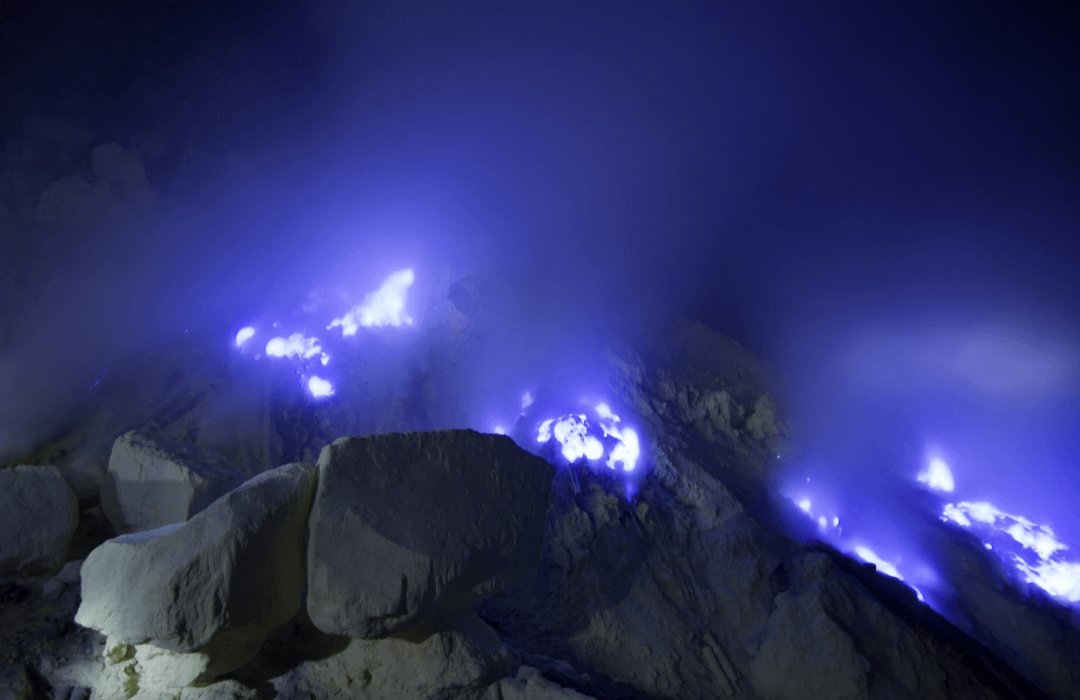
Ijen Volcano (Blue Flames) – Indonesia What’s happening? It’s a chemical phenomenon caused by the combustion of high-pressure sulfur gases upon contact with oxygen in the air. The distinctive color: The burning sulfur produces a bright blue flame resembling molten lava.
Ijen Volcano Blue Flames: Nature’s Dazzling Chemical Fire Show in Indonesia
Deep within the volcanic highlands of East Java, Indonesia, lies a spectacle that defies imagination: Ijen Volcano (Kawah Ijen), home to an otherworldly phenomenon known as the “blue flames.” This surreal display of dancing azure fire, visible only in darkness, draws adventurers and scientists alike to witness one of Earth’s most mesmerizing chemical performances. Below, we unravel the science, beauty, and adventure behind Ijen’s legendary blue flames.
What Causes Ijen’s Blue Flames?
The blue flames of Ijen are not lava, but a rare chemical combustion phenomenon. Here’s how nature orchestrates this dazzling show:
-
High-Pressure Sulfur Gases: Ijen’s active crater releases sulfuric gases at temperatures exceeding 600°C (1,112°F). Under extreme pressure, these gases—primarily hydrogen sulfide (H₂S) and sulfur dioxide (SO₂)—escape through cracks in the volcano’s surface.
-
Combustion with Oxygen: As the sulfur gases meet atmospheric oxygen, they ignite spontaneously, producing electric-blue flames that can reach up to 5 meters (16 feet) in height.
-
The Role of Darkness: The blue light is faint and invisible in daylight. Visitors must hike overnight to witness the flames at their peak intensity between 2 AM and 4 AM under a moonless sky.
-
Formation of Liquid Sulfur: As the gases cool, they condense into molten sulfur that flows like blue-tinted rivers before solidifying into yellow deposits. This creates a striking contrast between the blue flames and the sulfur-rich terrain.
Why Are the Flames Blue? The Science Simplified
The vivid blue color results from sulfur’s unique combustion properties:
- When sulfur burns, it emits light at a wavelength of ~425 nanometers, producing an intense blue hue.
- This is similar to how natural gas flames burn blue in stoves but amplified on a gigantic, volcanic scale.
The Ijen Crater Lake: A Toxic Beauty
Beyond the flames, Ijen boasts a turquoise acidic lake—the world’s largest hydrochloric acid lake—with a pH of less than 0.5. The lake’s vibrant color comes from dissolved metals and sulfur, creating a deadly yet stunning mirror for the flames above.
Best Time to Visit Ijen’s Blue Flames
- Dry Season (April–October): Clear skies improve visibility and reduce hiking hazards.
- Nighttime Access: Tours depart from nearby basecamps (e.g., Paltuding) around midnight for a 3-4 hour uphill trek.
- Safety Note: Toxic gases are prevalent. Gas masks are essential (often provided by guides).
The Human Element: The Sulfur Miners of Ijen
The volcano is a workplace for daring sulfur miners, who extract solidified sulfur by hand under hazardous conditions. Carrying loads up to 90 kg (200 lbs), they navigate acidic fumes daily for minimal pay. Their presence underscores both the spectacle’s allure and the ethical responsibility of visitors to respect the miners’ environment.
How to Experience Ijen Responsibly
- Hire a Local Guide: Support sustainable tourism and gain insights into the geology and culture.
- Wear Protective Gear: Gas masks and sturdy shoes are mandatory.
- Stay on Marked Trails: Avoid fragile sulfur deposits and toxic fumes.
- Minimize Plastic Use: Preserve Ijen’s pristine ecosystem.
Planning Your Trip to Ijen Volcano
- Location: East Java, Indonesia (nearest city: Banyuwangi).
- Getting There: Fly to Bali (Denpasar) and take a ferry to Banyuwangi. From there, 1-hour drives reach the trailhead.
- Permits: A small entry fee (~IDR 100,000/$7 USD) includes gas mask rental.
- Physical Requirements: The hike is steep (3 km ascent) and challenging; fitness is advisable.
Beyond the Blue Flames: Other Wonders of Ijen
- Sunrise Views: After the flames fade, watch the sunrise over the crater lake.
- Coffee Plantations: Explore Java’s famous arabica farms on the volcano’s slopes.
- Nearby Attractions: Extend your trip to Bali, Mount Bromo, or Komodo Island.
Conservation Challenges
Ijen’s popularity threatens its fragile ecosystem. Increased tourism risks litter, gas pollution, and trail erosion. Authorities limit visitor numbers seasonally—check local updates before visiting.
In Conclusion
The blue flames of Ijen Volcano are a testament to nature’s capacity for wonder. This extraordinary blend of chemistry, geology, and raw beauty reminds us of our planet’s hidden magic—and the importance of protecting it. For those willing to brave the darkness, Ijen offers a glimpse into the sublime.
Meta Description: Discover the science behind Indonesia’s Ijen Volcano blue flames—nature’s rare sulfur-fueled fire show. Learn how to visit responsibly, best times to go, and the miners who brave its toxic beauty.