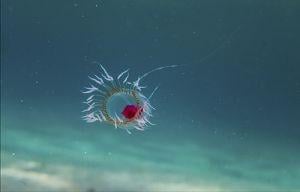
“Immortal Jellyfish” Turritopsis dhornii can revert it’s adult form back to its polyp stage which is a process can repeat indefinitely and it can only be killed through external causes
Title: Unlocking Immortality: The Fascinating Secret of the Immortal Jellyfish
Meta Description: Discover Turritopsis dohrnii, the “immortal jellyfish” that defies aging by reverting to its polyp stage indefinitely. Explore its biology, habitat, and scientific significance.
The Immortal Jellyfish: Nature’s Ageless Wonder
For centuries, humans have fantasized about eternal life. But while our species obsesses over longevity, one unassuming creature has already unlocked the secret to biological immortality: Turritopsis dohrnii, the immortal jellyfish. This translucent, thumbnail-sized ocean dweller can reverse its lifecycle, returning from adulthood back to infancy—a feat that challenges everything we know about aging and death.
What Makes the Immortal Jellyfish “Immortal”?
Unlike humans—or any other known animal—Turritopsis dohrnii can revert to its juvenile polyp stage after reaching sexual maturity, effectively hitting the “reset” button on its lifecycle. Here’s how it works:
- The Unique Lifecycle:
- Polyp Stage: Like other jellyfish, T. dohrnii begins life as a stationary polyp attached to rocks or coral.
- Medusa Stage: It matures into a free-swimming, bell-shaped adult (medusa) capable of reproduction.
- The Reverse: When stressed (due to injury, starvation, or environmental changes), the adult medusa undergoes transdifferentiation. Its cells transform, shrinking its body and tentacles into a cyst-like structure that eventually reattaches to a surface and becomes a new polyp colony.
This process—referred to as “biological immortality”—isn’t just a one-time trick. The jellyfish can repeat this cycle indefinitely, escaping death by age.
Key Facts About Turritopsis dohrnii
- Habitat: Found globally in tropical and temperate waters, especially the Mediterranean Sea and Japan.
- Size: Tiny, averaging 4.5 mm in diameter as adults.
- Diet: Plankton, fish eggs, and small mollusks.
- Lifespan (Technically): Unless killed by predators (like fish or sea turtles), disease, or drastic environmental shifts, T. dohrnii doesn’t age and could live forever.
The Science Behind Immortality
The secret to this jellyfish’s rebirth lies in transdifferentiation—a rare cellular process where specialized adult cells “reprogram” themselves into entirely different types. For example, a skin cell can become a nerve cell. In T. dohrnii, this allows the medusa to dissolve its body and rebuild it as a polyp.
Why Isn’t Every Jellyfish Immortal?
While other members of the Turritopsis genus share similar traits, T. dohrnii is the most efficient at reversing its lifecycle. Other jellyfish species mature and die, making this ability truly unique.
Implications for Human Biology
Scientists study Turritopsis dohrnii to unlock insights into:
- Aging Research: Could its cellular regeneration slow or reverse human aging?
- Regenerative Medicine: Understanding transdifferentiation might aid in repairing damaged tissues or organs.
- Cancer Studies: The jellyfish’s ability to control cell growth could reveal new cancer-fighting strategies.
However, translating these discoveries to humans remains a distant goal. Jellyfish biology is vastly different from vertebrates, but the research is groundbreaking.
Threats to the “Immortal” Species
Despite its extraordinary resilience, Turritopsis dohrnii faces risks:
- Climate Change: Warming oceans and pollution disrupt marine ecosystems.
- Invasive Spread: Ships’ ballast water have carried the species far beyond its native range, potentially threatening local biodiversity.
- Predators: It’s still part of the food chain—fish, anemones, and turtles don’t care about its immortality!
Frequently Asked Questions
Q: Can Turritopsis dohrnii really live forever?
A: Yes, but only if it avoids predators, disease, and environmental hazards. It doesn’t die of old age but remains vulnerable to external threats.
Q: How was this discovery made?
A: Scientists first observed the reversal process in the 1980s. The term “immortal jellyfish” was coined in the 1990s by Italian biologist Ferdinando Boero.
Q: What’s the difference between T. dohrnii and Turritopsis nutricula?
A: T. nutricula was initially thought to be immortal, but research confirmed T. dohrnii as the true “immortal” species.
Q: Could this research lead to human immortality?
A: Not directly—but it’s advancing our understanding of cellular regeneration, which could improve longevity treatments.
Conclusion
The immortal jellyfish is a reminder of nature’s boundless ingenuity. While humans may never achieve biological immortality, studying Turritopsis dohrnii holds promise for medicine, aging, and our understanding of life itself. As we navigate the ethics and possibilities, one thing is certain: Earth’s oceans still harbor mysteries that could reshape our future.
Target Keywords/Tags: Immortal jellyfish, Turritopsis dohrnii, biological immortality, transdifferentiation, jellyfish lifecycle, anti-aging research, regenerative biology, immortal sea creatures.
Optimized for SEO with clear headings, factual depth, and structured FAQs to rank for informational queries about the immortal jellyfish.