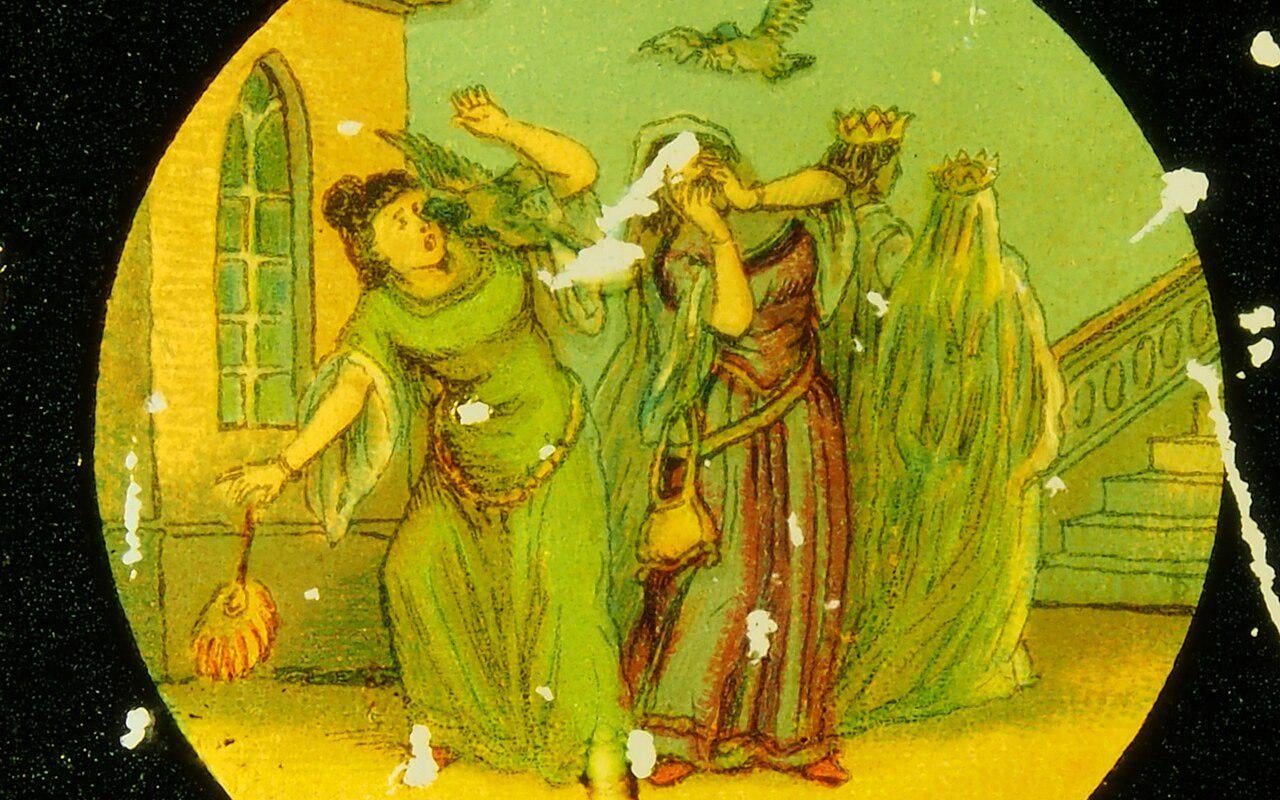
In the Brothers Grimm’s original Cinderella (Aschenputtel), the stepsisters mutilate their feet to fit cinderella’s glass slipper and later have their eyes pecked out by doves at the royal wedding, leaving them blind forever.
The Shocking Truth of the Original Cinderella: Mutilation, Vengeful Birds, and the Grimm Brothers’ Darkest Tale
When we think of Cinderella, images of a glittering ball, a fairy godmother, and a charming prince often come to mind—thanks to Disney’s beloved 1950 adaptation. But the Brothers Grimm’s original 1812 tale, Aschenputtel, is a far cry from this sanitized fantasy. In their version, jealousy drives the stepsisters to gruesome acts, divine justice is brutally poetic, and the “happy ending” comes with a horrifying twist. Let’s revisit the chilling details Disney left out.
A Slipper of Blood and Betrayal: The Stepsisters’ Desperation
In the Grimm tale, Cinderella (called Aschenputtel, meaning “ash girl”) receives her glass slippers not from a fairy godmother, but from a magical tree growing on her mother’s grave. When the prince begins his search for the slipper’s owner, the stepsisters’ obsession with wealth and status turns deadly.
The Shoe-Fitting Scene Goes Horribly Wrong
Unlike Disney’s comedic struggle, the Grimm stepsisters resort to self-mutilation to claim the throne:
- The Eldest Sister cuts off her toe to force her foot into the slipper.
- The Younger Sister slices off her heel.
Each time, the prince is fooled—until doves (sent by Aschenputtel’s mother’s spirit) cry:
“Look! Look! There’s blood in the shoe!
Her foot’s too long, her foot’s too wide—
This is not the proper bride!”
The blood reveals their deceit, and Cinderella ultimately claims the slipper.
Divine Retribution: Blindness and Eternal Punishment
The story doesn’t end at the wedding. When Cinderella marries the prince, her loyal doves deliver a final, grisly punishment to the stepsisters and their mother for their years of cruelty:
“As the wedding procession passed, two doves pecked out one eye from each sister. And as they returned, the doves pecked out the other eyes. So they were punished with blindness for the rest of their days.”
This act is framed not as random violence, but as karmic justice orchestrated by the spirit of Cinderella’s deceased mother, emphasizing the Grimm’s moral: wickedness earns a fearsome price.
Why Did the Grimm Brothers Include Such Violence?
- Moral Lessons Over Magic: Unlike Perrault’s French Cendrillon (which inspired Disney), the Grimm version focuses less on romance and more on poetic justice. Cruelty, greed, and vanity demand severe consequences.
- Cultural Context: Early Germanic folk tales were dark cautionary tools. The mutilation and blindness mirrored harsh societal values—transgressors paid visibly and painfully.
- Supernatural Balance: The doves represent divine intervention. Aschenputtel’s piety (honoring her mother’s grave) earns protection, while her sisters’ malice invites ruin.
Disney vs. Grimm: A Stark Contrast
| Element | Disney’s Cinderella (1950) | Grimm’s Aschenputtel (1812) |
|---|---|---|
| Shoe Fitting | Comedic struggle | Toe/heel amputations, blood |
| Stepsisters’ Fate | Forgiven, remain unharmed | Blinded by doves |
| Magic Helper | Fairy godmother | Tree/birds from mother’s grave |
| Moral Focus | Kindness leads to reward | Sin demands brutal punishment |
The Legacy of a Darker Cinderella
Modern adaptations like Into the Woods and Ever After nod to the Grimm tale’s edges, but Aschenputtel remains a visceral reminder of fairy tales’ origins—stories where vengeance was visceral, lessons were uncompromising, and happy endings were not universally granted. The stepsisters’ blinding, while disturbing, reinforces a worldview where actions have irrevocable consequences—a far more haunting, complex narrative than “happily ever after.”
In Summary: A Tale of Ash, Blood, and Feathers
The Grimm Brothers’ Aschenputtel is a masterclass in gothic horror wrapped in a fairy tale. Its unflinching violence—rooted in folklore’s role as moral instruction—challenges modern sensibilities, reminding us that in the original Cinderella, justice wasn’t just served; it was carved and clawed into existence.
Keywords for SEO: Original Cinderella story, Brothers Grimm dark tales, Aschenputtel, stepsisters mutilation, Cinderella glass slipper blood, Grimm vs Disney Cinderella, fairy tale origins, Cinderella stepsisters blindness.
Explore more macabre origins of beloved fairy tales in our deep dives into Snow White’s coffin punishment and Little Red Riding Hood’s grim fate in the Grimm archives.