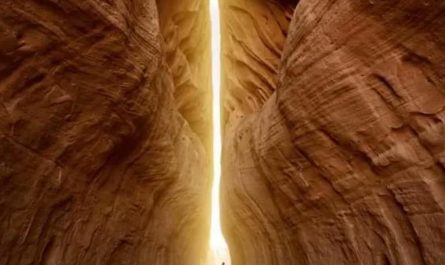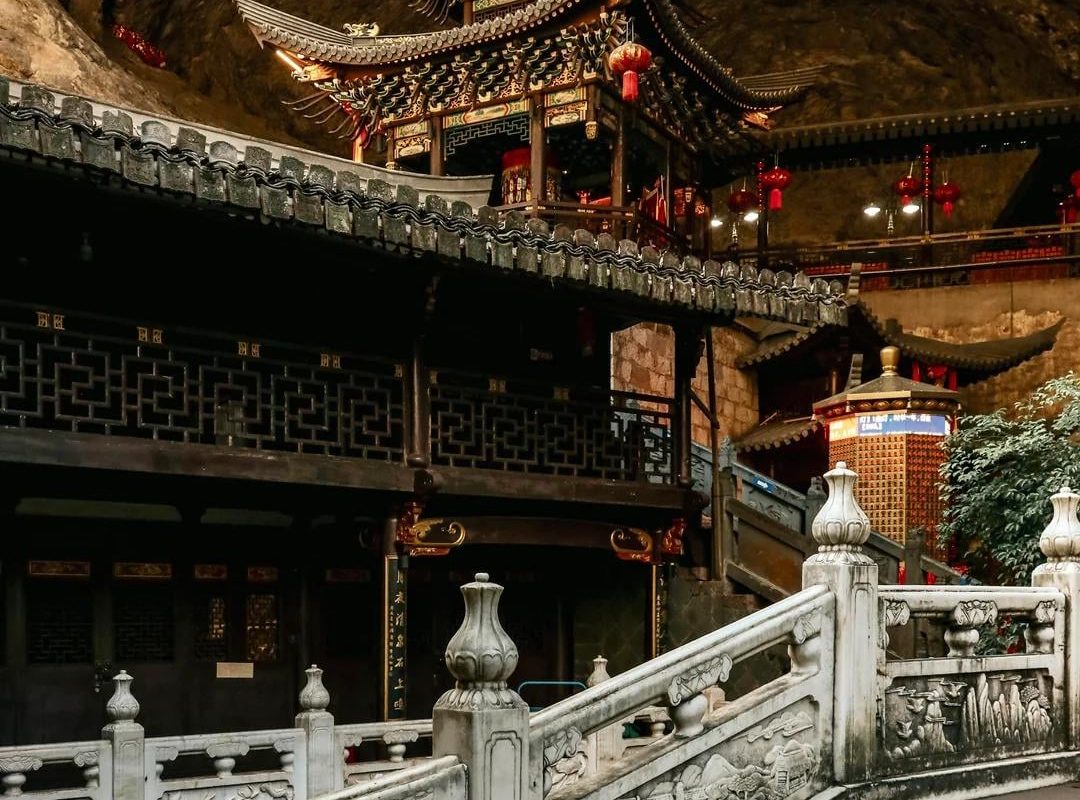
In Wenzhou, China, there’s a Taoist temple built inside a 2000-year-old cave
Unveiling the Sublime: Exploring Wenzhou’s Ancient Cave Temple — Yanqing Temple
Nestled within the rugged, mist-shrouded landscapes of Wenzhou, China, lies a hidden spiritual treasure: Yanqing Temple, a serene Taoist sanctuary built inside a 2000-year-old natural cave. This awe-inspiring fusion of nature and devotion offers travelers a rare glimpse into China’s ancient spiritual traditions and geological wonders. For adventurers, history buffs, and seekers of tranquility, this cave temple is a must-visit destination in Zhejiang Province.
The Mystique of Yanqing Temple
Located in the Longwan District of Wenzhou, Yanqing Temple (延庆观) isn’t just a place of worship—it’s a testament to humanity’s harmony with nature. Carved into the limestone cliffs of Da Luo Mountain, the temple merges seamlessly with its primordial surroundings. Stalactites drip from the cave ceiling, and natural rock formations frame altars dedicated to Taoist deities, creating an atmosphere that feels both sacred and surreal. Visitors often describe the experience as stepping into a mythical realm where time stands still.
A Journey Through History
The Cave’s Ancient Origins
The cave itself predates human civilization, formed over millennia by water erosion. Locals believe it was “discovered” during the Han Dynasty (206 BCE–220 CE), when Taoist hermits sought solitude in its cavernous depths. Over centuries, the site evolved from a solitary retreat into a formal temple during the Northern Song Dynasty (960–1127 CE). Today, its 2000-year legacy makes it one of China’s most unique religious landmarks.
Taoism and the Cave’s Spiritual Significance
Taoism emphasizes living in harmony with the natural world (道法自然, Dao fa ziran), making this cave temple a physical embodiment of its philosophy. Dedicated to Lü Dongbin, one of the Eight Immortals in Taoist lore, the temple attracts pilgrims seeking blessings for health, wisdom, and longevity. Incense smoke curls through the cool, damp air as worshippers kneel before statues carved directly into the cave walls.
What to Experience at Yanqing Temple
1. Architectural Marvels in a Natural Setting
Unlike conventional temples, Yanqing Temple integrates minimalist human design with the cave’s raw beauty. Highlights include:
- The Three Purities Hall: A shrine honoring Taoism’s highest deities, illuminated by natural light filtering through crevices.
- Jade Emperor Statue: A towering figure etched into the cave’s central chamber.
- Underground Streams and Pools: Crystal-clear water flows beneath walkways, adding an ethereal ambiance.
2. Ceremonial Rituals and Festivals
Time your visit during Taoist festivals like Laba Festival or the birthday of Lü Dongbin (14th day of the fourth lunar month) to witness vibrant processions, chanting, and offerings. Monks clad in traditional robes conduct ceremonies that echo through the cavernous halls.
3. Hiking and Natural Wonders
The temple serves as a gateway to Da Luo Mountain’s hiking trails. After exploring the cave, trek through bamboo forests, past cascading waterfalls, and up to panoramic viewpoints overlooking Wenzhou’s coastline.
Visitor Essentials
- Location: Yanqing Temple, Longwan District, Wenzhou, Zhejiang Province (温州龙湾区延庆观).
- Best Time to Visit: Spring (March–May) for mild weather and blooming flora, or autumn (September–November) to avoid summer humidity.
- Admission: ¥40–60 (approx. $6–8 USD).
- Pro Tips:
- Wear sturdy shoes—paths inside the cave are uneven and slippery.
- Bring a jacket; temperatures inside hover around 16–18°C (60–64°F) year-round.
- Combine your trip with visits to nearby attractions like Dragon Lake or Yandang Mountain.
Why Yanqing Temple Stands Out
In a country famed for its grand temples and grottoes (think Longmen or Mogao), Yanqing Temple distinguishes itself through its intimacy and untouched majesty. Here, spirituality isn’t imposed—it emerges organically from the whispers of wind through stone and the soft glow of candlelight on ancient walls.
For photographers, the interplay of shadows and textures is unparalleled. For spiritual seekers, the temple offers profound quietude. And for historians, it’s a living museum of China’s enduring cultural tapestry.
Preserving the Past, Inspiring the Future
As Wenzhou modernizes, Yanqing Temple remains a sacred bridge between past and present. Efforts by local authorities to protect the cave’s ecosystem ensure that this 2000-year-old wonder continues to inspire awe for generations. Whether you’re drawn by faith, history, or natural beauty, a visit to this subterranean sanctuary promises an unforgettable journey into the heart of Taoist China.
Plan Your Pilgrimage Today — Unearth the secrets of Wenzhou’s cave temple and discover why some places transcend time itself.
Meta Description: Discover Wenzhou’s Yanqing Temple—a 2000-year-old Taoist sanctuary hidden inside a mystical cave. Explore its history, architecture, and visitor tips for an unforgettable journey into China’s spiritual heritage.