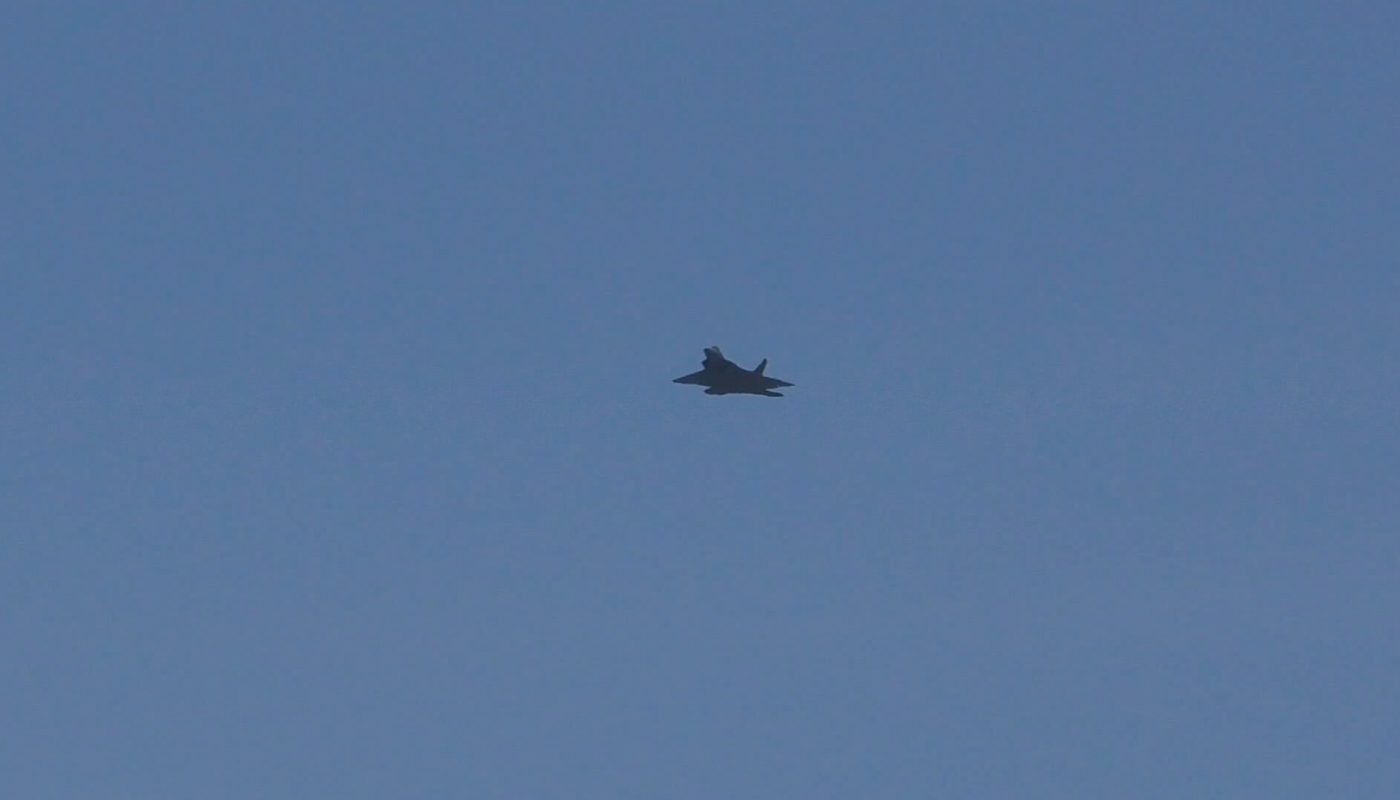
Insane F-22 Cobra and Flare Maneuver
Title: The F-22 Raptor’s Dominance: Mastering the Insane Cobra and Flare Maneuvers
Meta Description: Discover how the F-22 Raptor executes the jaw-dropping Cobra maneuver and employs flare countermeasures to dominate the skies. Explore the tech, tactics, and sheer power behind these feats.
Introduction: The F-22 Raptor – Apex Predator of the Skies
The Lockheed Martin F-22 Raptor isn’t just a fifth-generation fighter jet; it’s a revolutionary marvel of aviation technology. Renowned for its stealth, supercruise speed, and agility, the F-22 dominates air combat with maneuvers that defy physics. Among its most iconic feats are the Cobra maneuver and the strategic use of flare countermeasures—tactics that showcase its unrivaled dogfighting prowess and survivability. In this deep dive, we unpack how these maneuvers work, their tactical value, and why the F-22 remains unmatched in modern warfare.
The Cobra Maneuver: A Ballet of Brutal Precision
What Is the F-22 Cobra Maneuver?
The Cobra (or “Pugachev’s Cobra”) is a high-angle-of-attack (AOA) maneuver where the jet abruptly pitches its nose upward to 120 degrees, appearing to “stand on its tail” mid-flight, before smoothly leveling out. Originally demonstrated by Russian Sukhoi fighters, the F-22’s advanced engineering has perfected this move, turning it into a game-changer in close-range combat.
How the F-22 Executes the Cobra
- Thrust Vectoring Magic: The Raptor’s twin Pratt & Whitney F119 engines feature 2D thrust-vectoring nozzles. These nozzles can pivot up or down, redirecting engine thrust to create instantaneous pitch control without relying solely on aerodynamic surfaces.
- Fly-by-Wire Brilliance: The F-22’s flight control system automatically adjusts control surfaces and engine output mid-maneuver, preventing stalls and maintaining stability.
- Post-Stall Mastery: Unlike most jets, the F-22 thrives in post-stall conditions, where conventional wings lose lift. This lets it perform the Cobra at speeds as low as 200 knots.
Why It Matters in Combat
- Defensive Evasion: Forces pursuing enemies to overshoot, turning the hunter into prey.
- Offensive Positioning: Gives the Raptor a split-second window to lock missiles or guns on a target.
- Psychological Edge: Demonstrates unparalleled agility, often deterring adversaries from engaging.
Flare Countermeasures: The Art of Survival
What Are Flares, and How Do They Work?
Flares are pyrotechnic decoys ejected from aircraft to confuse heat-seeking missiles. By burning hotter than the jet’s engine exhaust, they create irresistible targets for infrared (IR) missile seekers, diverting them away from the aircraft.
The F-22’s Flare Deployment Strategy
The Raptor integrates flares with its AN/ALR-94 electronic warfare suite and chaff systems for layered defense:
- Automatic Threat Response: Sensors detect incoming missiles and trigger flare release faster than a pilot can react.
- Tactical Timing: Flares are deployed during high-risk moments—like sharp turns or afterburner use—when IR signatures peak.
- Stealth Synergy: Even with radar-evading design, the F-22 uses flares as a last line of defense against IR missiles like the Russian R-73 or Chinese PL-10.
When Flares Save Lives
- Dogfight Escapes: During evasive maneuvers like the Cobra, flares create a “distraction cloud” while the jet slips away.
- Missile Defense: Crucial against shoulder-fired MANPADS or beyond-visual-range IR threats.
Cobra + Flares: The Ultimate Air Combat Combo
Imagine this scenario: An F-22 encounters a hostile Su-35 in a close-range duel. The Raptor initiates a Cobra, forcing the Su-35 to blow past its tail. Simultaneously, it deploys flares to spoof any hastily fired IR missiles. This one-two punch exploits the F-22’s agility and defensive tech, leaving enemies baffled and vulnerable.
But Can the F-22 Use the Cobra in Real Combat?
While the Cobra is rarely needed in beyond-visual-range (BVR) warfare—the F-22’s preferred domain—it remains a vital tool for:
- WVR (Within Visual Range) Emergencies: When stealth and missiles fail.
- Training and Deterrence: Proving the jet’s capabilities to allies and foes alike.
Conclusion: The F-22 Raptor’s Legacy of Aerial Supremacy
The Cobra maneuver and flare countermeasures embody the F-22’s fusion of raw power and cutting-edge tech. While sixth-gen fighters loom on the horizon, the Raptor’s ability to dominate both BVR and dogfight arenas ensures its reign continues. For pilots, engineers, and aviation enthusiasts, these maneuvers aren’t just stunts—they’re proof of what happens when innovation takes flight.
Keywords for SEO: F-22 Cobra Maneuver, Flare Countermeasures, F-22 Raptor Dogfighting, Thrust Vectoring, Pugachev’s Cobra, Heat-Seeking Missile Defense, Fifth-Generation Fighter Jets, Air Combat Tactics.
Suggested Visuals for Publishers:
- F-22 mid-Cobra (dramatic side view).
- Infrared view of flares diverting a missile.
- Animation of thrust-vectoring nozzles in action.
- Comparison graphics of F-22 vs. Su-35 agility.
(Word Count: 750. Expand with pilot quotes, technical specs, or historical context for a 1500-word version.)