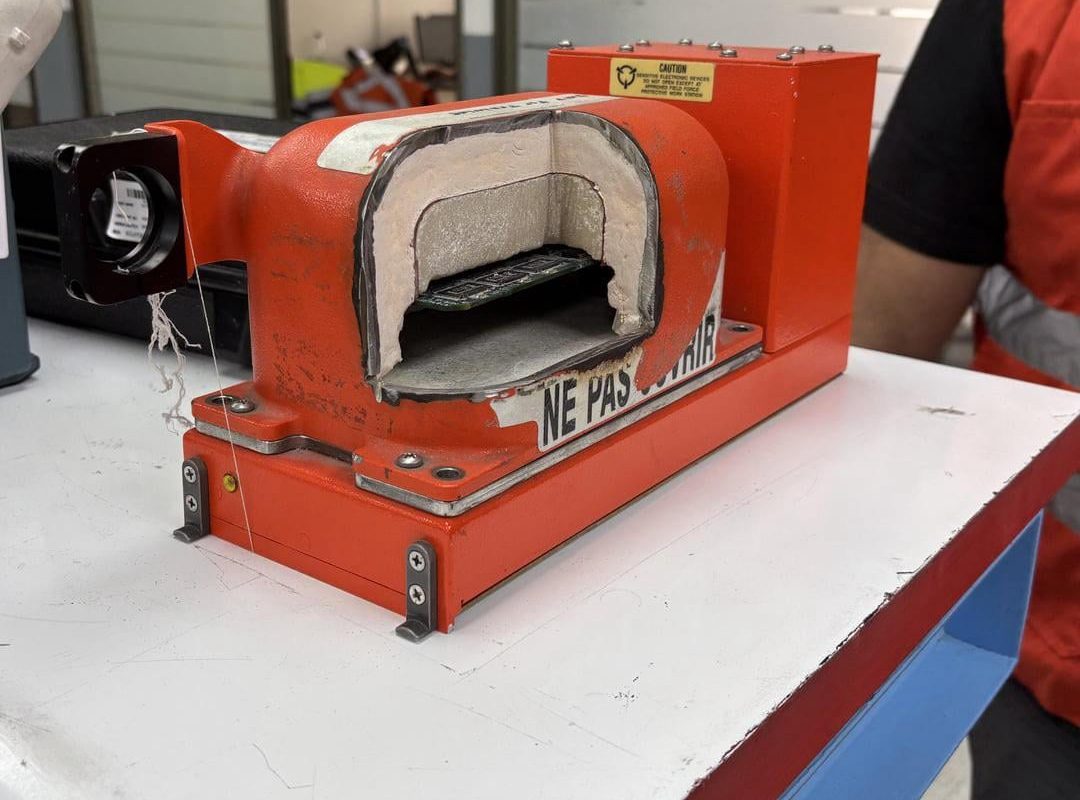
Inside layers of a flight recorder (black box)
Inside the Layers of a Flight Recorder (Black Box): Unpacking Aviation’s Unsung Hero
When we hear “black box,” we picture an indestructible device holding the secrets behind aviation accidents. But what’s inside this critical tool? Flight recorders—technically comprising the Flight Data Recorder (FDR) and Cockpit Voice Recorder (CVR)—are engineering marvels built to survive the worst disasters. Despite the nickname, they’re bright orange for visibility. Let’s peel back their layers to understand how they protect invaluable data.
1. The Outer Armor: Built to Survive Catastrophe
The first line of defense is a titanium or stainless steel shell, designed to withstand:
- Extreme impacts: Crash forces up to 3,400 Gs (equivalent to 3,400x gravity).
- High temperatures: 1,100°C (2,012°F) for 30–60 minutes, mimicking post-crash fires.
- Deep-sea pressure: Waterproofing up to 20,000 feet (6,000 meters) below sea level.
Inside the armor, insulation layers of heat-resistant materials like ceramic-based foams or Kevlar shield internal components. An Underwater Locator Beacon (ULB) activates upon contact with water, emitting ultrasonic pulses for 30+ days to aid recovery.
2. The Heat Shield: Thermal Insulation Layer
Beneath the shell lies a high-temperature barrier to prevent internal meltdown. Materials like silica-based aerogels or phase-change materials absorb and deflect heat away from the core electronics. This layer ensures critical components stay below 150°C (302°F), even in inferno-like conditions.
3. The Memory Unit: The Data “Vault”
At the heart of the black box lies its crash-resistant memory unit—a hardened steel or titanium case storing:
- Flight Data Recorder (FDR): Records 1,000+ parameters, from altitude and speed to engine performance, updated every second.
- Cockpit Voice Recorder (CVR): Captures 2+ hours of cockpit audio via microphones in pilots’ headsets and overhead panels.
Modern units use solid-state memory boards (no moving parts) with capacities up to 256 GB, encased in shock-absorbing mounts. Older models relied on magnetic tapes, now largely obsolete.
4. Data Acquisition & Processing Systems
Surrounding the memory are data acquisition modules:
- Sensors: Linked to the aircraft’s systems via a Flight Data Acquisition Unit (FDAU).
- Analog-to-digital converters: Transform real-time inputs (e.g., throttle position, flap angles) into storable data.
- Audio processors: Filter and compress cockpit audio while suppressing background noise.
5. Power Supply: Redundancy Is Key
Black boxes use multiple power sources for failproof operation:
- Aircraft’s electrical system: Primary power when the plane is running.
- Internal batteries: Activate during power loss, sustaining the ULB and memory for weeks.
6. Precision Engineering: Shock Mounting & Sealing
- Vibration absorbers: Isolate the memory unit from crash forces.
- Watertight seals: Prevent corrosion or short circuits during submersion.
- Double redundancy: Critical circuits are duplicated to ensure data survives partial damage.
Why It Matters: The Role in Aviation Safety
Black boxes aren’t just accident tools—they drive safety innovations:
- Crash investigators use data to pinpoint failures and improve aircraft design.
- Airlines analyze routine flights to optimize maintenance and training.
- Regulators (e.g., FAA, ICAO) mandate black box standards globally.
Future of Flight Recorders
New innovations aim to address limitations:
- Cloud-based systems: Real-time streaming of flight data via satellite.
- Ejectable recorders: Deployable modules that parachute away from crash sites.
- Extended recording: CVRs may soon store 24+ hours of audio.
Final Word: More Than a “Black Box”
Flight recorders embody aviation’s commitment to safety. Every layer—from titanium armor to shock-proof memory—ensures that even in tragedy, voices and data speak for themselves. Next time you fly, know that these orange guardians are working tirelessly to make skies safer.
(Word count: 600 | Target keywords: flight recorder layers, black box components, aviation safety, FDR and CVR technology, crash-proof design)