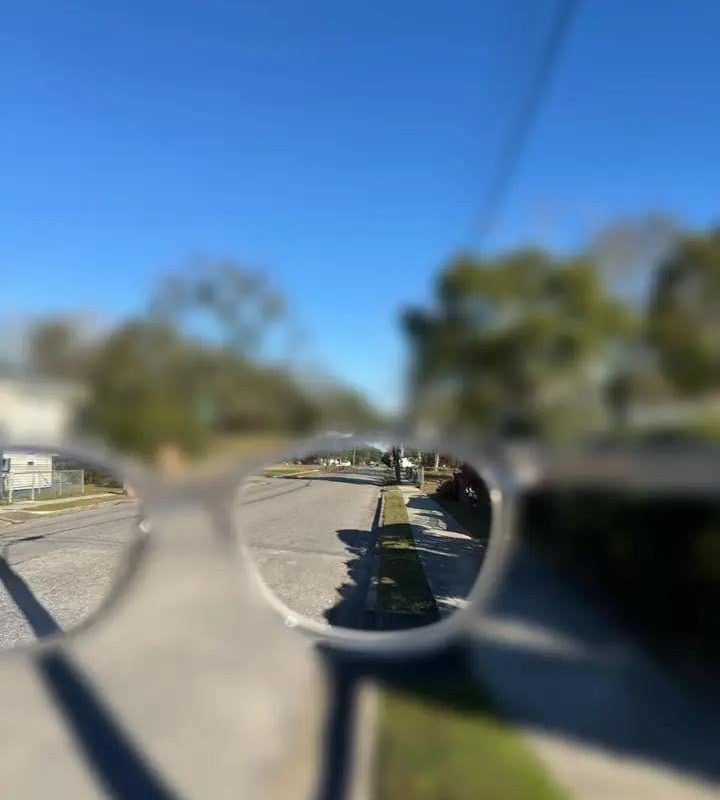
Is this how people who need glasses really see the world. A big blurred background?
Is This How People Who Need Glasses Really See the World? A Big Blurred Background?
If you’ve ever wondered how someone with uncorrected vision perceives the world, you might imagine scenes from movies or viral TikTok filters: soft-focus backgrounds, blurry street signs, or faces that lack sharpness. But does needing glasses really mean seeing the world as one big, blurred mess? The reality is more nuanced—and understanding it can help dispel myths about vision impairment.
How Vision Problems Actually Work: Beyond the Blur
Contrary to popular belief, people who need glasses don’t always see everything as uniformly blurred. Instead, refractive errors (the most common reason people wear glasses or contacts) affect the eye’s ability to focus light properly on the retina. This leads to specific types of blur that depend on the condition:
-
Myopia (Nearsightedness)
- Distant objects appear blurry (e.g., road signs, whiteboards, faces across a room), but close-up objects remain sharp.
- Real-world experience: A student might see the teacher clearly up close but struggle to read the projector screen at the back of the classroom.
-
Hyperopia (Farsightedness)
- Close-up objects are blurry (e.g., books, phone screens), while distant objects may be clearer—though severe hyperopia blurs all distances.
- Real-world experience: A person might squint to read a menu but navigate a street easily.
-
Astigmatism
- Light focuses unevenly, causing distorted or stretched blur at any distance (e.g., lights with halos, text that seems to “vibrate”).
- Real-world experience: Headlights at night look like starbursts; straight lines appear wavy.
-
Presbyopia (Age-Related Farsightedness)
- The lens loses flexibility, making close-up tasks like reading challenging. Blur is localized to near vision.
The “Blurred Background” Myth: What’s Accurate (And What Isn’t)
While movies often portray vision impairment as a blanket haze or a hazy “bokeh” effect (like a camera lens out of focus), real-life uncorrected vision rarely works that way. Here’s why:
-
Focus Matters
Blur depends on where your eyes are trying to focus. For example, a nearsighted person might see a mountain range as a smudged silhouette while clearly seeing their phone in their hands. -
The Brain Adapts
Over time, the brain compensates for mild blur, making it feel less pronounced. Some people don’t realize how poor their vision is until they get glasses and experience clarity for the first time. -
Lighting Plays a Role
Low light worsens blur for many people, while bright light can sharpen details by causing pupils to constrict.
What It Really Looks Like: First-Hand Perspectives
People with uncorrected refractive errors describe their vision in relatable ways:
- “Streetlights look like glowing balls at night.” (astigmatism)
- “I could read my textbook but not the chalkboard from my desk.” (myopia)
- “My phone screen looked like a watercolor painting until I held it farther away.” (hyperopia)
Filters that add uniform blur (like the viral “blur challenge” videos) oversimplify these experiences. Real-world vision impairment is often selective and dynamic—changing with distance, lighting, and even eye fatigue.
How Glasses Fix the Blur (And Why They’re Not Magic)
Prescription lenses work by bending light rays to correct the eye’s focusing errors:
- Concave lenses for myopia diverge light, helping distant objects focus properly.
- Convex lenses for hyperopia converge light, aiding near vision.
- Cylindrical lenses for astigmatism compensate for uneven corneal curvature.
While glasses restore clarity, they don’t “cure” refractive errors. Many wearers still experience minor peripheral blur or distortions, especially with strong prescriptions or multifocal lenses (e.g., bifocals for presbyopia).
Could You Have Undiagnosed Vision Problems? Signs to Watch For
- Frequent squinting, headaches, or eye strain
- Trouble recognizing faces from a distance
- Difficulty reading small text
- Halos around lights at night
- Holding books or phones unusually close or far away
If these sound familiar, schedule an eye exam—nearly 75% of adults need vision correction, yet many delay treatment, worsening eye strain and safety risks (e.g., driving with poor vision).
Final Answer: No, It’s Not All a Blur
People who need glasses don’t universally perceive the world as a smudged canvas. Instead, blurriness is localized, distance-dependent, and often manageable—until it isn’t. Glasses and contacts restore precision to daily life, revealing details that uncorrected vision obscures. If you’ve ever been curious about how others see, remember: clarity is just an optometrist visit away.
FAQ
Q: Can LASIK fix blurry vision permanently?
A: LASIK reshapes the cornea to correct refractive errors, but results vary. Age-related presbyopia may still require reading glasses later.
Q: Do screens worsen blurry vision?
A: Digital eye strain can cause temporary blur, but it doesn’t cause permanent refractive errors.
Q: Why do some people hate wearing glasses?
A: Adjusting to peripheral distortion, glare, or lens thickness can be challenging, but modern lightweight frames and anti-reflective coatings help.
Optimize your sight—and your life. Don’t settle for a blurred reality. If you suspect vision issues, prioritize an eye exam to see the world in sharp relief. 🌟