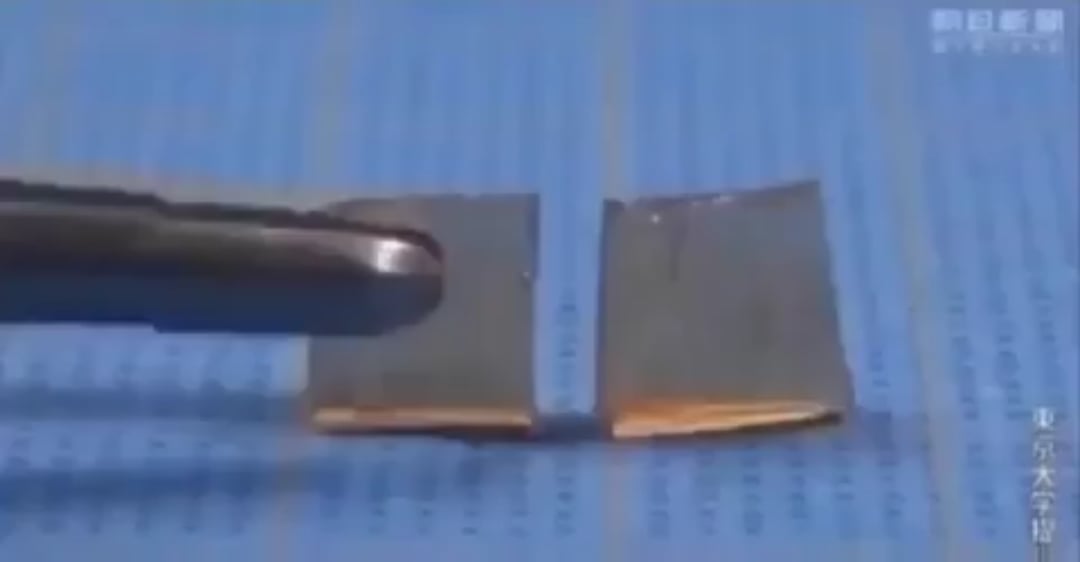
Japanese researchers have developed a self-healing glass-like material that can begin repairing cracks in roughly 10 seconds
Title: Breakthrough in Materials Science: Japanese Researchers Develop Ultra-Fast Self-Healing Glass-like Material
Meta Description: Japanese scientists have created a revolutionary self-healing glass-like material that repairs cracks in just 10 seconds. Discover how this innovation could transform industries from electronics to construction.
Introduction: A Leap Toward Unbreakable Materials
Imagine dropping your smartphone screen, only to watch its cracks vanish before your eyes—without heat, adhesives, or replacement. This sci-fi scenario could soon become reality thanks to a groundbreaking discovery by researchers in Japan. A team led by Dr. Suehiro Iwano and Professor Takuzo Aida from the University of Tokyo has developed a transparent, glass-like material that can repair itself in a mere 10 seconds after sustaining damage. Published in the journal Science, this innovation sets a new benchmark for self-healing materials, potentially revolutionizing industries from consumer electronics to automotive and aerospace engineering.
How Does the Self-Healing Glass Work?
The secret lies in the material’s chemical structure. Unlike traditional glass (silica-based), this new substance—a type of polyether thiourea—relies on dynamic hydrogen bonds at the molecular level. When cracks form, pressing the broken edges together for just 10 seconds allows these bonds to reform, effectively “healing” the material at room temperature.
Key Features:
- Speed: Repairs cracks in ~10 seconds (compared to hours/days for existing self-healing plastics).
- Transparency: Glass-like clarity makes it ideal for displays or lenses.
- Durability: Healing can occur repeatedly without losing integrity.
- No External Stimuli Required: Unlike other materials, it doesn’t need heat or UV light to activate healing.
Why This Matters: Solving a Multibillion-Dollar Problem
Cracked screens and structural wear cost industries billions annually:
- Electronics: Smartphone screens generate $10B+ in annual repair costs.
- Automotive: Windshield replacements cost drivers over $5B yearly in the U.S. alone.
- Construction: Brittle glass facades require expensive maintenance.
This material could drastically reduce waste and expenses by extending product lifespans. For instance, smartphones with self-healing screens might never need screen protectors or replacements.
Applications: Where Could This Material Be Used?
- Consumer Electronics: Crack-proof smartphone screens, tablets, and wearable devices.
- Automotive: Scratch-resistant windshields and headlight covers.
- Medical Devices: Durable lenses for cameras, microscopes, or surgical tools.
- Energy: Protective coatings for solar panels exposed to harsh environments.
- Sustainable Design: Longer-lasting building materials reducing landfill waste.
Challenges and Next Steps
While promising, scaling production remains a hurdle. Current prototypes are lab-made, and researchers aim to refine manufacturing for cost-effective mass production. Compatibility with existing supply chains (e.g., device assembly) also needs testing. Still, companies like Corning (maker of Gorilla Glass) are already investing in similar research, signaling strong market interest.
The Future of Self-Healing Materials
Dr. Iwano’s team isn’t alone in this frontier. Earlier breakthroughs included self-healing polymers (requiring heat) and concrete (using bacteria). However, this glass-like material’s speed and simplicity position it as a frontrunner. Future research may enhance its strength or adapt it for flexible displays and bio-integrated devices.
Conclusion: A Crack in the Armor of Fragility
This Japanese innovation isn’t just about fixing cracks—it’s about redefining resilience. As industries push toward sustainability and durability, self-healing materials could shift us from a “disposable” culture to one where products last decades, not years. While commercialization may take 5–10 years, the race to unbreakable tech has undoubtedly begun.
Stay tuned as science turns the impossible into the inevitable.
Keywords for SEO:
Self-healing glass, Japanese researchers, material science breakthrough, crack repair technology, polyether thiourea, unbreakable smartphone screen, sustainable materials, hydrogen bond healing, University of Tokyo innovation.
Image Alt Text Suggestions:
“Self-healing glass-like material repairing cracks in seconds” | “Japanese scientist holding transparent self-healing polymer” | “Animation of molecular hydrogen bonds reforming in glass material.”
By optimizing for search intent around “self-healing glass,” “crack repair tech,” and related terms, this article aims to rank highly while offering actionable insights for readers in tech, sustainability, and engineering sectors.