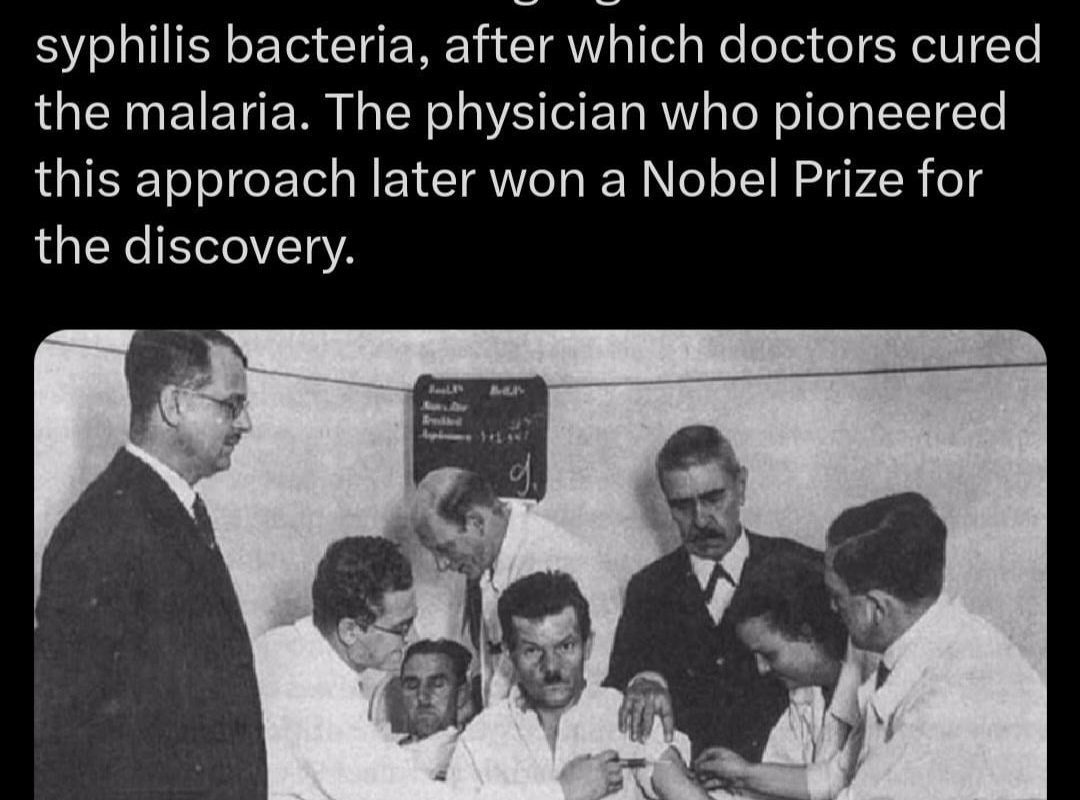
Julius Wagner- Juaregg, an Austrian physician discovered a way to treat syphilis with malaria in the early 20th century.
Title: Julius Wagner-Jauregg: The Nobel Laureate Who Revolutionized Syphilis Treatment with Malaria
Meta Description: Explore how Austrian physician Julius Wagner-Jauregg pioneered malariotherapy—a groundbreaking early 20th-century treatment for neurosyphilis.
Introduction
In the early 20th century, syphilis—a sexually transmitted infection caused by Treponema pallidum—was a death sentence for many, particularly when it advanced to its neuropsychiatric stage (neurosyphilis). No cure existed until Austrian physician Julius Wagner-Jauregg (1857–1940) made an unexpected breakthrough: infecting patients with malaria to combat syphilis. His discovery earned him the Nobel Prize in Physiology or Medicine in 1927, marking a radical shift in psychiatric and infectious disease treatment.
Julius Wagner-Jauregg: A Pioneer Neuropsychiatrist
Born Julius Wagner Ritter von Jauregg in 1857, Wagner-Jauregg dedicated his career to neurology and psychiatry in Vienna. He observed that psychotic symptoms in neurosyphilis patients sometimes improved after surviving fevers from illnesses like typhus or erysipelas. This laid the groundwork for his revolutionary idea: could artificially induced fever treat neurosyphilis?
The Malaria-Syphilis Treatment: How It Worked
Wagner-Jauregg’s approach, called malariotherapy (or pyrotherapy), hinged on a bold hypothesis:
- Inject malaria-infected blood into syphilis patients to induce high, prolonged fevers (up to 106°F/41°C).
- Let the malaria fever “burn out” the syphilis bacteria, which were heat-sensitive.
- Control malaria’s effects using quinine—a known antimalarial drug—after several fever cycles.
The Results
- Between 1917–1922, Wagner-Jauregg treated hundreds of neurosyphilis patients.
- 30–40% showed full recovery, while another 15–40% saw symptom improvement.
- The treatment carried risks (10–15% mortality from malaria), but neurosyphilis itself was 100% fatal at the time.
Why Malaria? The Science Behind the Madness
Malaria’s role was strategic:
- Targeted Heat Sensitivity: Treponema pallidum bacteria die at high temperatures. Malaria’s recurring fevers weakened them.
- Immune Activation: Fever stimulated the immune system, potentially enhancing its ability to fight syphilis.
- Controllable Risk: Malaria could be managed post-treatment with quinine, making it safer than other deadly infections.
Key Milestones in Wagner-Jauregg’s Career
| Year | Milestone |
|---|---|
| 1887 | First proposed fever therapy for mental illnesses. |
| 1917 | First successful malaria-syphilis trial at Vienna Hospital. |
| 1927 | Awarded the Nobel Prize for his malariotherapy breakthrough. |
| 1930s | Malariotherapy adopted globally until penicillin replaced it in the 1940s. |
Legacy and Ethical Considerations
While Wagner-Jauregg’s treatment saved thousands, modern ethics debate its risks:
- Unconsented Trials: Many patients were institutionalized or unable to consent fully.
- Mortality Trade-off: Doctors weighed malaria’s risks against syphilis’ certain fatality.
- Transition to Penicillin: By the 1940s, antibiotics made malariotherapy obsolete, but it remained the first effective neurosyphilis treatment.
Conclusion
Julius Wagner-Jauregg’s malariotherapy was a landmark in medical history—a daring, lifesaving gamble that redefined syphilis treatment before antibiotics. His work exemplifies how creative, even counterintuitive strategies can illuminate paths to healing. Though superseded by modern medicine, Wagner-Jauregg’s legacy endures in immunology, psychiatry, and the relentless pursuit of innovation.
Keywords for SEO: Julius Wagner-Jauregg, malaria treatment for syphilis, malariotherapy, neurosyphilis treatment, Nobel Prize in Medicine 1927, pyrotherapy, history of syphilis.