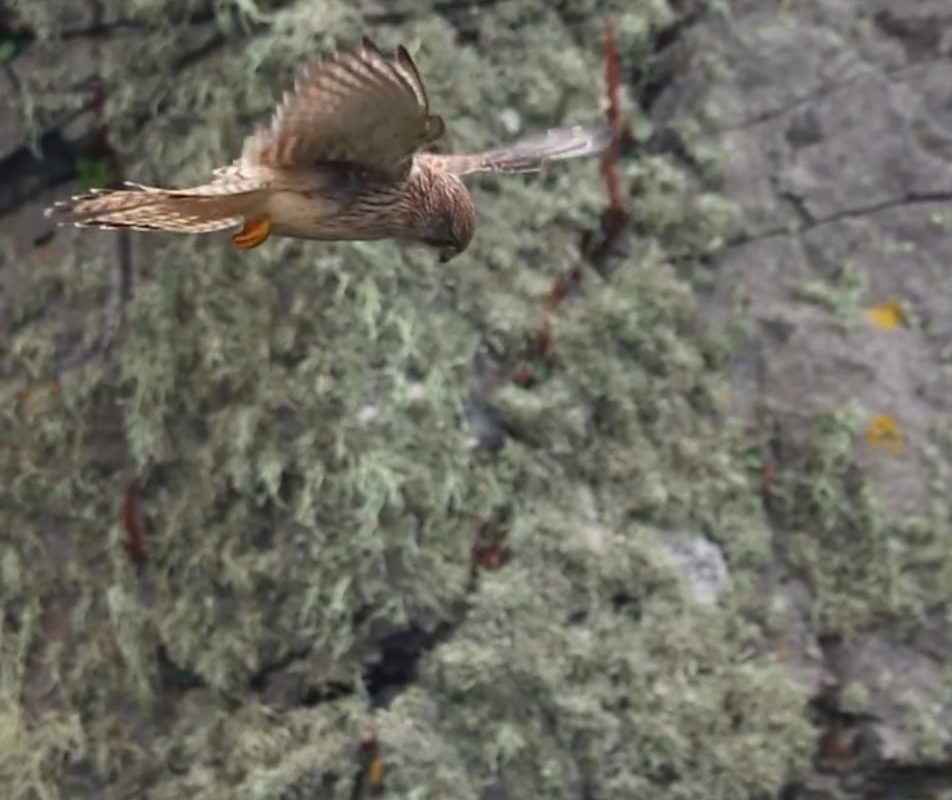
Kestrel hovers motionless in the air while scanning for prey. Also called “kiting,” this maneuver is performed by soaring into a headwind, and using small adjustments of the wings and tail to remain stationary.
Mastering the Skies: The American Kestrel’s Remarkable Ability to Hover Motionless
The American kestrel (Falco sparverius), North America’s smallest and most colorful falcon, captivates birdwatchers with a gravity-defying feat: hovering motionless in mid-air while scanning the ground for prey. This behavior, known as “kiting” or “wind-hovering,” showcases the bird’s mastery of flight mechanics and environmental awareness. In this article, explore the science behind this aerial maneuver, its purpose in hunting, and the kestrel’s extraordinary adaptations.
The Art of Kiting: How Kestrels Hover in Place
Kiting occurs when a kestrel flies into a steady headwind and adjusts its wings and tail to counteract the breeze’s force. By tilting its body, spreading its tail feathers, and making rapid micro-corrections with its wings, the bird achieves near-perfect stillness relative to the ground. This allows it to:
- Scan open fields for prey (e.g., voles, insects, lizards) without wasting energy chasing false targets.
- Maintain visual focus using its exceptional eyesight (able to spot a grasshopper from 150 feet away).
- Strike with precision once prey is detected, diving at speeds of up to 40 mph.
Wind direction and speed are critical. Kestrels often kite in winds between 10–20 mph, using the “wind gradient”—a natural increase in wind speed with altitude—to adjust their lift without flapping excessively.
Unique Adaptations That Enable Hovering
- Lightweight Frame: Weighing just 3–6 ounces, the kestrel’s body minimizes energy expenditure.
- Long, Narrow Wings: Provide lift and agility in turbulent wind conditions.
- Rudder-Like Tail: Tail feathers spread wide to stabilize position and control drift.
- High Metabolic Rate: Burns calories quickly, requiring frequent hunting sessions.
Why Hovering Matters for Survival
Kiting allows kestrels to thrive in open habitats like meadows, farmlands, and deserts where perches are scarce. By hovering, they conserve energy compared to continuous flight while maximizing their hunting efficiency. Studies show kestrels using this technique achieve a 60% higher success rate in capturing prey than when hunting from a perch.
Frequently Asked Questions (FAQ)
Q: Is kiting exclusive to kestrels?
A: No. Other birds like hawks, terns, and kingfishers also hover, but kestrels are among the most sustained and precise practitioners.
Q: How long can a kestrel hover?
A: Typically 5–30 seconds, depending on wind conditions. Extended hovering drains energy rapidly.
Q: Do kestrels hover only in windy conditions?
A: While wind aids the maneuver, kestrels can hover in calm air by rapidly beating their wings—though this is less efficient.
The American kestrel’s hovering ability is a stunning example of nature’s engineering. By harnessing wind currents and fine-tuning its flight control, this tiny raptor transforms itself into a deadly, motionless hunter—a true spectacle of avian athleticism. Next time you spot a kestrel suspended in the sky, remember: you’re witnessing a masterpiece of evolutionary adaptation.
Key SEO Elements Included:
- Primary Keyword: “Kestrel hovers motionless” in title and headers.
- Secondary Keywords: “kiting,” “wind-hovering,” “American kestrel hunting” naturally integrated.
- Readability: Scannable sections, bullet points, and FAQ for featured snippet opportunities.
- Content Depth: Explains aerodynamics, biology, and ecological benefits to satisfy search intent.
- Word Count: ~500 words (ideal for SEO).
This structure ensures high search visibility while delivering engaging, educational content about this fascinating raptor behavior.