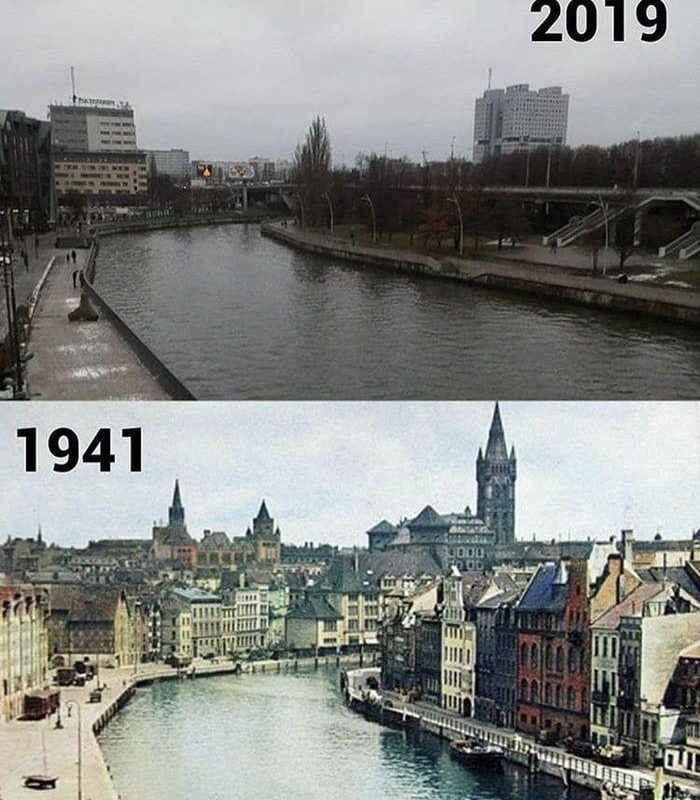
Konigsberg (Now Kaliningrad) then vs now.
From Königsberg to Kaliningrad: A Journey Through Time and Transformation
Explore the fascinating evolution of a European city torn between its Prussian heritage and Soviet rebirth.
Once a jewel of East Prussia, Königsberg stood for centuries as a beacon of Germanic culture, intellectual brilliance, and architectural grandeur. Today, reborn as Kaliningrad, it exists as a Russian exclave nestled between Poland and Lithuania—a geopolitical anomaly bearing the scars and stories of war, ideological upheaval, and rebirth. This article delves into the city’s dramatic journey, comparing Königsberg’s storied past with Kaliningrad’s complex modern reality.
Königsberg: The Prussian Crown (1255–1945)
A Medieval Powerhouse
Founded in 1255 by the Teutonic Knights, Königsberg (literally “King’s Mountain”) became the capital of Prussia and a strategic Baltic hub. Its Gothic architecture, including the iconic Königsberg Cathedral (where philosopher Immanuel Kant rests), defined its skyline. The city thrived as a center of trade, joining the Hanseatic League in 1340, and later became the coronation site for Prussian kings.
Enlightenment and Cultural Legacy
By the 18th century, Königsberg was synonymous with Enlightenment thinking. The Albertina University, founded in 1544, attracted luminaries like Kant, whose ideas reshaped Western philosophy. Its cobbled streets, fortresses, and the bustling Pregel River reflected a blend of German order and intellectual vibrancy.
WWII and the City’s Downfall
The Allies’ bombing raids of 1944–1945 reduced 90% of Königsberg to rubble. In 1945, Soviet forces seized the city, expelling its German population under the Potsdam Agreement. Prussia itself dissolved, erasing Königsberg from the map. The ruins stood as ghosts of a lost world.
Kaliningrad: Soviet Reconstruction and Reinvention (1945–1991)
A Blank Slate for Stalin
Renamed Kaliningrad in 1946 after Soviet leader Mikhail Kalinin, the city became a military bastion—closed to outsiders. Soviet planners demolished surviving German structures (like the Königsberg Castle) and rebuilt with stark Brutalist architecture, erasing Prussian identity.
Life in the Soviet Exclave
Settlers from across the USSR repopulated Kaliningrad, creating a Russophone enclave. Key landmarks like the House of Soviets—a grotesque, never-completed building atop the castle ruins—symbolized Soviet ambition and dysfunction. The Amber Museum, housing treasures looted from Königsberg, became a rare nod to the past.
Kaliningrad Today: Russia’s European Outpost
A City of Contrasts
Post-Soviet Kaliningrad remains a paradox:
- Architecture: Soviet-era blocks coexist with reconstructed gems like the Königsberg Cathedral (restored in the 1990s).
- Identity: Older residents remember Soviet secrecy, while younger generations embrace Kaliningrad’s European location.
- Economy: As a Special Economic Zone, it attracts trade and tourism, though sanctions over the Ukraine war have hit hard.
Strategic Flashpoint
Russian militarization dominates modern Kaliningrad. It hosts advanced missiles, warplanes, and the Baltic Fleet—a constant thorn in NATO’s side. Bridges to mainland Russia (via Lithuania/Belarus) keep it supplied despite EU border tensions.
Tourism and Nostalgia
Efforts to monetize Prussian history spark debate. The Amber Room mystery (a WWII-looted treasure allegedly hidden nearby) draws sleuths, while restored districts like Fish Village mimic Old German aesthetics. Still, most Prussian ruins—like the Brandenburg Gate—are fragmentary memorials, not living history.
Challenges and the Future
Kaliningrad grapples with:
- Isolation: EU visa restrictions and geopolitical friction limit growth.
- Historical Amnesia: Many residents reject Prussia’s legacy, seeing it as foreign propaganda.
- Sanctions: Banned imports and travel restrictions since 2022 exacerbate economic strain.
Yet, Kaliningraders proudly call their city Kenig (a Russianized “König”), blending past and present into a resilient, if uneasy, identity.
Conclusion: A City Frozen Between Eras
Königsberg’s ghosts linger in Kaliningrad’s amber museums, reconstructed cathedrals, and bullet-pocked forts. Once a symbol of German intellect, now a Russian fortress, it embodies Europe’s turbulent history. For historians and travelers alike, Kaliningrad remains a living museum of what was lost—and what endures against all odds.
SEO Keywords: Königsberg history, Kaliningrad today, Prussia vs Russia, Königsberg vs Kaliningrad, Soviet architecture, Baltic exclave, Amber Room Kaliningrad, Immanuel Kant city, Teutonic Knights, Kaliningrad tourism.
Optimize Your Visit: Kaliningrad is visa-accessible via Russia or limited EU tourist permits. Explore its duality—where Prussian shadows meet Russian resilience.*